
You are trying to have a conversation in the kitchen, but you have to shout over the appliance in the corner. If you notice a refrigerator buzzing noise that seems louder than usual, it is not just annoying, it is a cry for help. A healthy refrigerator should hum gently. It should fade into the background.
However, when you have a refrigerator vibrating loudly enough to rattle the floorboards, something is wrong. It could be as simple as an uneven floor, or it could be a warning sign that your compressor is struggling to breathe.
The good news is that “loud” rarely means “dead.” Most of the time, the noise is caused by vibration or a dirty part, not a catastrophic failure.
In this guide, we will walk you through 5 proven steps on how to quiet a noisy refrigerator, from adjusting the leveling legs to cleaning the fans.
💡 Mentor’s Diagnostic Hub
A loud refrigerator is often the first acoustic warning sign of a failing component. This specific fix is part of our comprehensive master guide on tracking down every bizarre sound and smell your appliance makes.
The “Normal” Hum vs. The Problem
Before you start pulling the fridge out, let’s define what is normal.
- Normal: A soft hum, a quiet whir of a fan, or the occasional sound of ice dropping.
- Abnormal: A loud mechanical refrigerator buzzing noise, a rattle that stops when you touch the door, or a vibration that shakes items on top of the fridge.
If the noise is sudden, loud, or constant, use this checklist to find the source.
Cause #1: Refrigerator Vibrating Loudly Due to Uneven Legs
This is the most common cause of a noisy fridge, and luckily, it is the easiest to fix.
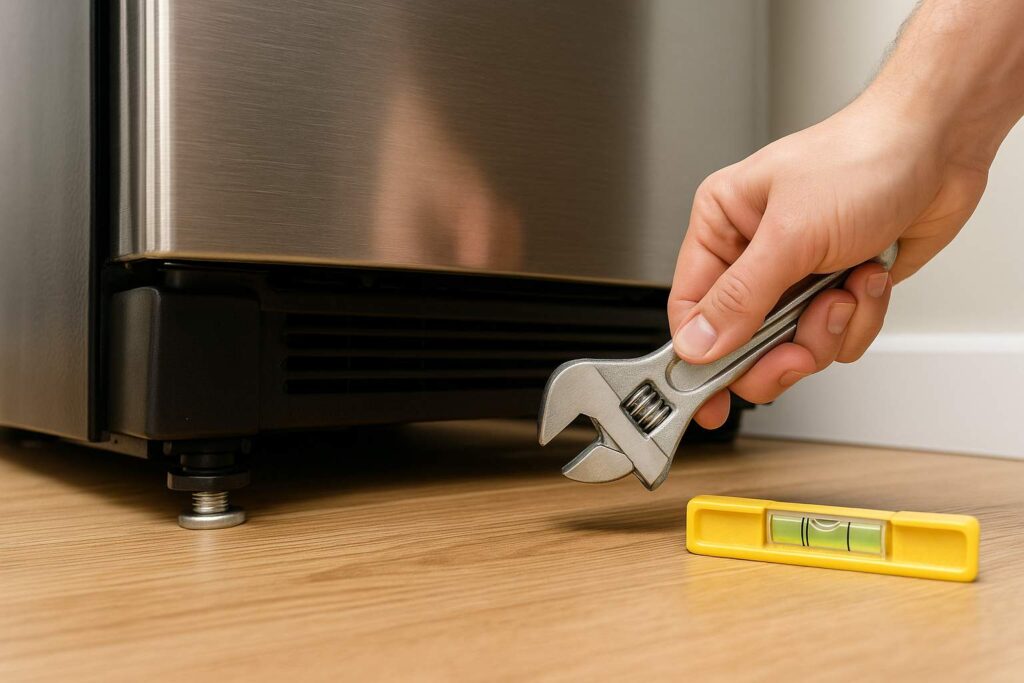
The Problem: Your refrigerator stands on four feet (or rollers). If even one of those feet is not touching the floor firmly, the entire heavy metal cabinet will wobble. When the compressor turns on, that slight wobble turns into a harmonic vibration.
- The Result: You hear a loud rattling or a refrigerator vibrating loudly against the floor or the cabinets next to it.
How to Fix It:
- Remove the Grille: Snap off the plastic kick-plate at the bottom front of the fridge.
- Locate the Legs: You will see threaded leveling legs (feet) that screw up and down.
- Adjust: Use a wrench or pliers. Turn the legs clockwise to lower them or counter-clockwise to raise them. Ensure all four feet are firmly planted on the floor.
- Check the Tilt: Ideally, the fridge should tilt back slightly so the doors close on their own. Use a bubble level to be sure.
Cause #2: Dirty Coils Creating a Refrigerator Buzzing Noise
If the fridge is level but still loud, the problem might be dust.
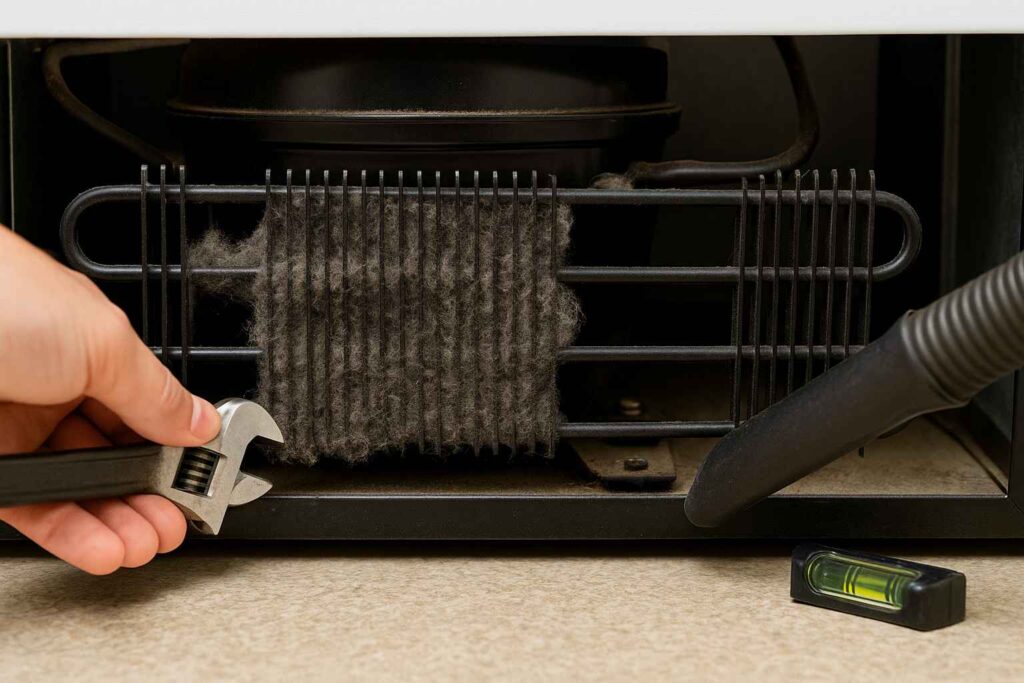
The Problem: The condenser coils (usually on the back or bottom) are responsible for releasing heat. If they are coated in a thick blanket of dust and pet hair, the system cannot cool down efficiently.
- The Noise: The compressor has to work twice as hard. It runs hotter and louder, creating an aggressive refrigerator buzzing noise that never seems to stop.
The Solution: Cleaning the coils is the best way to quiet a noisy fridge and lower your electric bill.
- Unplug: Safety first.
- Access: Pull the fridge out or remove the bottom panel.
- Vacuum: Use a specialized refrigerator coil brush to loosen the dust, then vacuum it up.
- Result: The compressor will run cooler and significantly quieter.
See our complete guide on refrigerator running constantly for a step-by-step cleaning tutorial.
Cause #3: The Condenser Fan Motor is Obstructed
If the buzzing persists after cleaning, check the fan that sits right next to the compressor.
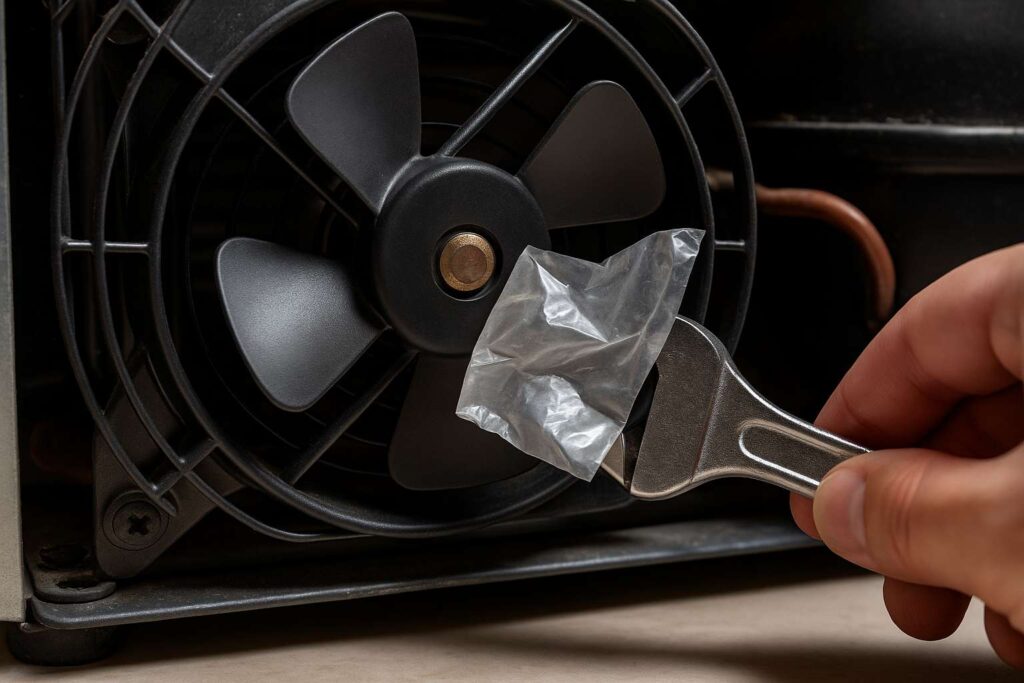
The Problem: The condenser fan cools the compressor. Because it sits at the bottom of the fridge, it is prone to sucking in debris.
- The Obstruction: Sometimes, a piece of paper, a mouse trap, or a large dust bunny gets sucked into the fan cage.
- The Sound: As the fan blades hit the obstruction, it creates a rapid-fire ticking, clicking, or loud buzzing sound.
How to Diagnose:
- Pull the Fridge Out: Remove the rear access panel at the bottom.
- Listen: Plug the fridge back in briefly. Is the noise coming from the spinning fan blade?
- Clear It: Unplug it again. Use a flashlight to check for debris blocking the blades. Spin the fan by hand to see if it moves freely. If the motor is seized or grinding, you need a condenser fan motor replacement.
Cause #4: The Evaporator Fan (Buzzing Inside the Freezer)
Is the noise louder when you open the freezer door? That is your clue.
The Problem: The evaporator fan is located inside the freezer, behind the back wall. It circulates the cold air.
- Ice Buildup: If you have a defrost problem, ice can build up around the fan. The fan blades hit the ice, sounding like a playing card in bicycle spokes.
- Motor Failure: The bearings in the fan motor can dry out, causing a high-pitched squeal or a grinding refrigerator buzzing noise.
How to Fix It:
- Check for Ice: If you see frost on the freezer back wall, you have a defrost issue. Read our guide on freezer not freezing to solve that.
- Check the Motor: If there is no ice, but the noise is loud, the fan motor grommets (rubber mounts) might be worn out, causing vibration. You may need to replace the fan motor assembly.
Cause #5: The Drain Pan is Rattling
This is a simple but annoying issue.
The Problem: Underneath your fridge, there is a plastic pan designed to catch defrost water. It is held in place by a bracket or slide.
- The Rattle: Over time, this pan can rattle loose due to the normal vibration of the compressor. If it touches the metal frame or the compressor itself, it creates a loud plastic-on-metal vibration sound.
The Fix:
- Locate the Pan: Remove the bottom front kick-plate or the rear access panel.
- Secure It: Wiggle the pan. If it feels loose, secure it with a piece of duct tape or a rubber band, or simply reposition it so it doesn’t touch the vibrating compressor.
How to Quiet a Noisy Refrigerator (Soundproofing Tips)
If your fridge is mechanically fine but still just “loud” by design, you can use soundproofing tricks to dampen the noise.
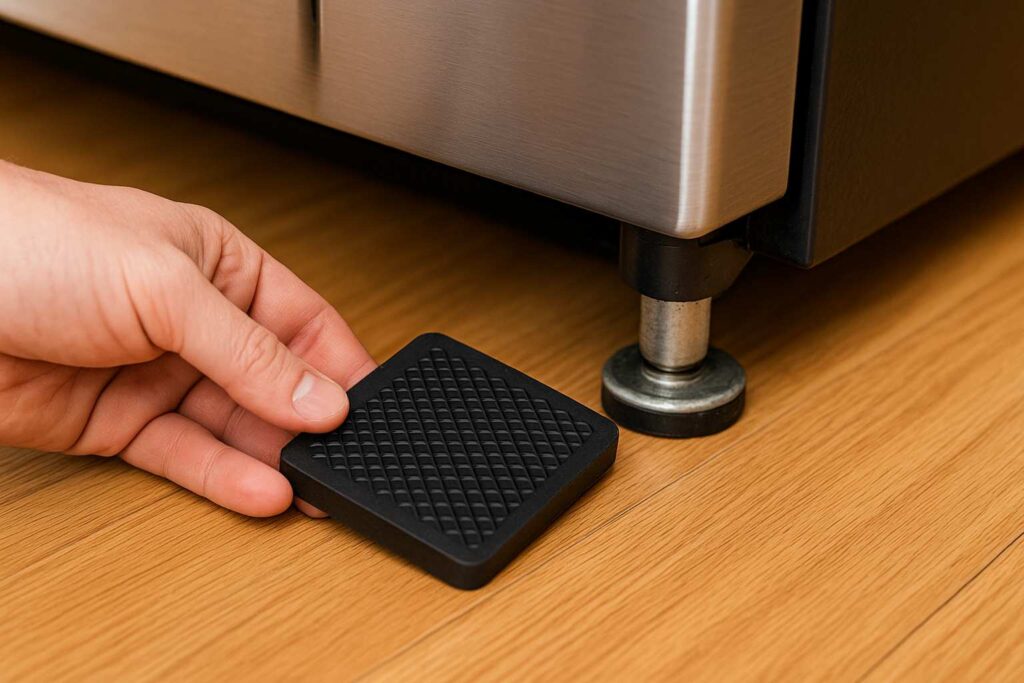
Tip 1: Install Anti-Vibration Pads
You can buy thick rubber anti-vibration pads to place under the feet of the refrigerator. These absorb the energy from the compressor and stop it from transferring into your kitchen floor. This is especially helpful for wood floors.
Tip 2: Soundproof the Alcove
If your fridge sits in a tight alcove, the sound waves bounce off the hard walls behind it, amplifying the noise.
- The Fix: Place a sheet of acoustic foam or a dense rubber mat on the wall behind the refrigerator. This absorbs the refrigerator buzzing noise instead of reflecting it back into the room.
Tip 3: Fill It Up
An empty fridge acts like an echo chamber. A full fridge absorbs sound. Keep your fridge reasonably full (water jugs work great) to add mass and dampen internal vibrations.
Related Noises: What Else Do You Hear?
- Gurgling: Does it sound like running water? That is normal refrigerant flow. Read about refrigerator gurgling noise.
- Clicking: Is the buzz interrupted by a loud click? Your start relay might be failing. Check our guide on refrigerator making a clicking noise.
- Hissing: A short hiss is just the defrost heater. A constant hiss with warm temps is a leak.
Frequently Asked Questions (FAQ)
Why is my fridge vibrating loudly only sometimes?
Is a buzzing fridge dangerous?
Can I put a rug under my fridge to stop the noise?
How do I know if it’s the compressor dying?
Conclusion: Enjoy the Silence
You do not have to live with a headache-inducing appliance. A refrigerator buzzing noise is almost always a solvable problem.
Your Action Plan:
- Level the Legs: Stop the wobble.
- Clean the Coils: Stop the strain.
- Check the Fans: Remove the debris.
By spending 15 minutes troubleshooting these issues, you can turn your roaring appliance back into the quiet, background helper it was meant to be.