
You walk into your kitchen late at night when the house is quiet, and you hear it. It sounds like water running, a faint bubbling, or even a snake in the corner. If you notice a refrigerator gurgling noise coming from your appliance, it can be unsettling.
Is it leaking? Is the compressor dying? Is it about to explode?
Homeowners often panic when they hear these liquid sounds because they associate them with plumbing leaks. However, a refrigerator is a unique machine. It circulates both liquid and gas to keep your food cold.
In 90% of cases, a refrigerator gurgling noise or a refrigerator hissing sound is actually a sign that your appliance is working perfectly. It is the sound of the cooling system doing its job.
However, there are rare cases where these noises signal a serious failure. In this guide, we will help you distinguish between the “good” sounds of a healthy fridge and the “bad” sounds of a dying system.
💡 Mentor’s Diagnostic Hub
Gurgling and hissing are just two of the many sounds your fridge can make. This specific guide is part of our comprehensive master series on diagnosing every bizarre click, buzz, and smell your appliance produces.
The Science of Sound: Why Fridges Are Noisy
To understand the noise, you have to understand the cooling cycle.
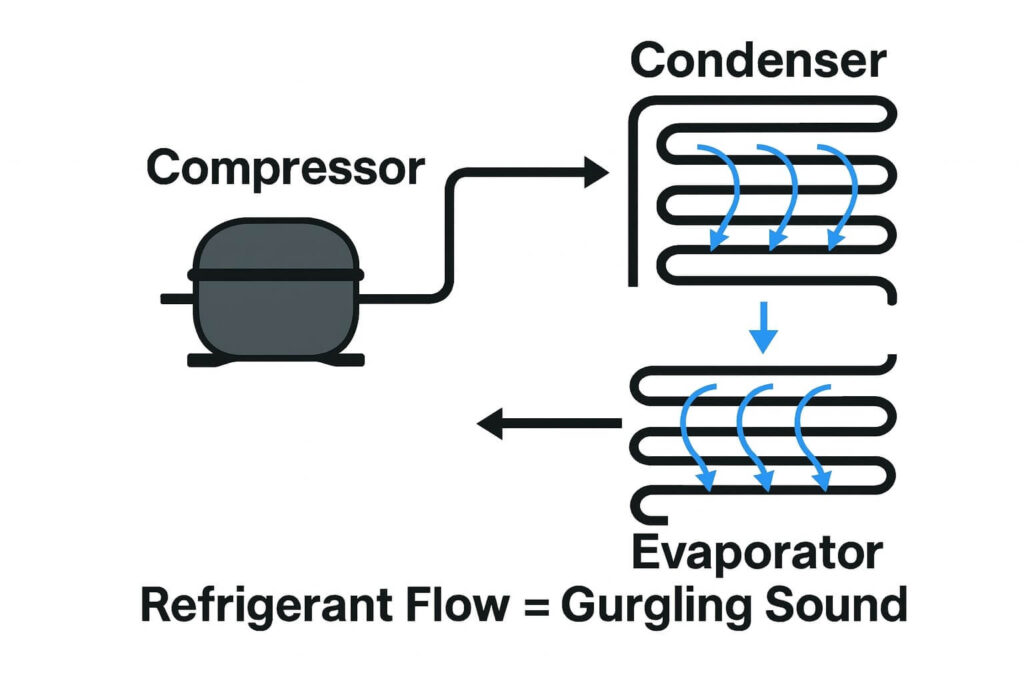
Your refrigerator does not just “make cold.” It moves heat. It does this using a chemical called refrigerant (Freon or R600a).
[Image of refrigerator cooling cycle diagram]
- The Compressor: Squeezes the gas (making it hot).
- The Condenser: Cools the gas down into a liquid.
- The Evaporator: The liquid boils instantly back into a gas, absorbing heat from your freezer.
This constant changing from liquid to gas and back again is a noisy process. It involves boiling, flowing, dripping, and expanding. This is the source of almost all normal refrigerator noises.
Sound #1: The Refrigerator Gurgling Noise (Usually Normal)
This is the most common complaint we hear. It sounds like boiling water, a bubbling brook, or water draining from a sink.
Why It Happens (The Good Gurgle): The refrigerator gurgling noise is caused by the refrigerant flowing through the tubes inside your fridge walls.
- The Boiling: When the refrigerant hits the evaporator coils in the freezer, it boils from a liquid into a gas. Just like a pot of water on the stove gurgles when it boils, your refrigerant gurgles as it absorbs heat.
- The Flow: When the compressor shuts off, the pressure in the system equalizes. The remaining liquid refrigerant flows back down the tubes, creating a “glug-glug” sound, similar to water settling in a pipe.
Verdict: If you hear this sound, but your refrigerator not cooling is NOT an issue (meaning temps are fine), then the noise is 100% normal. It means the circulation system is open and flowing correctly.
Sound #2: The Refrigerator Hissing Sound vs. Gurgling
This sound can be sharper and more alarming. It might sound like air escaping a tire or water hitting a hot pan.
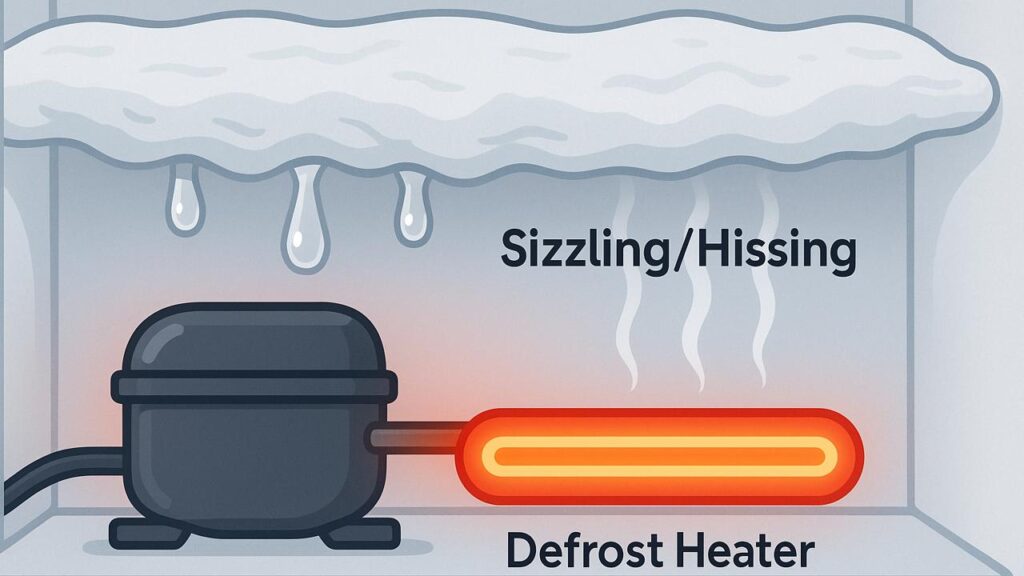
Why It Happens (The Defrost Cycle): A refrigerator hissing sound is almost always related to the automatic defrost system.
- The Melt: Every 8-10 hours, a heater turns on inside the freezer to melt frost off the coils.
- The Sizzle: Water droplets from the melting ice drip down onto the red-hot heater element.
- The Noise: Ssssss. It is the exact same sound as an ice cube dropped onto a hot skillet.
Verdict: This is a healthy sound. It means your defrost heater is working, which prevents your freezer not freezing due to frost buildup. This noise typically lasts for only 5 to 10 minutes.
Sound #3: The “Bad” Hiss vs. A Normal Refrigerator Gurgling Noise
While rare, a hiss can be fatal for a fridge. You need to know the difference between a defrost hiss and a leak hiss.
The Symptoms of a Bad Hiss:
- Constant: A defrost hiss stops after 10 minutes. A leak hiss is continuous.
- Volume: It sounds like a loud aerosol spray can.
- Temperature: The most telling sign is the temperature. If you hear a loud hiss AND your fridge is warm, you likely have a puncture in the cooling loop.
The Problem: If you tried to scrape ice out of your freezer with a knife and accidentally poked a hole in the wall, you might have punctured a refrigerant line. The gas escapes under high pressure, creating a loud refrigerator hissing sound.
The Fix: Sadly, this is usually a “terminal” failure. A sealed system leak often costs more to fix than the fridge is worth. You will likely need to buy a new refrigerator.
Sound #4: Refrigerator Gurgling Noise Caused by Water Draining
Sometimes, the refrigerator gurgling noise isn’t refrigerant; it is actual water.
The Problem: During the defrost cycle, melted water drains down a tube to a pan under the fridge.
- The Trap: This tube has a “P-trap” (like your sink) to prevent air from traveling up. If this trap is dry or slightly clogged, the water rushing down can make a loud “glug” or sucking sound.
- The Overflow: If the drain pan is full and water keeps coming, you might hear a splashing sound right before you find a refrigerator leaking water on the floor.
The Fix: If the gurgling is accompanied by a puddle, check the drain pan. If the pan is dry but the sound is loud, check for a clogged drain tube that is backing up water.
Other Normal Refrigerator Noises You Might Hear
While diagnosing a refrigerator gurgling noise, you might notice other sounds. Most are harmless.
Popping or Cracking
- Cause: Thermal expansion. As the plastic walls and shelves inside the fridge get cold and contract, or warm up and expand during defrost, they “pop” like a house settling at night.
- Verdict: Totally normal.
Buzzing or Humming
- Cause: This is the compressor motor running or the ice maker filling with water.
- Verdict: Normal, unless it becomes extremely loud or turns into a hard clicking. A loud click usually indicates a failing start relay. Read our guide on refrigerator making a clicking noise if the buzz stops abruptly.
Clattering or Crashing
- Cause: Ice cubes dropping into the empty storage bin.
- Verdict: Normal. If it sounds like ice is trying to drop but can’t, check our guide on ice maker not making ice.
Troubleshooting Checklist for a Refrigerator Gurgling Noise
If you are still worried about the sound, run through this 3-point safety check.
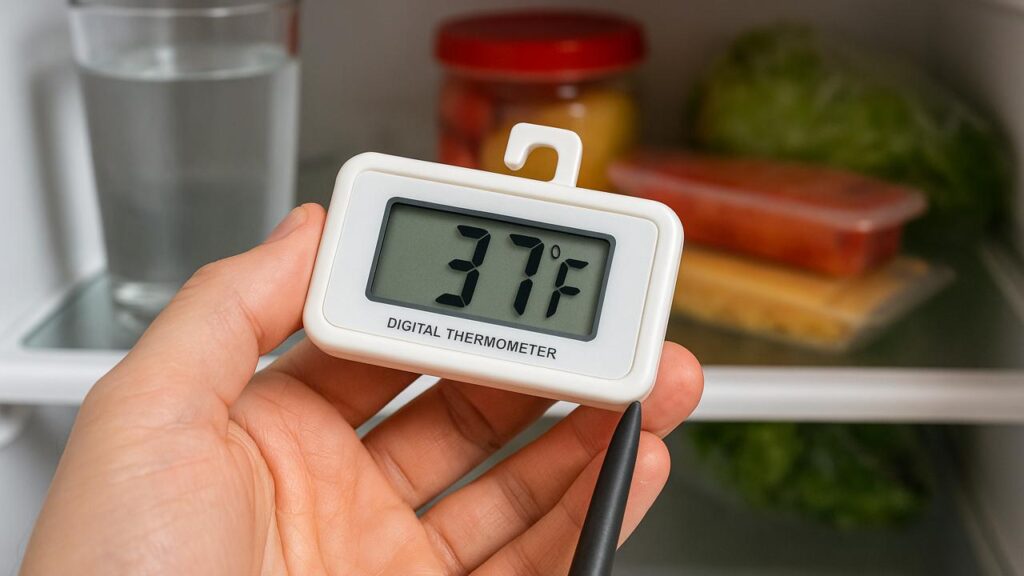
Step 1: Check the Temperature – Put a refrigerator thermometer in the freezer and fridge.
- Safe: Freezer is 0°F, Fridge is 37°F. (The noise is normal).
- Unsafe: Freezer is 20°F, Fridge is 50°F. (The noise might be a system struggle).
Step 2: Check the Duration – Time the sound.
- Safe: The hiss lasts 10 minutes, or the gurgle happens for a minute after the motor stops.
- Unsafe: The hiss never stops, 24 hours a day.
Step 3: Check for Damage – Look at the back wall of the freezer.
- Safe: The wall looks normal.
- Unsafe: You see a puncture hole, oil residue, or a massive ball of ice in one corner (indicates a slow leak).
Frequently Asked Questions (FAQ)
Why is my new refrigerator gurgling so much?
Can I stop the refrigerator hissing sound?
Does a gurgling sound mean low Freon?
Is it dangerous if my fridge sounds like running water?
Conclusion: Don’t Fear the Refrigerator Gurgling Noise
In the quiet of the night, a refrigerator gurgling noise can seem loud and ominous. But now you know the truth: it is the heartbeat of your appliance.
Unless the noise is accompanied by warm food, a puddle of water, or a puncture wound in the freezer wall, you can relax. That gurgling and hissing is simply the sound of physics working to keep your groceries safe.
Summary of Sounds:
- Gurgling: Normal refrigerant flow.
- Hissing (Short): Normal defrost cycle.
- Hissing (Constant): Possible leak (Call a pro).
- Popping: Normal thermal expansion.
So, pour yourself a cold drink and let your refrigerator chat away. It’s just doing its job.