
A refrigerator compressor that is very hot to the touch and not cooling typically indicates a mechanical failure or an airflow obstruction. Compressors naturally generate heat during their normal operation. However, surface temperatures exceeding 150°F (65°C) strongly suggest the component is overheating. Consequently, it may have already tripped its internal thermal overload protector to prevent an electrical fire.
Common causes for this alarming symptom include heavily restricted condenser coils, a physically failed condenser fan motor, or a catastrophic internal mechanical failure. Specifically, brands utilizing advanced technology, like the LG Linear Compressor or the Samsung Digital Inverter, require unique diagnostic approaches. Identifying the exact root cause quickly is absolutely essential. Furthermore, implementing proper preventative fridge compressor care tips will successfully prevent permanent, highly expensive compressor damage.
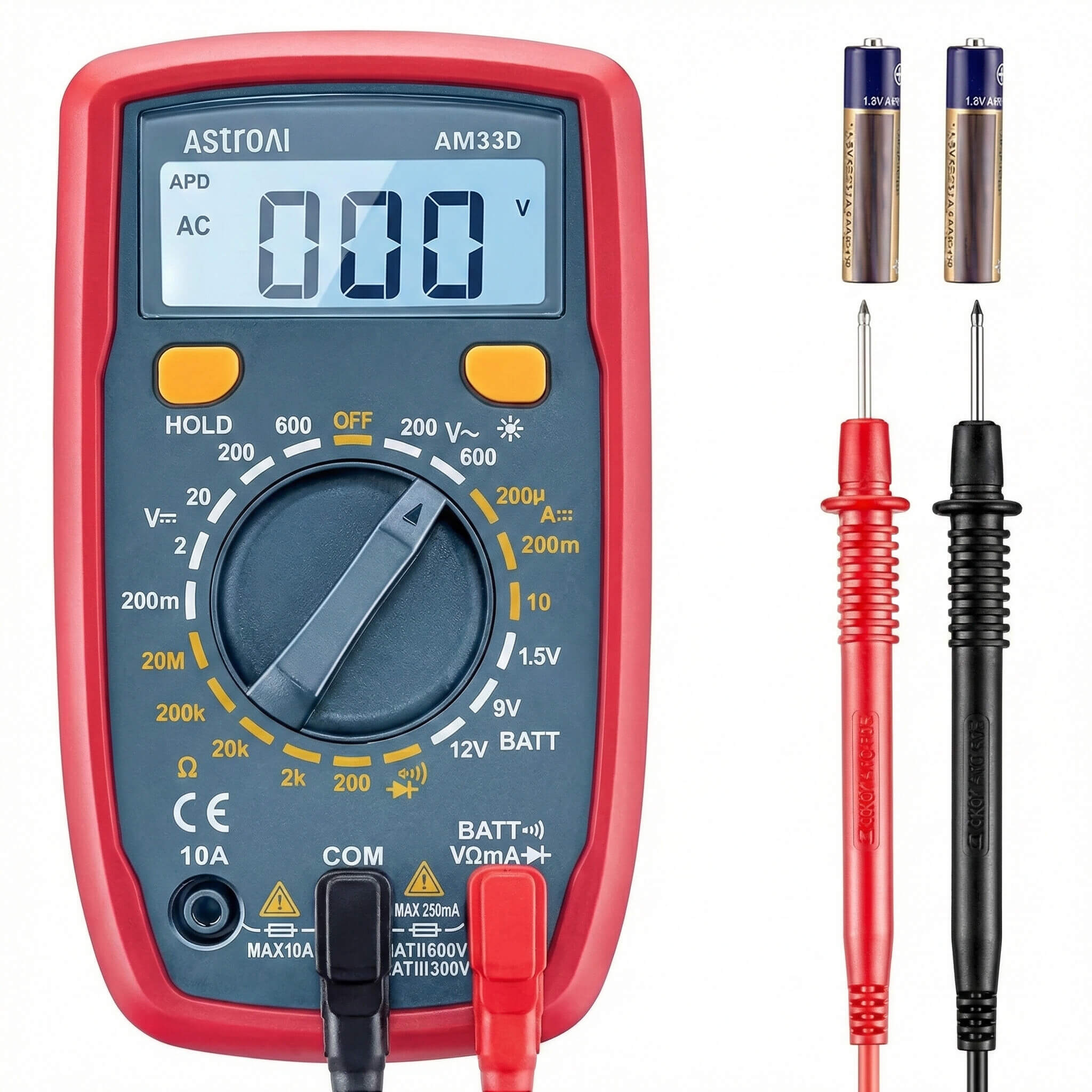
In this comprehensive, advanced diagnostic guide, we will provide a strict step-by-step procedure. You will accurately determine why your refrigerator compressor very hot not cooling situation is happening. Additionally, we will teach you how to perform a perfectly safe “touch test,” how to use a multimeter on motor pins, and specific repair protocols for major brands including LG, Samsung, GE, and Whirlpool.
💡 Mentor’s Diagnostic Hub
Electrical troubleshooting is the foundation of all major appliance repair. This specific guide is a core component of our comprehensive master series on diagnosing power failures, dead control boards, and compressor lock-ups.
Safety First: The Safe “Touch Test”
Before you hastily disassemble the heavy appliance, you must clearly differentiate between normal operating heat and critical overheating. Compressors rely heavily on thermodynamics to compress Freon gas. Consequently, this intense pressure naturally generates substantial heat. However, manufacturers engineer strict safety limits to prevent meltdowns.
The “3-Second Rule”
The absolute quickest way to diagnose the temperature severity without professional tools is the manual “Touch Test.”
- First, unplug the refrigerator directly from the wall. This instantly eliminates all electrical shock hazards.
- Next, carefully place your hand flat on the top of the black, dome-shaped compressor tank.
- Analyze The Result:
- Warm (100°F – 110°F): This indicates normal operation. If the fridge is not cooling, the fault is likely in the Defrost System or the internal Evaporator Fan, not the compressor itself.
- Hot (120°F – 130°F): This represents the upper limit of normal. This elevated heat often occurs during a long cooling cycle or immediately after loading warm groceries into the cabin.
- Scorching (150°F+): This signifies Critical Overheating. If you cannot physically hold your bare hand on the metal casing for more than 3 seconds, the motor is failing. The internal thermal overload has likely tripped.
When a heavy compressor overheats, it will violently shut itself off to actively prevent a fire hazard. You may clearly hear a distinct, sharp “click” followed by total silence. If you constantly hear this specific clicking sound, refer immediately to our technical guide: Why Is My Refrigerator Clicking?.
🛠️ Required Diagnostic Tool:
Etekcity Infrared Thermometer Gun
Why you need this: It safely measures surface temperature without burning your hand. Readings over 160°F instantly indicate critical failure.
Identify Your Specific Compressor Type
Troubleshooting steps vary significantly based on the internal compressor technology. Therefore, you must identify your specific motor type below before proceeding to electrical tests.
Standard Reciprocating Compressors (Old Style)
- Found in: GE, Frigidaire, Whirlpool, and older standard models.
- Behavior: This motor runs at 100% full power until the cabin reaches the target temperature. Then, it shuts off completely.
- Common Failure: The external PTC “Start Relay” heavily burns out. As a result, this causes the compressor to stall, click loudly, and overheat rapidly.
Linear Compressors (LG)
- Found in: LG and Kenmore Elite models manufactured from 2014 to the present.
- Behavior: This advanced motor runs constantly at varying speeds to maintain high energy efficiency.
- Common Failure: The internal mechanical exhaust valve suffers from metal fatigue and breaks. The motor actively runs and hums, but it pumps absolutely no refrigerant.
Inverter Compressors (Samsung)
- Found in: Samsung, Bosch, and premium GE Profile units.
- Behavior: A complex digital computer board (Inverter PCB) tightly controls the motor speed. It rarely stops running entirely.
- Common Failure: The delicate Inverter Control Board fails due to neighborhood voltage irregularities or power surges.
The #1 Cause: Severely Dirty Condenser Coils
The absolute most common cause of compressor overheating is heavily restricted airflow. Specifically, thick dust accumulation actively suffocates the cooling system.
The refrigerator dissipates its internal heat through the Condenser Coils. You will find these coils located at the bottom or rear of the heavy unit. If these coils become clogged with household dust, pet hair, or cooking grease, the heat cannot physically escape into the room.
Consequently, this thick insulation forces the compressor to run continuously at incredibly high temperatures. It operates exactly like a car engine trying to drive with a completely blocked radiator.
The Condenser Cleaning Fix
- First, you must unplug the refrigerator for your safety.
- Next, pull the unit away from the wall and remove the lower rear cardboard access panel.
- Then, utilize a dedicated, flexible coil brush to aggressively remove all dust and debris. Do not simply use a vacuum attachment, as it cannot reach the deep inner coils. (See our full procedure: How to Clean Condenser Coils).
- Result: After thorough cleaning, the compressor temperature should naturally return to normal operating ranges within 2 to 3 hours.
🛠️ Required Maintenance Tool:
Holikme Refrigerator Coil Cleaning Brush
Why you need this: This is an essential preventative maintenance tool. It actively prevents compressor death by clearing deep dust buildup.
Airflow Failure: The Condenser Fan Motor
Symptoms: The heavy compressor feels scorching hot and vibrates intensely, but the interior cabinet remains completely warm.
The condenser fan sits directly next to the compressor tank. Its sole mechanical function is to violently pull cool room air across the hot compressor casing and through the condenser coils. If this small fan fails, the compressor will overheat incredibly rapidly. Subsequently, it will safely shut down on thermal overload to prevent a fire.
How to Safely Diagnose the Fan
- First, carefully pull the fridge out and remove the lower back cardboard panel.
- Next, plug the unit back in and wait a few minutes for the compressor to actively engage.
- Inspect the fan blade operation:
- Spinning fast: The motor is functioning correctly. Your airflow issue lies elsewhere.
- Stopped or Twitching: The fan motor has completely failed electrically, or the main control board is providing zero power.
- Physically Obstructed: Closely inspect the area for physical blockages. Look for stray plastic bags, thick mouse nesting, or hard debris actively jamming the fan blade.
The Permanent Fix: You must replace the dead condenser fan motor. Fortunately, this represents a highly standard DIY repair (usually costing $35–$50). Replacing this cheap fan successfully prevents a catastrophic $800 compressor failure.
🛠️ Recommended Replacement Part:
Universal Refrigerator Condenser Fan Motor
Why you need this: It instantly restores critical cooling airflow to safely cool down the overheating compressor.
Advanced Diagnostics: The Multimeter Pin Test
Perhaps your condenser coils shine perfectly clean, and the fan operates flawlessly. In this scenario, the next logical step is to test the compressor windings for internal electrical continuity. This advanced test definitively confirms if the internal copper motor windings have shorted out or physically snapped open.
Safety Warning: You must physically disconnect the main power cord before touching any bare electrical terminals.
Step 1: Measure Internal Resistance
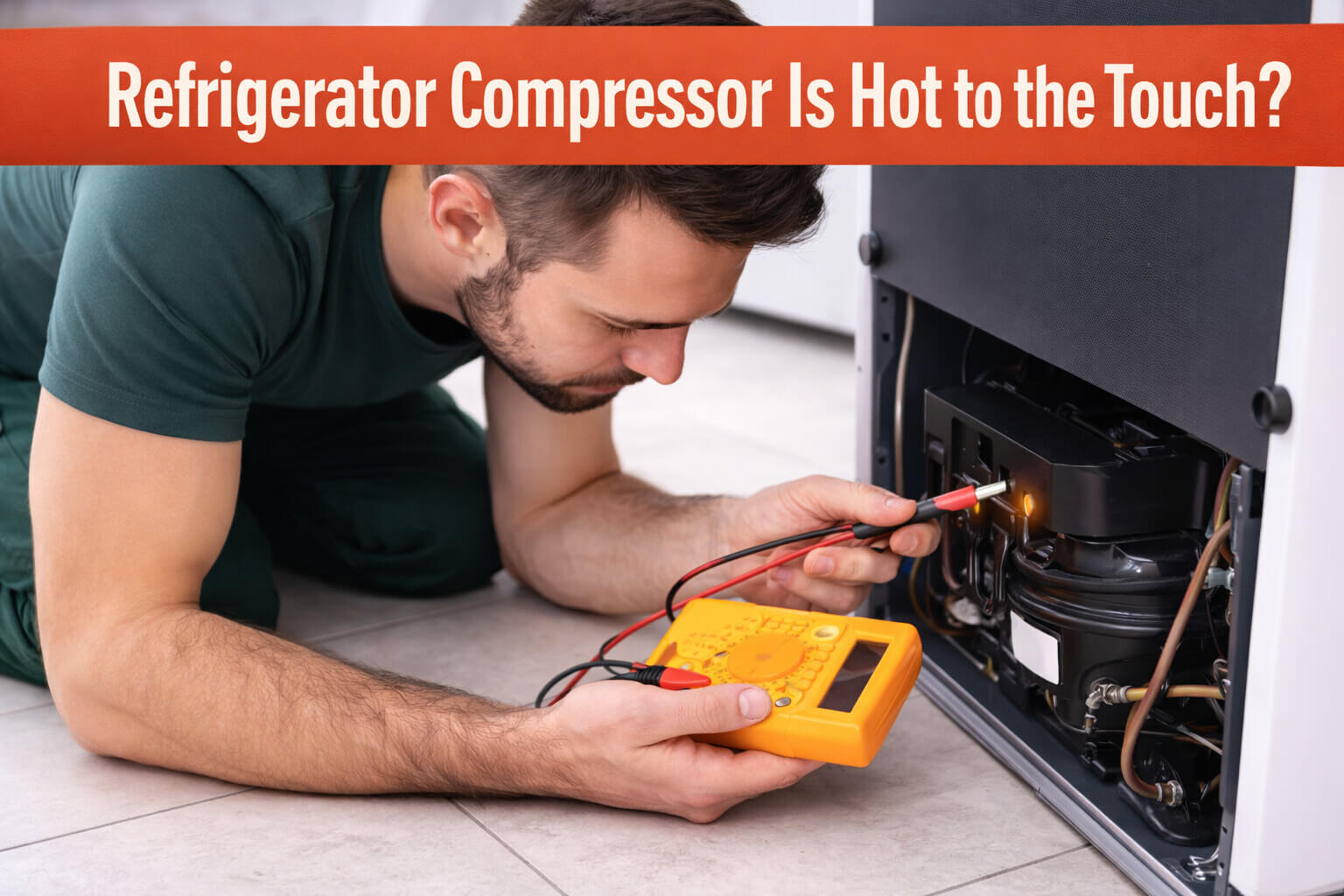
Carefully remove the plastic side cover attached to the compressor to access the three metal terminal pins (Common, Start, and Run). Next, set your digital multimeter to the lowest Ohms (Ω) setting.
- Firmly measure the resistance between Pin 1 to 2, then 2 to 3, and finally 1 to 3.
- The Failure State: If your meter displays a reading of 0.0Ω (a dead Short) or OL (an Open Line), the compressor is electrically dead. Conversely, a fully functional compressor typically displays healthy readings between 3 Ohms and 15 Ohms across all combinations.
Step 2: The Ground Fault Test
Place one multimeter probe firmly on a clean, unpainted copper section of the compressor casing. Touch the other metal probe to each of the three terminal pins sequentially.
- The Safe Result: The meter screen must display OL (Infinity/Open Loop). This proves no electricity is leaking.
- The Failure State: If any numerical reading appears on the screen, the compressor is heavily “grounded.” Consequently, it poses a severe, lethal electrocution hazard and must be replaced immediately.
Brand Specifics: LG Linear Compressor Failures
LG “Linear Compressors” possess a highly documented, incredibly high failure rate in the appliance industry. Specifically, internal exhaust valve fatigue causes this widespread issue. The metal flapper valve snaps under intense pressure.
Recognizing LG Symptoms of Failure
- The Constant Hum: The unit runs continuously at full speed without ever cycling off.
- The Extreme Heat: The black casing feels extremely hot due to non-stop, desperate operation.
- Absolutely No Cooling: The interior refrigerator maintains warm room temperature despite the compressor actively running.
The Unfortunate Verdict
You cannot repair this specific failure with external parts. LG sometimes foolishly recommends a software firmware update. However, if the compressor feels scorching hot and the fridge feels warm, it is a definitive mechanical failure.
Your Required Action: Verify your purchase date and warranty status immediately. LG often provides extended warranties (up to 10 years) covering this specific defective part. Crucially, you must never install a standard hard start kit on an LG Linear compressor, as it will cause a fire.
Brand Specifics: Samsung Inverter Compressor Diagnostics
Samsung compressors do not use standard relays. Instead, a variable-speed Inverter PCB (Printed Circuit Board) drives them. Unlike standard reciprocating models, you will absolutely not hear a mechanical relay “click” upon failure.
How to Check the Samsung Blink Codes
- First, remove the small metal access panel located on the upper rear exterior of the refrigerator.
- Next, locate the glowing Red LED securely mounted on the Inverter PCB.
Decoding the LED Blinks
- Solid Red Light: The inverter board functions perfectly. The actual issue is likely a toxic sealed system leak or a locked mechanical compressor failure.
- 3 Quick Blinks: This indicates a “Rotor Lock.” The heavy compressor attempts to start but is mechanically seized solid inside the casing.
- 5 Quick Blinks: This indicates “Low Voltage Constraint.” This blink code typically points to a fried inverter board failure or a severe house voltage irregularity.
The Samsung Fix: If the red LED blinks continuously, replace the Inverter Board immediately. If the LED remains solid red (and the compressor feels dangerously hot), you face a catastrophic sealed system failure. (See our detailed guide: Samsung Error Codes Explained).
🛠️ Recommended Samsung Part:
Generic Samsung Inverter Board Search
Important Note: You must match the exact Part Number printed on your specific green board.
The “Invisible” Problem: Toxic Freon Leaks
Sometimes, the fan works beautifully, and the coils shine. Yet, the compressor runs continuously and remains incredibly hot to the touch. In this specific scenario, the sealed system likely suffers from low refrigerant (Freon).
Compressors rely entirely on the return flow of icy-cold suction gas to safely cool their internal copper windings. Therefore, if the system leaks its Freon, the motor loses its only cooling source and overheats rapidly.
Confirming a Freon Leak
You must visually inspect the silver evaporator coils located securely in the freezer section.
- Normal Operation: A thin, beautifully even layer of white frost perfectly covers all the metal coils.
- Confirmed Leak: A massive, heavy ball of solid ice forms in one top corner, while the rest of the lower coils remain completely bare, warm metal.
If you confirm a chemical leak, the appliance is generally considered irreparable. Ultimately, the high cost of sealed system labor ($600+) makes the repair financially unwise. This dangerous repair absolutely requires a federally licensed technician.
Standard Compressors: The Start Relay Fix
For standard GE, Whirlpool, or Frigidaire models, a hot compressor that violently clicks periodically but fails to hum usually indicates a failed Start Relay/Overload Assembly.
The Cheap Fix: Carefully remove the plastic relay from the metal compressor pins. Next, shake it next to your ear. If it loudly rattles like broken glass, the internal ceramic thermistor has shattered completely. Fortunately, you can bypass this destroyed part easily. Simply replace it with a cheap “3-in-1 Hard Start Kit” to instantly revive the appliance.
The 50% Rule: Repair vs. Replace?
Compressor and toxic sealed system failures represent the absolute most expensive repairs in the entire appliance industry. We strongly recommend using the professional “50% Rule” to guide your financial decision:
- The Age Factor: If the refrigerator exceeds 10 years of age, do not replace the dead compressor. Specifically, ancillary parts (like door seals, fan motors, and control boards) are likely near the absolute end of their service life anyway.
- The Cost Factor: Professional compressor replacement easily costs between $600 and $1,200. Therefore, if this hefty repair quote exceeds 50% of the cost of a comparable brand-new refrigerator, total replacement represents the smarter economic choice.
- The Warranty Factor: Always consult the original user manual. Many modern manufacturers offer a standard 1-year warranty on the general plastic unit. However, they frequently offer a robust 5-year or 10-year extended warranty specifically covering the “Sealed System” (the Compressor).
Summary: Your Fast Action Plan
| Brand Type | Key Symptom | Likely Cause | The Solution |
|---|---|---|---|
| LG Models | Hot, Humming, No Cool Air | Linear Compressor Valve | Call LG Warranty Service |
| Samsung Models | Hot, Red PCB LED Blinking | Inverter Control Board | Replace Inverter PCB |
| Any Brand | Hot, Thick Floor Dust | Clogged Condenser Coils | Buy Coil Brush ($9) |
| Any Brand | Hot, Floor Fan Stopped | Dead Fan Motor | Buy Fan Motor ($35) |
Frequently Asked Questions (FAQ)
Is it dangerous if my Samsung compressor is extremely hot to the touch?
How do I cool down a hot refrigerator compressor quickly?
Why does my fridge make a loud clicking noise every few minutes?
How can I prevent the compressor from overheating again in the future?
Conclusion: The Ultimate Fix
In conclusion, diagnosing exactly why a refrigerator compressor very hot not cooling issue occurs is simply a matter of elimination. You must confidently test the physical airflow, clean the dusty condenser coils, and listen carefully to the heavy motor. If your condenser fan hums happily and the coils shine, the failure is inherently electrical.
Ultimately, you can save a failing system if you catch it early enough. For even deeper diagnostics on start relays, circuit boards, and severe voltage failures, be sure to explore our master resource: The Ultimate Refrigerator Electrical & Compressor Troubleshooting Guide. Staying informed is the absolute best way to protect your expensive kitchen appliances.