
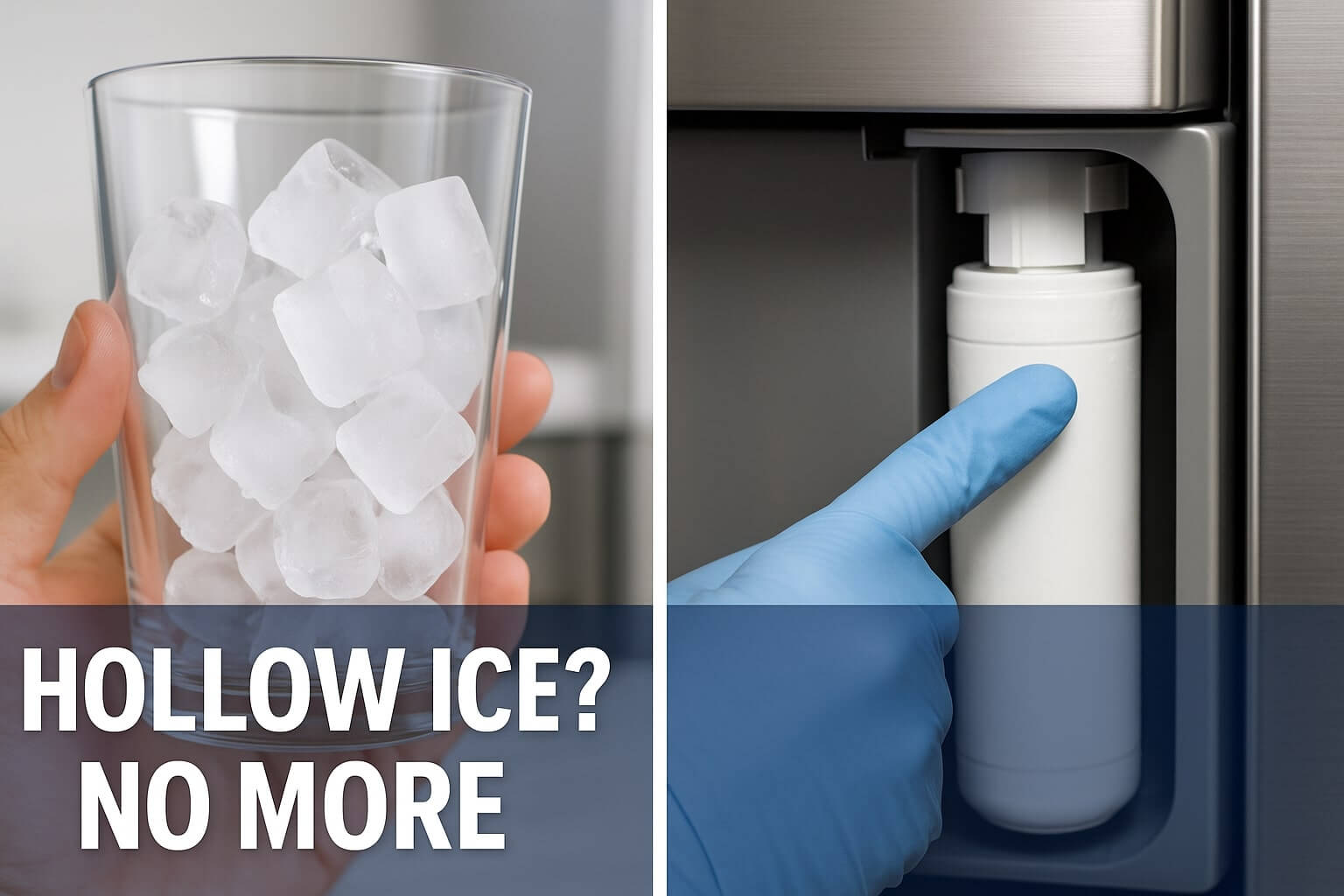
You grab a glass, press the lever on your refrigerator door, and… crunch. Instead of solid, uniform ice cubes, your dispenser spits out tiny, fragile chips. Or worse, the dispenser motor grinds and hums, but nothing comes out at all because a giant, frozen “igloo” of broken ice has jammed the chute.
If you notice your ice maker making small (or hollow) ice, you are dealing with a very specific and frustrating problem: insufficient water volume.
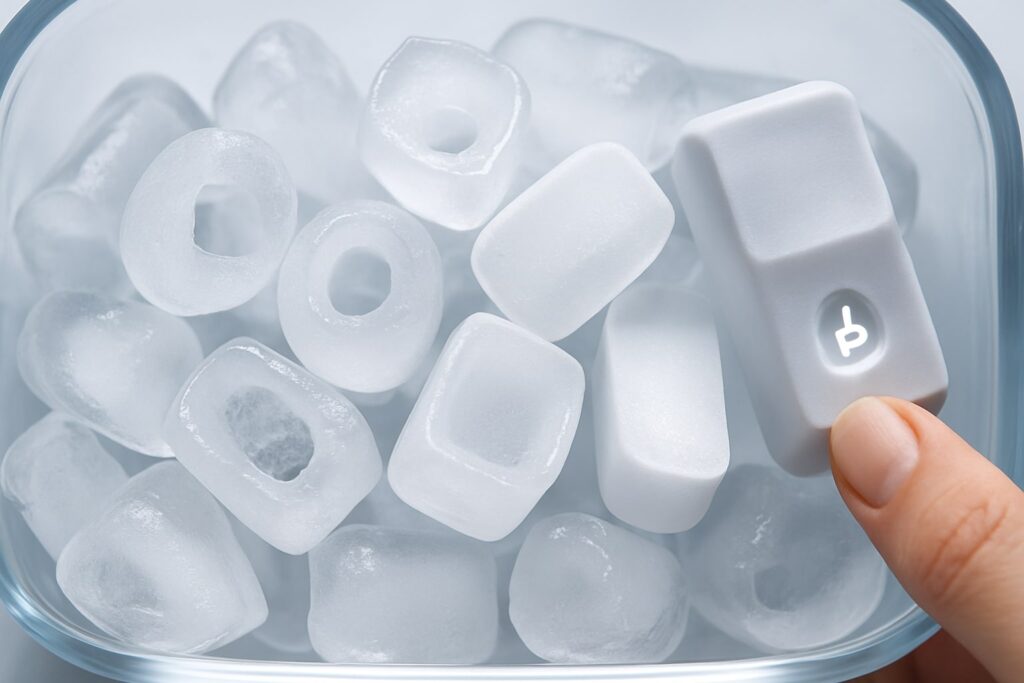
Unlike an ice maker that stops working entirely, a machine making ice maker small cubes is trying to work. The motor is running, the cycle is turning, but the ice mold isn’t filling up all the way. This creates cubes that are stunted, or deceptive “ghost cubes” that freeze on the outside but remain empty (hollow) on the inside.
These ice maker hollow cubes are more than just a nuisance—they are the #1 cause of broken ice dispensers. Because they are fragile, they crumble when they hit the bin. The unfrozen water inside them spills out, coating the surrounding ice. This slush refreezes into a solid brick, jamming your auger and potentially burning out the motor.
In this ultimate guide, we will troubleshoot the 5 main causes of low water flow, from the simple 5-minute filter fix to the advanced water valve replacement. Let’s get your ice solid again.
💡 Mentor’s Diagnostic Hub
Small or hollow ice is often just one piece of the puzzle. This guide is part of our comprehensive resource on diagnosing all refrigerator water and ice issues.
The Mechanics: Why Are My Cubes Hollow?
To fix this, you need to understand exactly how an ice maker works. It’s all about timing. Your refrigerator does not have a sensor inside the ice mold that says, “Okay, it’s full, stop the water.” Instead, it uses a timer.
When the ice maker calls for water, it sends an electrical signal to the water inlet valve to open for a specific amount of time—usually between 5 to 8 seconds. If your home has standard pressure (roughly 40-60 PSI), that mold fills perfectly. If you have low water pressure to the fridge, the mold only half-fills, resulting in ice maker small cubes or ice maker hollow cubes.
Cause #1: A Clogged Water Filter (The 90% Solution)
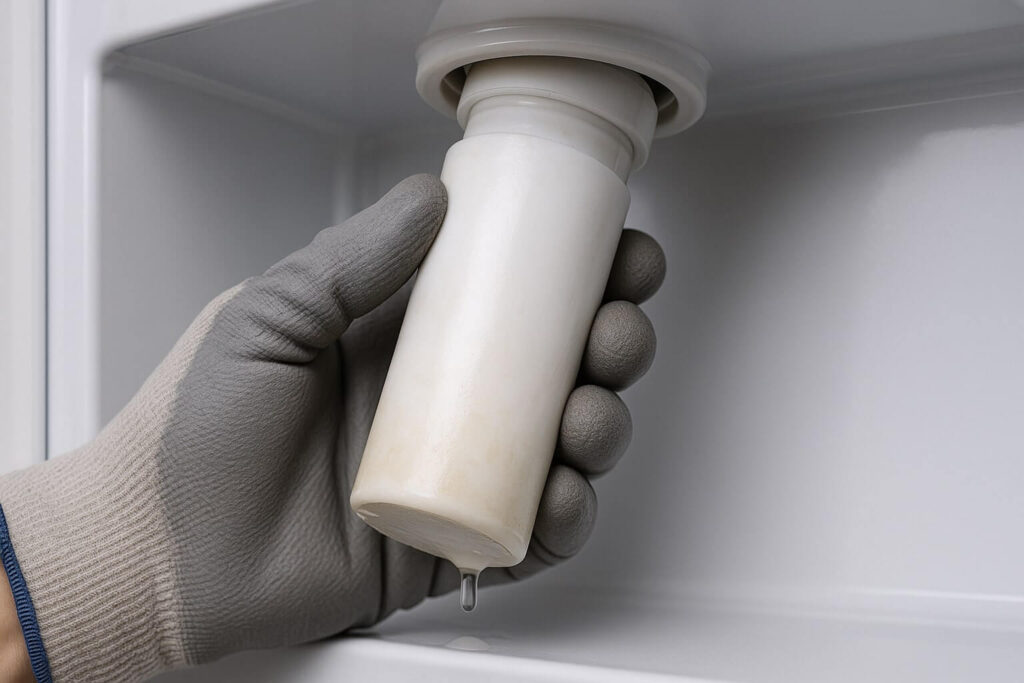
Before you pull the fridge out, check the simplest culprit. Your filter is a dense block of carbon designed to catch sediment. Over 6 to 12 months, that carbon gets packed with gunk, creating a massive bottleneck.
The “Sputter” Symptom
If you press your water dispenser and hear a “coughing” or “sputtering” sound, that is air being sucked into the line because the filter is too clogged to maintain a solid stream. This air enters the ice maker line too, causing the valve to “mist” rather than “pour,” leading to tiny, shattered ice shards.
The Fix:
- Filter Bypass: Remove your filter and install the bypass plug. If your ice size doubles in the next 24 hours, the filter was the culprit.
- Replace & Flush: Install a new refrigerator water filter and run at least 3 gallons of water through the dispenser to clear the air pockets.
Cause #2: Household Pressure and Saddle Valves
If the filter is new, the problem is likely in your home’s plumbing. Refrigerator valves are “Power-to-Open, Spring-to-Close.” They actually require a minimum of **20 PSI** just to push the internal diaphragm open fully.
The Faulty Saddle Valve
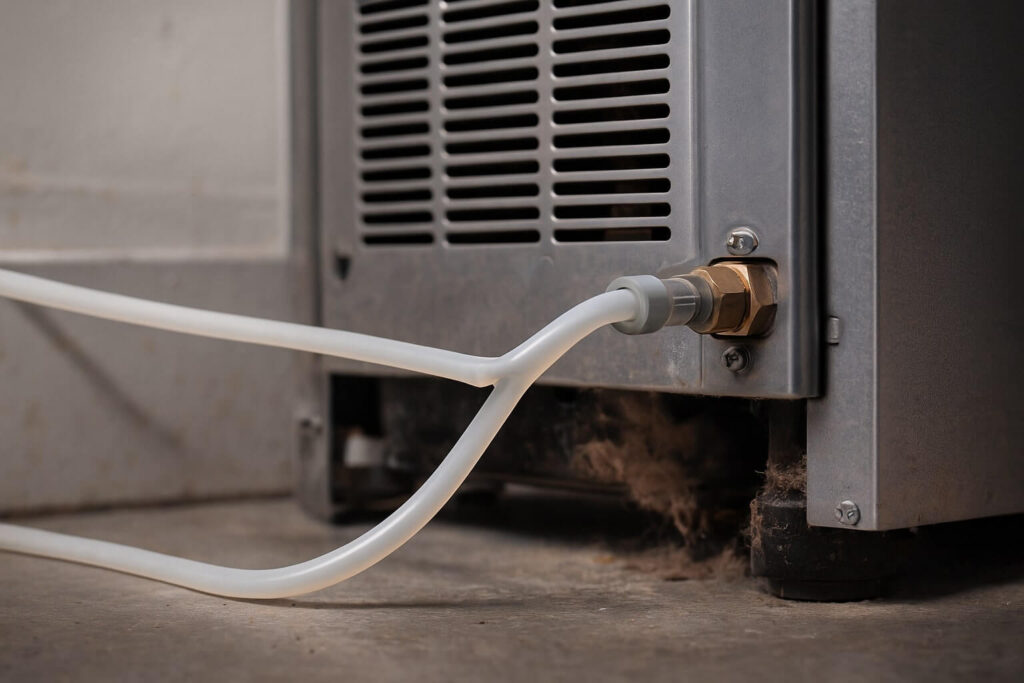
Many older fridge installations use a “Saddle Valve”—a cheap clamp that pinches a hole in a copper pipe. These are notorious for clogging with calcium. Over time, the tiny hole becomes restricted. You might have 60 PSI in your house, but only 5 PSI reaching the fridge.
The Test: Disconnect the water line from the back of the fridge and aim it into a bucket. Turn on the wall valve. If the water doesn’t come out with the force of a garden hose, your wall valve or supply line is blocked.
Cause #3: The Reverse Osmosis (RO) Conflict
Reverse Osmosis systems are the enemy of automatic ice makers. An RO system works by pushing water through a membrane, which naturally kills the water pressure. Most RO tanks only output 15-25 PSI.
The Fix: If you use an RO system, you **must** install a booster pump or a dedicated “Demand Pump.” This pump detects when the fridge asks for water and manually ramps the pressure up to 60 PSI so the ice maker can fill properly.
Cause #4: Electrical Solenoid Failure (Multimeter Testing)
If your plumbing is perfect, the water inlet valve is failing. The valve contains an electromagnetic coil (solenoid). If that coil is “weak,” it won’t pull the valve stem up high enough for full flow.
Advanced Diagnostic:
- Unplug the Fridge: Safety first.
- Access the Valve: Remove the lower rear panel.
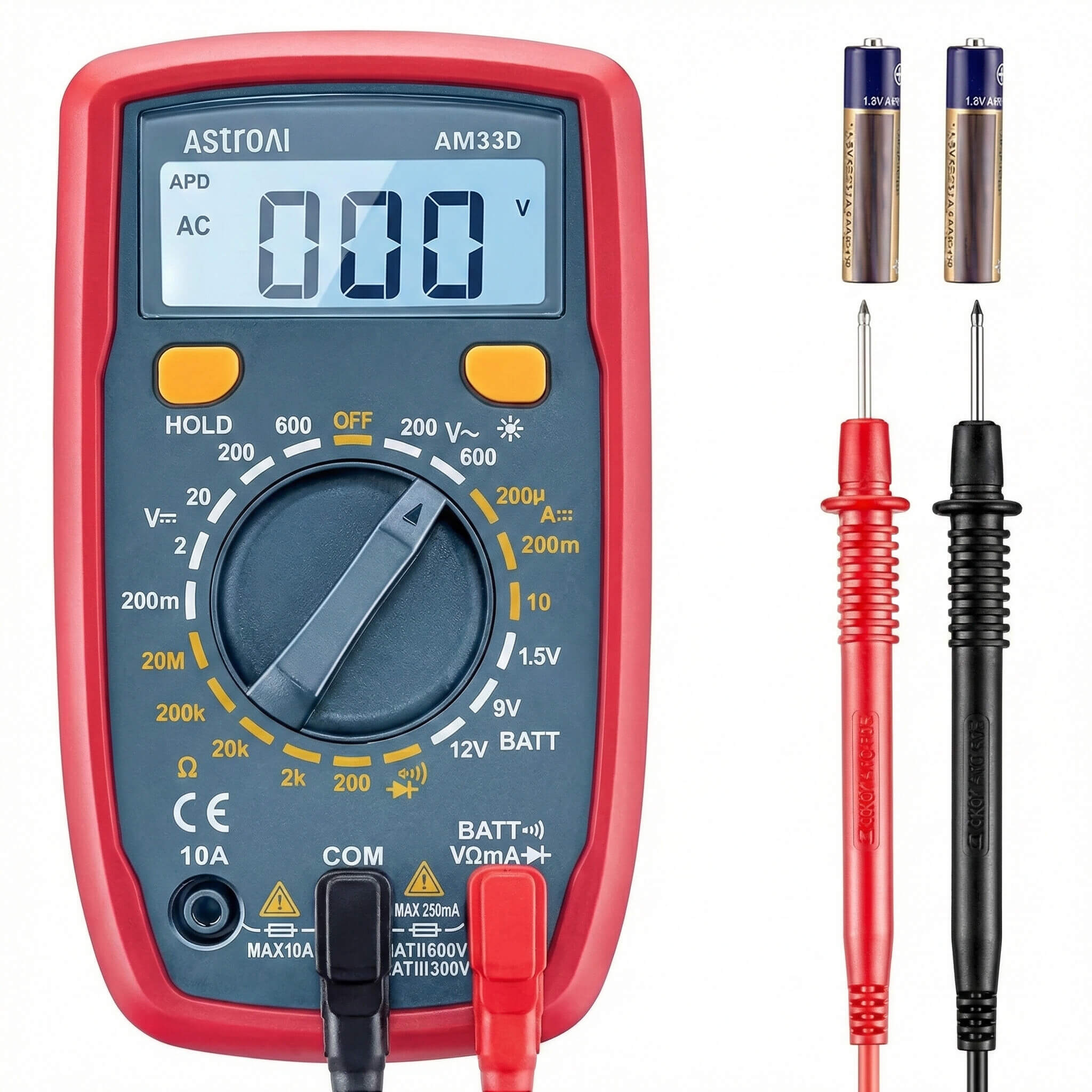
- Check Ohms: Set your multimeter to the Ohms (Ω) setting. Touch the probes to the two terminals on the ice maker solenoid. You should see a reading between 200 and 500 Ohms. If the reading is significantly lower or higher (or “OL”), the coil is burned out and causing your ice maker small cubes.

Model-Specific Troubleshooting Guide
| Refrigerator Brand | Common Hollow Ice Cause | Specific Fix |
|---|---|---|
| Samsung | Air leaks in Ice Room | Seal the ice room cabinet with RTV silicone. |
| Whirlpool / Maytag | Clogged Inlet Screen | Replace the Dual Water Inlet Valve assembly. |
| LG | Frozen Fill Tube | Thaw the ceiling fill tube with a hairdryer. |
Cause #5: Manual Fill Adjustment (The Last Resort)
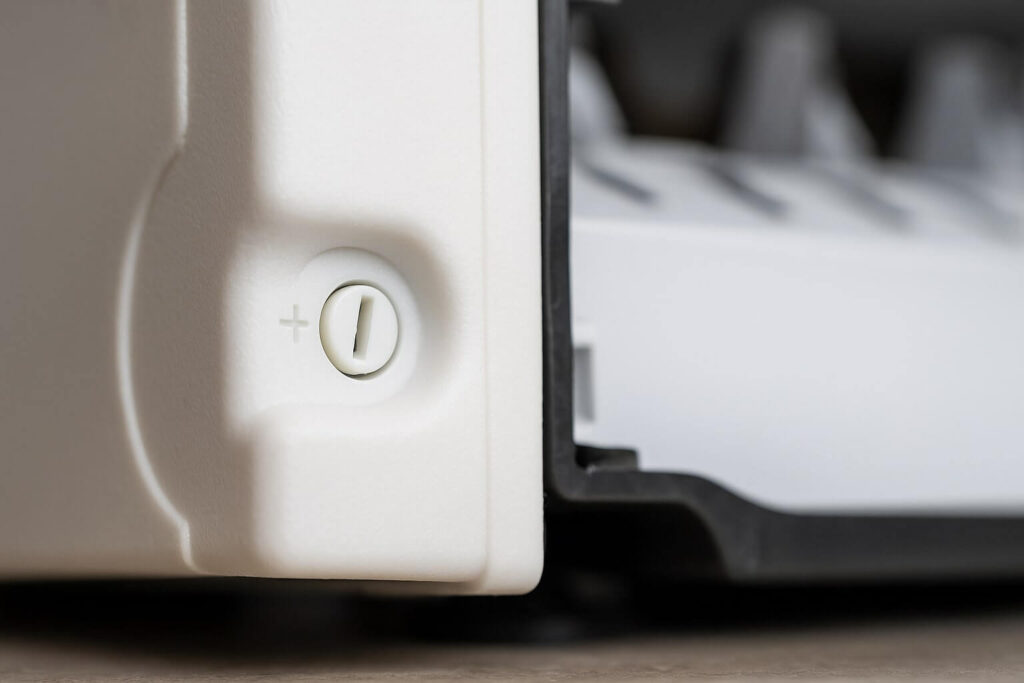
If you have an older “Modular” Whirlpool or KitchenAid unit, you can manually adjust the water dose. Pop off the front white cover. Look for a small plastic screw marked with + and –. One full turn toward the **(+)** side adds about 1.5 seconds of water flow.
Frequently Asked Questions (FAQ)
Why is my ice hollow only sometimes?
Can I just leave hollow ice alone?
Should I clean my water inlet valve screen?
Conclusion
Ice maker small cubes are rarely a sign of a broken motor—they are a cry for more water. By systematically checking your filter, supply lines, and inlet valves, you can restore your ice to its full, solid potential and protect your expensive dispenser motor from damage. Don’t let a $40 filter problem turn into a $2,000 appliance replacement.