

You open the door to grab a cold drink, and you are hit with a wall of stench. Whether it is the lingering scent of old fish, spoiled milk, or that mystery tupperware in the back, figuring out how to clean smelly fridge interiors is a task no one enjoys—but everyone faces.
When a refrigerator smells like rotten food, it is not just gross; it affects the taste of your fresh groceries. Your butter starts tasting like onions, and your ice cubes taste like garlic.
Even worse, a persistent bad smell can indicate mold or bacteria hiding in places you can’t see, like the drain pan or the door gaskets.
In this ultimate guide, we will show you exactly how to clean smelly fridge odors for good. We won’t just mask the smell; we will find the source, scrub it out, and use the right deodorizers like baking soda in fridge corners to keep it fresh.
💡 Mentor’s Diagnostic Hub
A persistently smelly fridge often points to hidden biological growth or a failing drainage system. This deep-cleaning guide is part of our comprehensive master series on tracking down and eliminating every bizarre odor and noise your appliance makes.
Why Does My Refrigerator Smell Like Rotten Food?
Before you start scrubbing, it helps to know what you are fighting.
Most bad smells are caused by bacteria or mold.
- Spoiled Food: As food decomposes, it releases gases (like methane and ammonia). Plastic liners in fridges are porous and absorb these gases.
- Spills: A few drops of meat juice or milk that seeped under a crisper drawer can rot for months unnoticed.
- Mold: Moisture + darkness + food residue = mold growth in the corners and seals.
If your refrigerator smells like rotten food even after you have thrown the bad food away, the bacteria has likely moved onto the surfaces of the fridge itself.
Step 1: The Total Purge (Empty It Out)
You cannot clean around the food. To truly learn how to clean smelly fridge shelves effectively, you must start with a blank slate.
The Process:
- Clear Everything: Take every single item out of the fridge. Place perishables in a cooler with ice packs if you plan to take longer than 30 minutes.
- The Sniff Test: As you remove items, sniff them. That jar of pickles from 2022? Toss it. The ketchup bottle with the crusty cap? Wash it.
- Remove Shelving: Take out all removable shelves, crisper drawers, and door bins. Carry them to the sink. It is much easier to deep clean them in soapy water than to try and wipe them down inside the fridge.
Step 2: Washing Parts Before You Learn How to Clean Smelly Fridge Shelves
Now that the “guts” of the fridge are in your sink, it is time to scrub.
The Solution: Use hot water and standard dish soap. For tough odors, add a cup of white vinegar to the sink water.
- Soak: Let the crisper drawers soak for 10 minutes to loosen dried vegetable flakes or sticky spills.
- Scrub: Use a non-abrasive sponge to scrub every corner. Bacteria loves to hide in the tracks where the drawers slide.
- Dry: Dry them completely with a towel. Putting wet drawers back in promotes new mold growth.
Step 3: How to Clean Smelly Fridge Interiors (The Deep Scrub)
This is the most important step. You need to disinfect the walls and floor of the fridge.
The Best Cleaning Mixture:
- 1 Quart Hot Water
- 2 Tablespoons Baking Soda
- (Optional) A splash of lemon juice for a fresh scent.
Why Baking Soda? Using baking soda in fridge cleaning solutions is better than soap because baking soda acts as both a mild abrasive (to scrub off stuck-on food) and a chemical neutralizer for acid-based odors.
The Method:
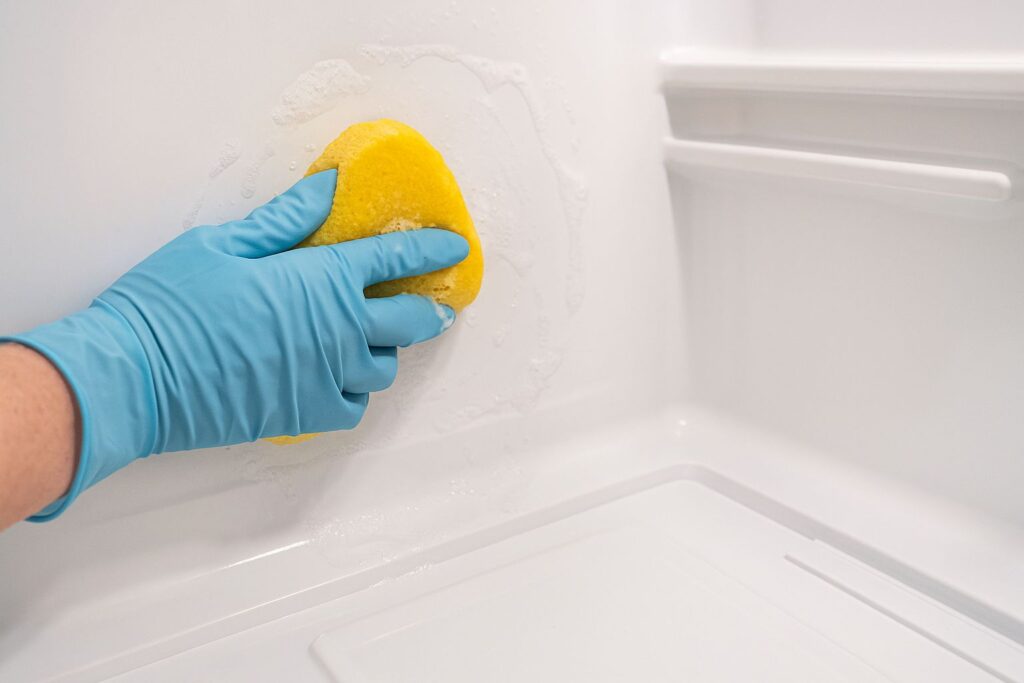
- Wipe Down: Dip a sponge in your mixture and wipe the ceiling, walls, and floor of the fridge.
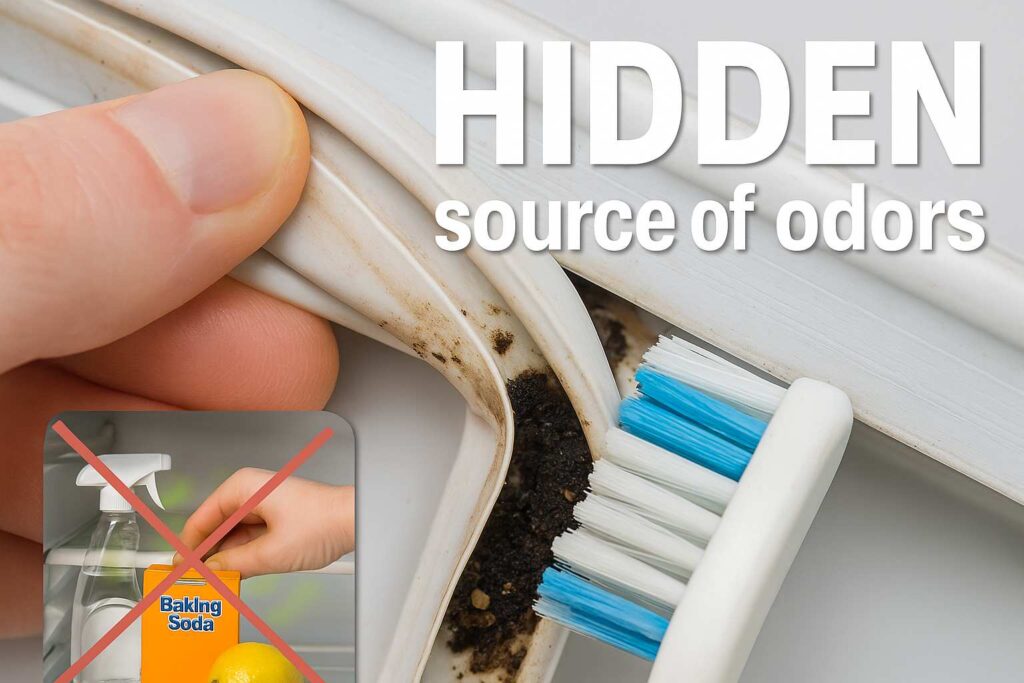
- The Gasket: Don’t forget the rubber door seal! Gently pull back the folds of the rubber. You will likely find crumbs and mold hiding there. Clean this with an old toothbrush.
- The Shelf Tracks: Use a Q-tip to clean the grooves where the shelves hook in. This is a prime spot for “mystery goo” to collect.
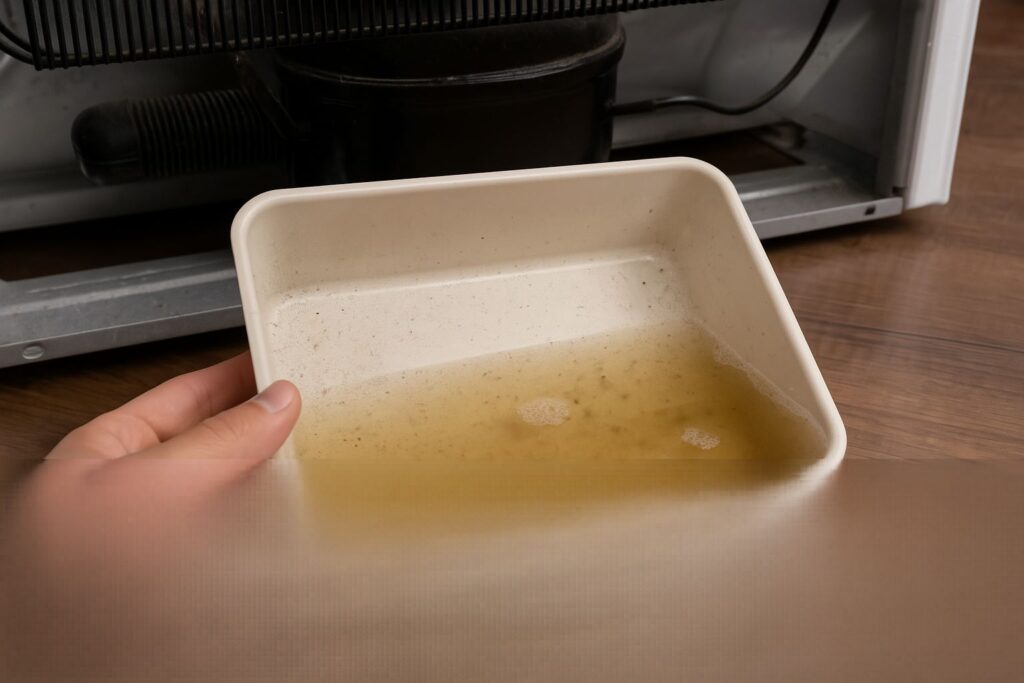
Step 4: The Drip Pan (A Secret to How to Clean Smelly Fridge Odors)
If you have scrubbed everything and the refrigerator smells like rotten food still, the smell isn’t in the fridge. It’s under it.
The Problem: Your fridge has a “drip pan” underneath it that catches water from the defrost cycle. If this water sits too long or gets contaminated with dust and bugs, it becomes a swamp.
How to Fix It:
- Locate: Remove the front kick-plate (grille) at the bottom of the fridge.
- Remove: On many models, you can slide the plastic pan out.
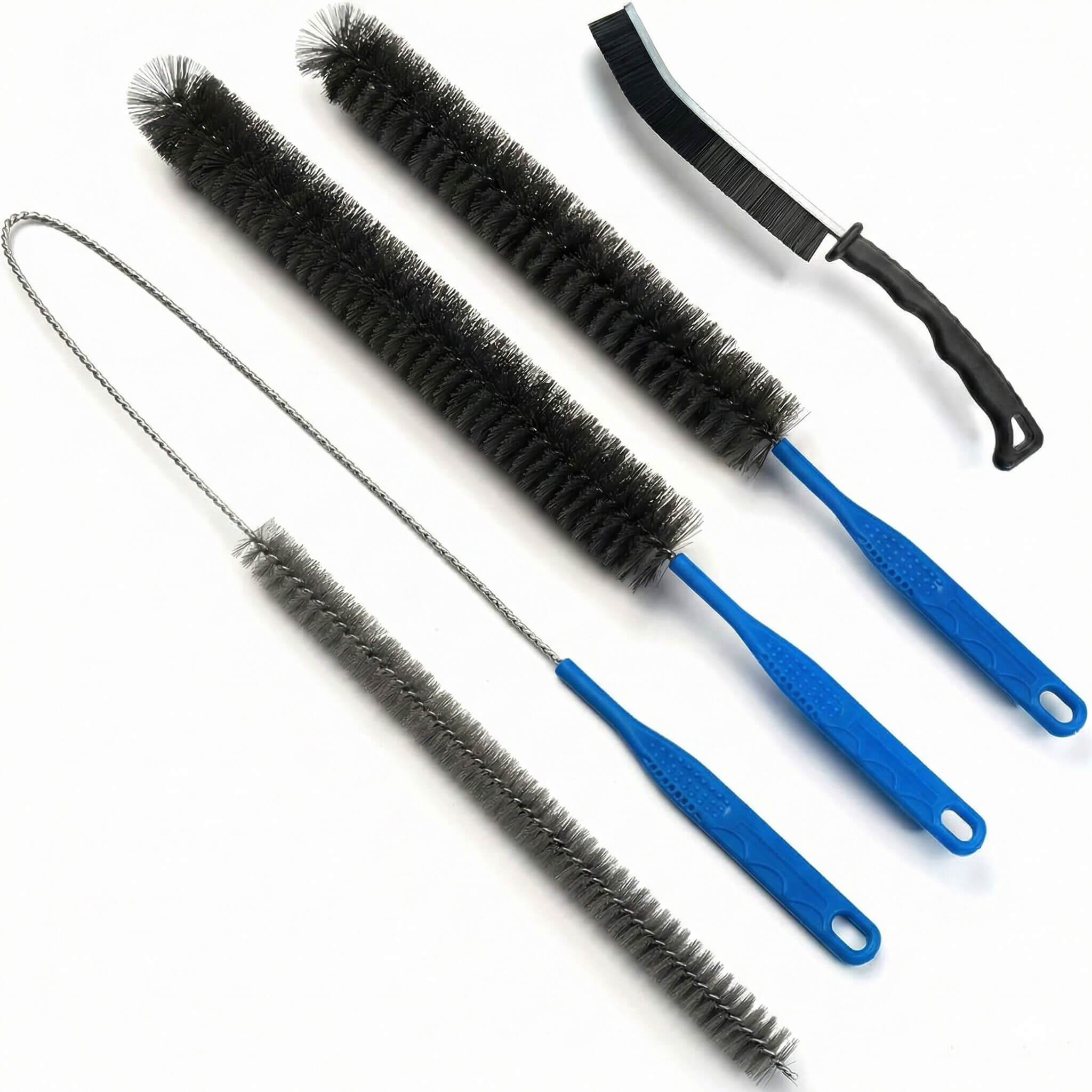
- Clean: Wash it with hot soapy water and bleach. If you can’t remove it, use a long-handled brush and a turkey baster to suck out the dirty water and clean it in place.
If the pan is overflowing, you might have a bigger issue. Check our guide on refrigerator leaking water on the floor.
Step 5: Using Baking Soda in Fridge for Maintenance
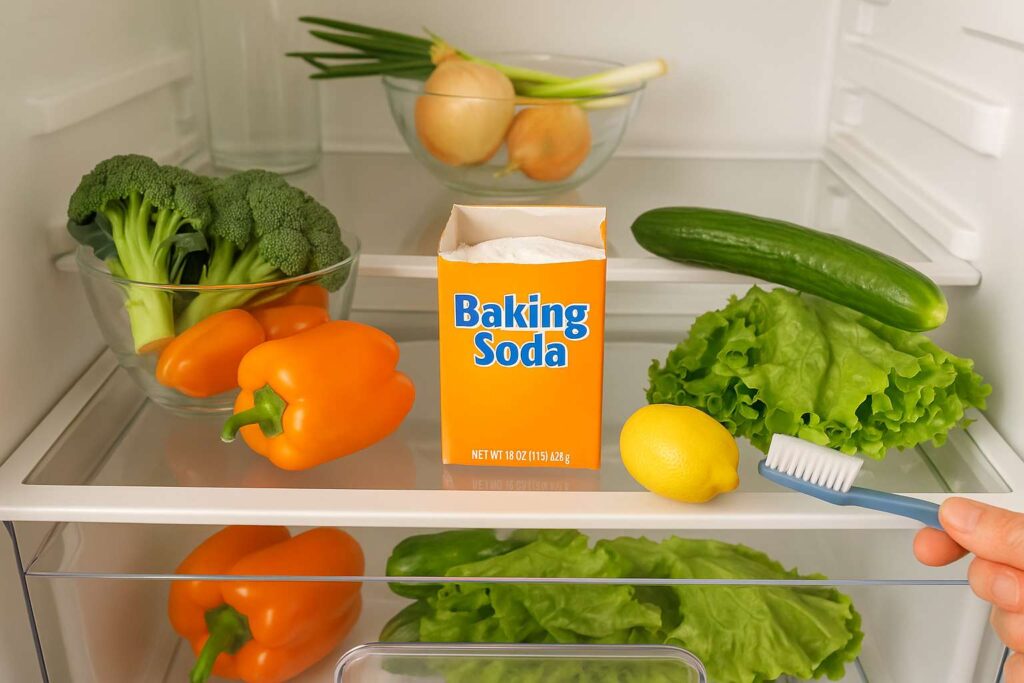
Once the fridge is clean, you need to keep it that way. The classic box of baking soda in fridge is a cliché for a reason: it works scientifically.
How It Works: Bad smells are usually either acidic (like sour milk) or basic (like rotten meat). Baking soda (sodium bicarbonate) is amphoteric, meaning it reacts with both acids and bases to neutralize them into harmless salts.
Best Practice:
- The Box: Open a fresh box of baking soda and place it on the back of the middle shelf.
- The Rotation: Change this box every 3 months. Write the date on the box so you don’t forget.
- Spread It Out: For a severe smell, pour the baking soda onto a rimmed baking sheet and leave it in the fridge overnight. The increased surface area absorbs odors faster.
Step 6: Advanced Tips on How to Clean Smelly Fridge Plastic
If knowing how to clean smelly fridge surfaces wasn’t enough, and the smell persists, it might have seeped into the plastic liner itself. You need stronger ammunition.
1. Activated Charcoal Charcoal is more porous than baking soda. It traps smaller odor molecules. You can buy activated charcoal refrigerator deodorizers that are compact and highly effective.
2. The “Newspaper” Trick Crumple up balls of black-and-white newspaper and stuff them into the fridge shelves and drawers. Close the door for 2-3 days (remove food first). The carbon ink and porous paper help absorb deep-set odors from the plastic.
3. Vanilla Extract Soak cotton balls in pure vanilla extract and place them in the corners of the fridge. This doesn’t just mask the odor; the alcohol in the extract helps neutralize bacteria while leaving a pleasant scent.
Step 7: Check the Air Filter
Did you know your modern fridge might have its own air filter?
The Problem: Many newer GE, LG, and Whirlpool models have a “Fresh Air Filter” (separate from the water filter). It is usually located on the back wall or ceiling of the interior. It contains carbon to scrub the air.
The Fix: If this filter is old, it stops working and can actually start releasing bad smells.
- Check your manual: See if your model has one.
- Replace it: These refrigerator air filters are cheap and typically need replacing every 6 months.
Related Issues: Chemicals and Burning
Sometimes the smell isn’t food.
- Chemicals: If the refrigerator smells like chemicals (nail polish remover/ammonia), it might be a refrigerant leak or a reaction to a cleaning product. Read our guide on why does my refrigerator smell like chemicals to be safe.
- Burning: If it smells like electrical fire, check the compressor start relay. See our guide on refrigerator making a clicking noise for details on electrical failures.
Frequently Asked Questions (FAQ)
Can I use bleach to clean my fridge?
Why does my fridge smell even after cleaning it?
How do I get rid of the smell of rotten meat?
How long does it take for the smell to go away?
Conclusion: A Fresh Start
Learning how to clean smelly fridge odors is a rite of passage for every homeowner. It is a dirty job, but the reward is fresh-tasting food and a kitchen that feels clean again.
Your Action Plan:
- Purge: Throw out old food.
- Scrub: Clean the gaskets and shelves with vinegar/water.
- Check: Don’t forget the drip pan underneath.
- Deodorize: Place a fresh box of baking soda in fridge shelves.
By following this routine, you can banish the stink and keep your appliance smelling like new.