
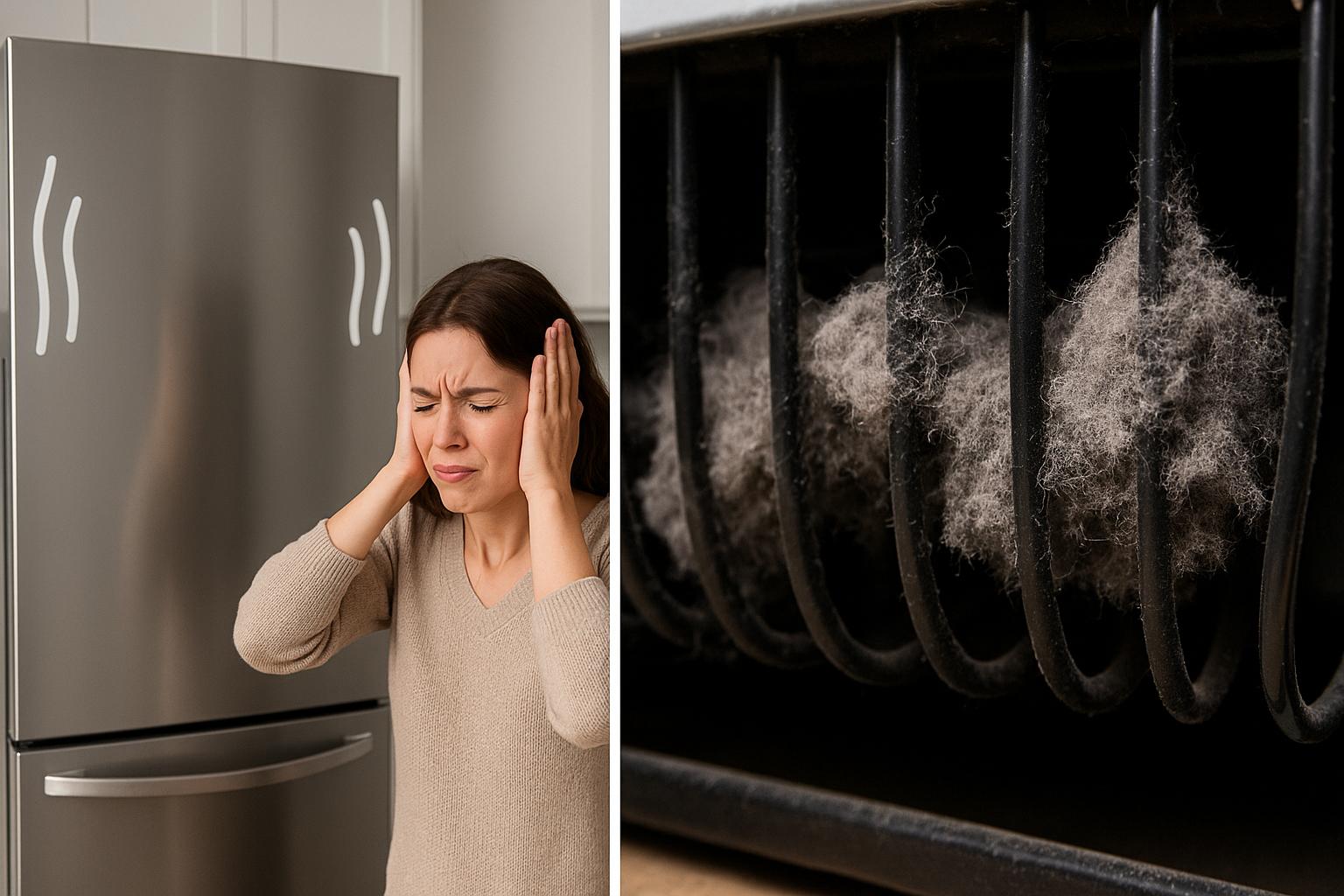
You are sitting in your kitchen enjoying a quiet moment, but there is a background noise that just won’t quit. That low hum, buzz, or drone from your appliance never seems to shut off. If you suddenly notice your refrigerator running constantly, it is more than just an auditory annoyance—it is a critical mechanical warning sign.
A healthy, efficient refrigerator is designed to cycle on and off throughout the day. It runs the compressor to pull the internal temperature down, then it rests in complete silence when the target temperature is successfully reached.
If your refrigerator won’t stop running, it means the appliance is working in a state of constant panic to keep your food cold. This continuous duty cycle leads to skyrocketing electricity bills, extreme premature wear on the expensive compressor motor, and eventually, total sealed system failure.
The good news? The most common cause is incredibly simple to fix and usually involves nothing more than removing dust.
In this comprehensive diagnostic guide, we will walk you through the 5 specific reasons your fridge is running a marathon, including exactly how to clean refrigerator coils safely, how to check your magnetic door seals, and how to troubleshoot a failing automated defrost system.
💡 Mentor’s Diagnostic Hub
Dealing with a noisy, overworked fridge? Continuous running is the leading cause of early compressor death. Learn how to diagnose every part of your appliance’s sealed system and airflow.
The “Normal” Run Time: How Long Should It Actually Run?
Before you grab your toolbox and assume the worst, let’s definitively define what “constantly” means in the appliance world.
Modern, high-efficiency refrigerators are designed much differently than the clunky fridges from the 1990s. They actually utilize smaller, variable-speed compressors that are designed to run longer (but at a much lower, quieter speed) to save electricity.
- The Standard Cycle: A typical, healthy modern fridge runs about 35% to 50% of the time in a standard 70°F climate-controlled home.
- The Summer Cycle: In the peak of hot weather, or in humid, non-air-conditioned kitchens, it is perfectly normal for it to run 80% to 90% of the time.
- The Red Flag: If your fridge runs 100% of the time (it literally never shuts off for a 20-minute rest), the exterior side walls are blistering hot, and the compressor sounds like it is straining, you absolutely have a problem that requires immediate attention.
Cause #1: Dirty Condenser Coils (The #1 Reason for a Refrigerator Running Constantly)
This is the definitive culprit in nearly 80% of service calls for this specific symptom. If you have lived in your home for over a year and have never actively cleaned behind or underneath your fridge, this is almost certainly your problem.
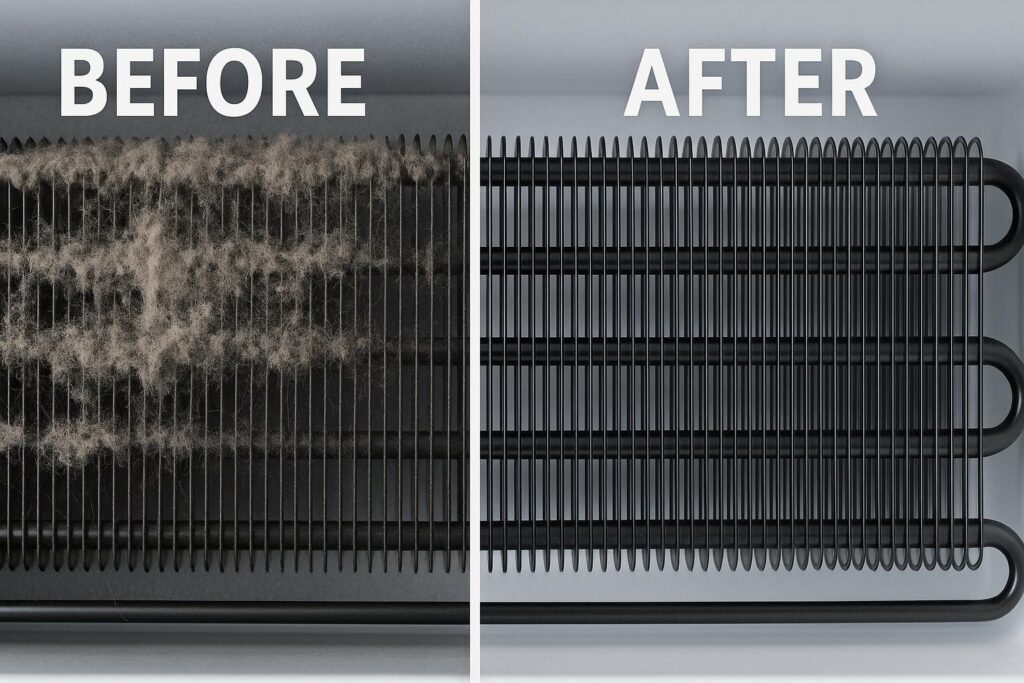
The Problem: Your refrigerator works by removing heat from the inside cabin and violently releasing it into your kitchen. It does this through winding black metal tubes called condenser coils. Because these coils sit near the floor, they act as a massive magnet for household debris. If these coils get heavily coated in thick dust, pet hair, and lint, they physically cannot release that heat into the room.
The Result: The compressor has to run non-stop to compensate for the trapped, suffocating heat. It’s exactly like forcing an athlete to run a marathon while wearing a thick winter coat; the engine will eventually overheat and collapse.
How to Fix It (Deep Clean): This is the single best preventative maintenance task you can do. Learning exactly how to clean refrigerator coils will lower your energy bill instantly.
- Locate the Coils: On older or basic fridges, they are mounted on the entire back wall (easy to see). On modern models, they are tucked underneath the chassis, accessible either from the front (by pulling off the plastic kick-plate) or from the lower rear (behind a cardboard machine panel).
- Unplug the Unit: Safety first. Never stick metal tools near live 120V wiring or spinning cooling fans.
- Vacuum the Dust: Use a long vacuum hose crevice attachment to suck out the massive, loose dust bunnies first.
- Brush the Coils: You absolutely must use a specialized flexible refrigerator coil brush to scrub deep between the delicate metal tubes. A standard broom will not work.
- Final Vacuum: Suck up all the newly loosened dust floating in the air, put the panels back on, and plug it in.
Result: Once the coils can finally breathe, your fridge should successfully cycle off within an hour or two.
Cause #2: Low Temperature Settings Causing Refrigerator Running Constantly
Sometimes, the problem isn’t a broken mechanical part at all; it’s simply an unrealistic user setting demanding too much from the machine.
The Problem: If you set your fresh food section to 33°F or 34°F, the compressor has to work incredibly hard to achieve and maintain that near-freezing environment, especially every time you open the door and let warm air in. This is entirely unnecessary for food safety and directly leads to a refrigerator running constantly just to fight the ambient room temperature.
The Fix:
- Check the Setting: The ideal, FDA-recommended temperature is 37°F (3°C) for the fresh food fridge and 0°F (-18°C) for the freezer compartment.
- Adjust Upwards: If you are lingering at the absolute bottom of the temperature range, manually bump the digital dial up to 38°F.
- Verify: Use a cheap, external appliance thermometer placed in a glass of water to verify the true temperature. If the fridge is actually running much colder than the setting you chose (e.g., set to 38°F but freezing your lettuce), you definitely have a refrigerator freezing food issue, which points to a broken thermistor sensor or a stuck damper door, not just a bad setting.
Cause #3: Defective Door Gaskets (Why Your Refrigerator Won’t Stop Running)
Your fridge is desperately trying to cool the food inside, but if the magnetic door seal has failed, it’s actually trying to air condition your entire kitchen.
The Problem: The thick rubber seal (the gasket) around your doors is critical. It keeps the heavy, dense cold air safely inside and the warm, humid room air outside. If this rubber seal becomes torn, warped, permanently compressed, or coated in sticky food residue, warm air will constantly leak inside the cabin. The internal thermostat senses this continuous influx of heat and screams at the compressor to keep running to fight it.
The Diagnostic Test:
- Visual Inspection: Closely examine the entire perimeter of both doors. Look for physical cracks, tears in the folds, or black mold deteriorating the rubber.
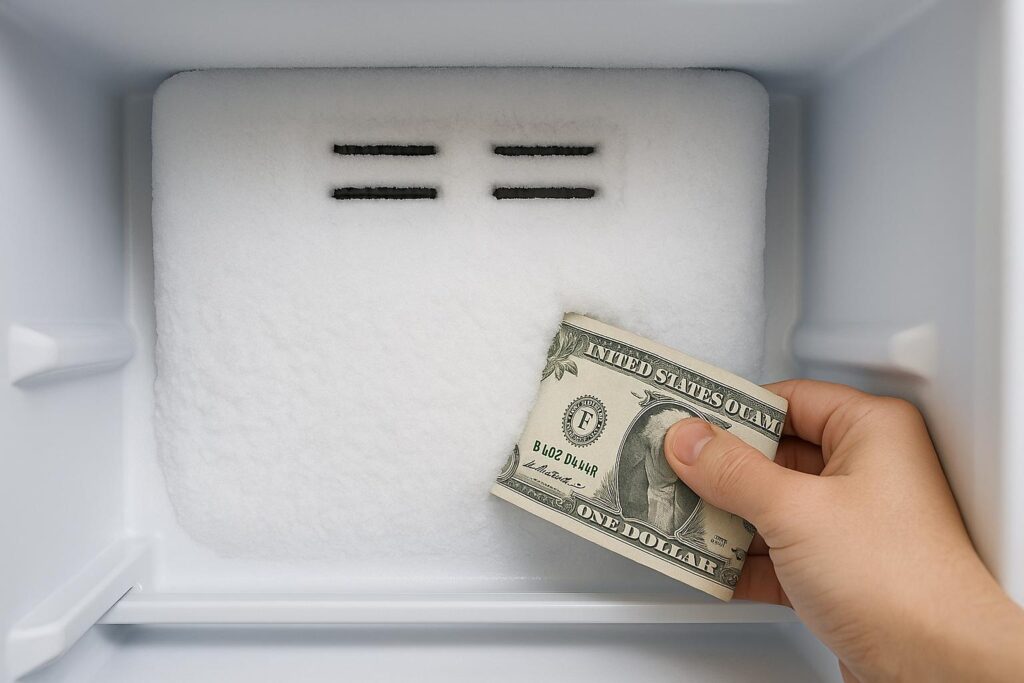
- The Classic Dollar Bill Test: Open the fridge door and place a crisp dollar bill or a piece of paper halfway across the rubber seal. Close the door firmly on the paper. Now, try to pull the bill out slowly.
- Resistance: If there is a noticeable, strong drag as you pull, the magnetic seal is gripping properly.
- Slips Out Easily: If the paper slides out with zero resistance, the seal has failed and is actively leaking air. You must test the entire perimeter of the door this way.
The Solution: First, try scrubbing the gasket and the metal door frame with warm, soapy water (often, a simple spill of sticky juice prevents the magnet from making contact). If the rubber is physically torn or deformed, you must order a replacement refrigerator door gasket specifically for your model number. Modern gaskets simply press firmly into a plastic groove—no messy glue or screws required.

Cause #4: Defrost Failure Leading to a Refrigerator Running Constantly
This specific mechanical issue is incredibly deceptive because the fridge will audibly run constantly, but the interior will actually get warmer and warmer over time, ultimately ruining your food.
The Problem: Every 8 to 12 hours, your refrigerator is programmed to turn on a hidden glass heating element to melt ambient frost off the internal cooling coils. If the electronic defrost heater, the defrost timer, or the bi-metal defrost thermostat fails, this melting cycle never occurs. Ice rapidly builds up over the coils inside the freezer wall.
The Effect: A massive, solid wall of ice physically blocks the internal fan from blowing cold air into the cabin. The thermostat senses the fridge is getting dangerously warm and commands the compressor to “Run! Run! Run!” The compressor obediently runs 24/7, resulting in a refrigerator running constantly, but the cold air is trapped behind the ice block and never reaches your food.
How to Diagnose:
- Check the Freezer Wall: Remove your food and look closely at the very back plastic wall of the freezer compartment. Do you see a heavy bulging buildup of white frost or solid snow (not just on the frozen pizza boxes, but erupting from the vent slots on the wall itself)?
- Check the Temp Imbalance: Is the freezer still freezing, but the fresh food fridge section is completely warm? This is the hallmark sign of an airflow blockage caused by ice. Read our dedicated guide on what to do when your freezer is cold but the fridge is warm for the complete fix on this specific problem.
Cause #5: A Failing Component (Motors or Sealed System)
If you have verified that the condenser coils are spotless, the door seals pass the dollar bill test, and there is zero ice buildup inside the freezer, you are unfortunately dealing with a core mechanical failure in the sealed system.
Possibility A: The Condenser Fan Motor Is Dead
This specific fan sits directly next to the compressor at the bottom rear of the unit. Its sole job is to blow room air over the hot compressor and coils to cool them down. If this electrical fan motor burns out, the compressor severely overheats and runs highly inefficiently, staying on constantly just to achieve minimal cooling.
- The Check: Pull the fridge away from the wall and carefully remove the lower back panel. Look at the fan blade next to the compressor. Is the fan spinning rapidly while the compressor is humming? If the compressor is hot but the fan is dead still, you need to order a new condenser fan motor immediately.
Possibility B: A Sealed System Leak (Low Freon)
This is the absolute worst-case scenario in appliance repair. If your fridge has developed a microscopic pinhole leak in the copper tubing, the refrigerant gas (Freon) has slowly escaped into your kitchen. Without enough gas to absorb heat, the compressor runs 24/7 trying desperately to reach a freezing temperature it can physically never achieve again.
- The Check: If the fridge runs constantly, the coils are perfectly clean, the fans are all spinning, but the interior is essentially completely room temperature, you likely have a catastrophic sealed system leak. This requires an EPA-certified professional to braze the lines and recharge the gas, which is often so expensive that buying a new refrigerator is the wiser choice. Review our guide on refrigerators that run but won’t cool for final confirmation.
Related Symptoms: What Else is Happening?
A fridge that won’t stop running is under immense physical stress, which almost always triggers secondary, highly noticeable issues.
- Strange Noises: Is the constant running accompanied by a harsh, metallic clicking sound? This means the overworked compressor is dangerously overheating and an internal overload switch is actively tripping to prevent a fire. Check our diagnostic guide on a refrigerator making a clicking noise immediately to test your start relay before the compressor dies permanently.
- Pooling Water: If the constant running forces the internal evaporator coils to freeze over, and then those massive ice chunks melt all at once during a manual defrost or power outage, the small drain pan will overflow. If you suddenly find your refrigerator leaking water on the floor, you likely have a frozen or clogged defrost drain tube that needs flushing.
Frequently Asked Questions (FAQ)
Will a brand new refrigerator run constantly?
Why are the exterior side walls of my refrigerator so hot?
Does a fridge naturally run more in the summer?
How much extra electricity does a constantly running fridge actually use?
Conclusion: Give Your Overworked Fridge a Break
A refrigerator running constantly without ever cycling off is a literal mechanical cry for help. It is actively trying to tell you that it physically cannot breathe, or that it cannot keep the cold air safely locked inside the cabin.
Your Quick Action Plan:
- Clean the Coils: Aggressively vacuum the condenser coils at the bottom. This solves 80% of constant running problems immediately.
- Check the Seals: Perform the dollar bill test to ensure the magnetic rubber gaskets are gripping tightly all the way around both doors.
- Monitor the Frost: Look for thick, bulging snow on the freezer back wall, which indicates a complete failure in the automated defrost circuitry.
By taking just 20 minutes to perform these simple, routine maintenance steps, you can stop the annoying noise, lower your monthly electric bill, and confidently extend the life of your expensive appliance by years.