
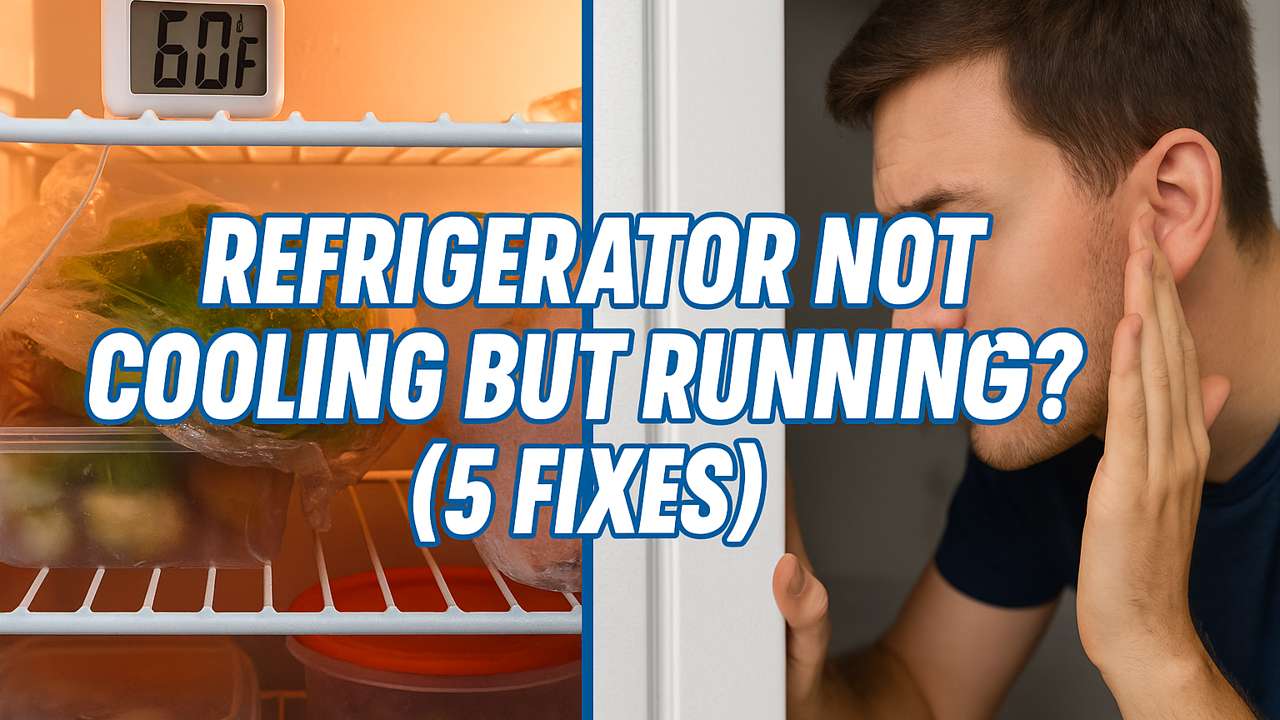
Is your refrigerator not cooling even though you can clearly hear the motor humming? This is one of the most frustrating appliance problems to diagnose. You know the unit isn’t completely “dead” because the lights are on and the engine is actively running, yet your milk is spoiling, your produce is wilting, and your drinks are uncomfortably lukewarm.
To most homeowners, it feels like a contradiction. If the refrigerator is running and using electricity, shouldn’t it be cold?
Usually, this specific symptom means the “engine” (the compressor) is working, but the “delivery system” (the internal fans and air vents) is failing. The cold air is technically being created within the sealed system, but it is trapped and isn’t getting to your food.
In this guide, we will troubleshoot the 5 most common reasons for a refrigerator not cooling while running, ranging from simple five-minute airflow blockages to more complex electrical failures like bad thermistor symptoms.
💡 Mentor’s Diagnostic Hub
Dealing with multiple cooling issues? This specific fix is part of our comprehensive master guide. Learn how to diagnose every part of your appliance’s sealed system and airflow.
The “Running” Test: What Are You Hearing?
Before we fix it, we need to accurately confirm what “running” actually means. Your refrigerator relies on several different motors, and identifying which ones are working is the first step in diagnostics.
Your refrigerator makes two main sounds during a normal cycle:
- The Compressor: A low, steady hum, buzz, or vibration (usually coming from the back bottom of the appliance). This is the heavy pump that pressurizes the gas and makes cold air possible.
- The Fans: A higher-pitched, airy whirring sound (coming from inside the freezer or the back panel). These fans physically move the cold air.
If you hear both of these working, but you still have a refrigerator not cooling, you have a severe airflow blockage or an efficiency problem. If you hear only the compressor but no fans (or vice versa), you have an isolated dead motor. Let’s find out which part is to blame.
Cause #1: Blocked Vents Causing Refrigerator Not Cooling
This is the easiest fix and the absolute first thing you should check. Believe it or not, a poorly placed loaf of bread or a tightly packed crisper drawer can shut down your entire cooling system.
The Problem: Most residential fridges create 100% of their cold air inside the freezer. They rely on a fan to blow it into the fridge section through specific vents. If you overpack your shelves, you physically block this airflow loop. The compressor runs constantly to try and reach the target temperature, but the cold air effectively hits a wall of food and stops.
The Fix:
- Locate the Vents: Look for the slatted air slots at the top, back wall, and bottom of the fresh food compartment.
- Clear the Path: Ensure there is at least 2 to 3 inches of empty airspace around every item to let the air cascade downward.
- Check the Return: Don’t forget the “return air” vents at the bottom. If these are blocked by a crisper drawer stuffed with vegetables, the air cannot circulate back to the freezer.
Pro-Tip: If you fix this and the fridge gets cold again, but a few days later you find your refrigerator freezing food, you may have over-corrected and emptied the top shelf too much, allowing a direct blast of 0°F air to hit your delicate produce.
Cause #2: Evaporator Fan Failure Causing Refrigerator Not Cooling
If the vents are totally clear, the next culprit is the fan that pushes the air.
The Problem: The evaporator fan is located directly behind the back wall of your freezer. Its job is to pull the cold air off the freezing coils and push it into the rest of the unit. If this fan motor burns out, or the blades get stuck on ice, the cold air stays permanently trapped inside the freezer.
The Symptom: This results in the classic scenario where your freezer is cold but your fridge is warm.
- The Freezer: Might be 0°F (perfect).
- The Fridge: Might be 55°F (unsafe).
- The Sound: You hear the compressor humming in the back, but you don’t hear the fan whirring inside the freezer.
How to Diagnose:
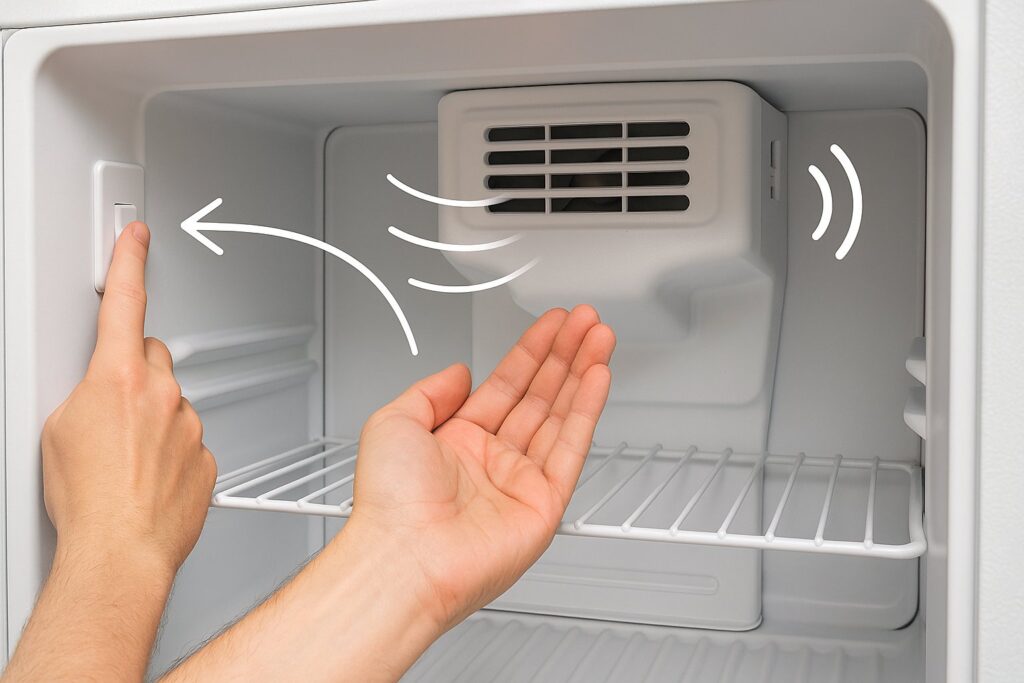
- Open the Freezer: Open the door and listen closely.
- Press the Switch: Locate and press the mechanical door switch (the button that turns off the light when the door closes). Holding this down should force the fan to kick on immediately.
- The Verdict: If you hear dead silence when pressing the switch, but the compressor below is running, you likely need to learn how to test the evaporator fan motor to confirm it is dead and order a replacement.
Cause #3: Dirty Condenser Coils Leading to Refrigerator Not Cooling
If both the fridge and freezer seem uncomfortably warm, but the unit is running non-stop, you likely have a deferred maintenance issue.
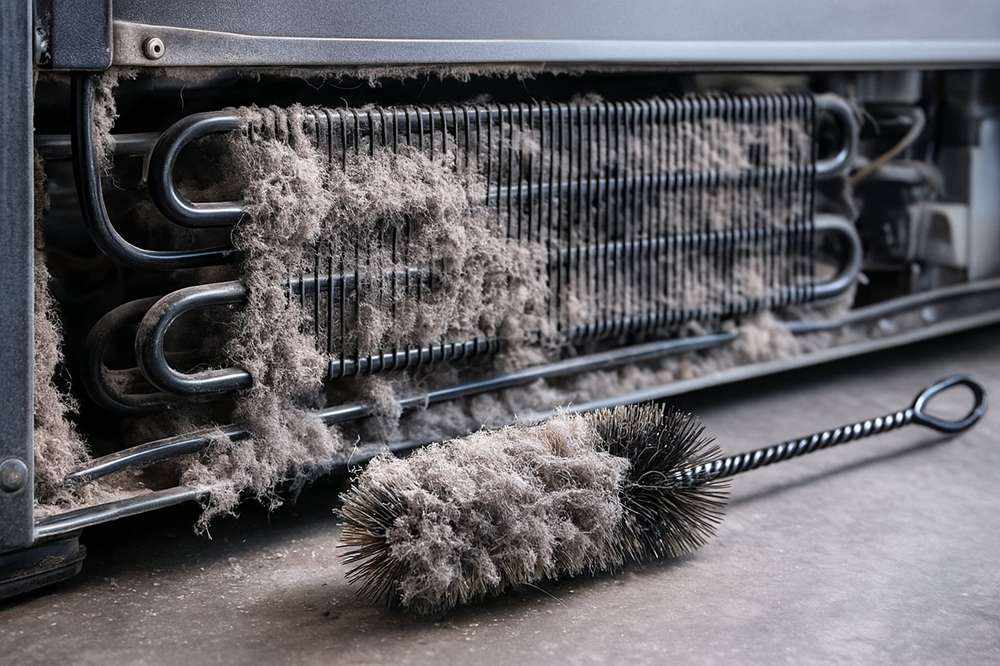
The Problem: Condenser coils are the winding black metal tubes located underneath or behind your fridge. They act exactly like a car radiator to release heat. If they are coated in a thick blanket of dust, pet hair, and lint, they cannot release that heat. The system overheats and loses efficiency rapidly.
The Result: You hear the refrigerator running constantly, but the internal temperature never drops low enough. The compressor is working incredibly hard, but it’s producing very little actual cooling power.
How to Fix It:
- Unplug: Safety first. Always disconnect the appliance from the wall.
- Access: Remove the front plastic kick-plate or pull the fridge out to reach the lower back panel.
- Clean: Read our full guide on how to clean your refrigerator coils properly using a flexible coil brush and a vacuum.
- Result: Once clean, the fridge should start cooling properly within 2 to 4 hours.
Cause #4: Bad Thermistor Symptoms
If the fans are blowing and the coils are clean, the problem might be the refrigerator’s electronic “brain” getting bad information.
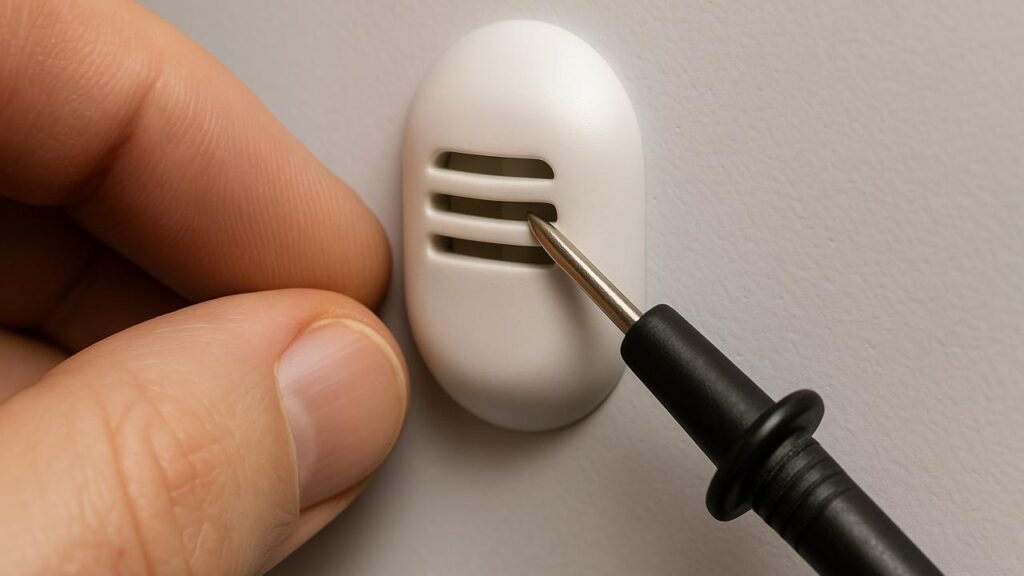
The Problem: A thermistor is a small, highly sensitive temperature sensor. It tells the main control board exactly how cold the interior air is. If the thermistor fails, it sends wildly incorrect data.
Recognizing Bad Thermistor Symptoms:
- Symptom A: The fridge thinks it is freezing cold (e.g., it falsely reads 34°F internally), but it is actually warm (50°F). The compressor runs on “low” or cycles off too early because it assumes the job is done.
- Symptom B: The fridge thinks it is hot, so it runs the compressor at maximum speed 24/7, yet the system behaves erratically, causing massive temperature swings.
How to Test & Fix:
- Locate It: Look for a small plastic capsule (about the size of a jelly bean) attached to the wall or ceiling of the fridge interior behind a plastic grille.
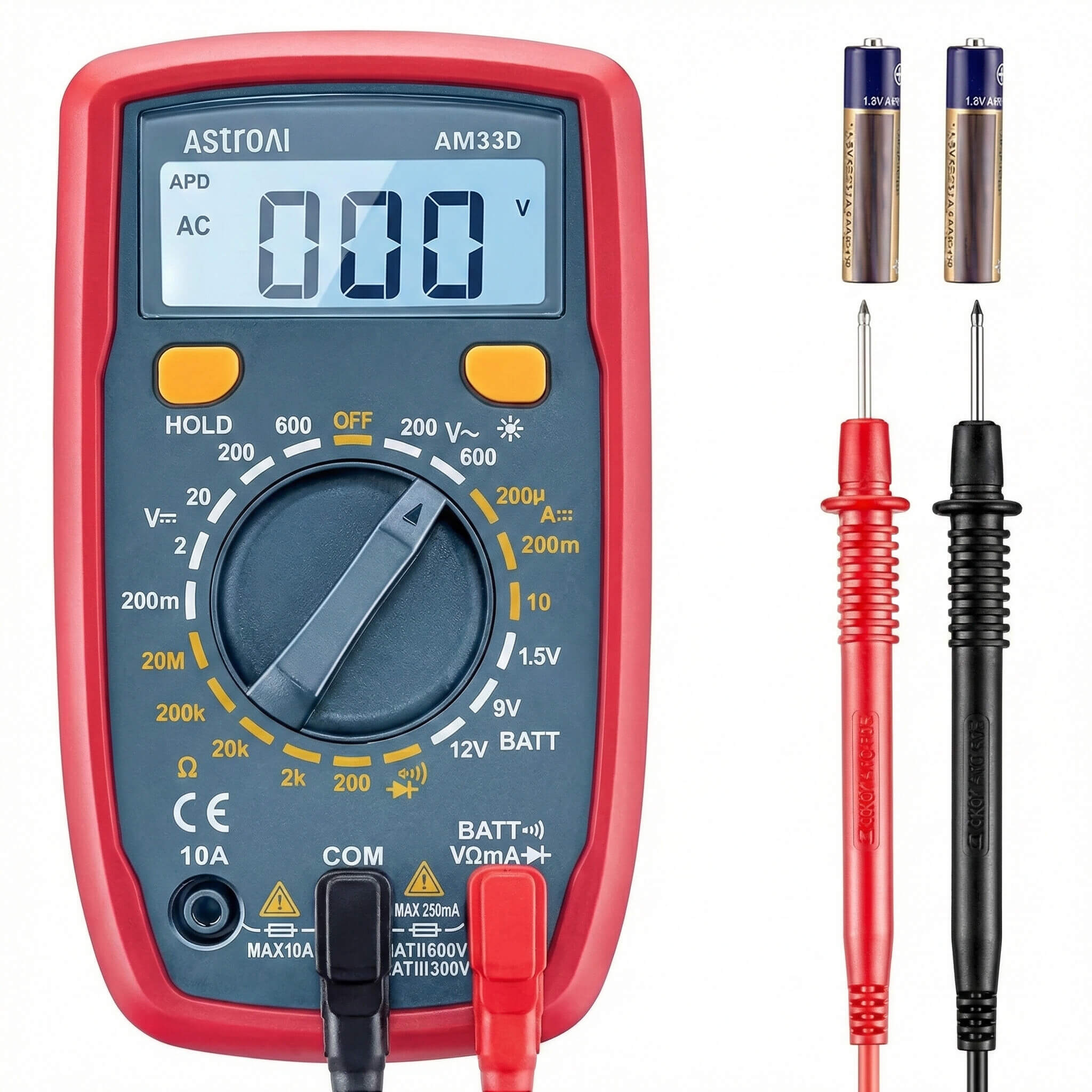
- Test It: Using a digital multimeter, you can test the electrical resistance (Ohms) at different temperatures (check your service manual for the correct Ohms chart).
- Replace It: If the readings are off, cut the wires and splice in a new OEM refrigerator thermistor.
If electrical testing feels overwhelming, consider contacting a certified appliance repair technician to diagnose your control board.
Cause #5: Defrost System Failure
This is often referred to as a “slow death” for your cooling capacity. The fridge works perfectly fine for weeks, then slowly gets warmer and warmer.
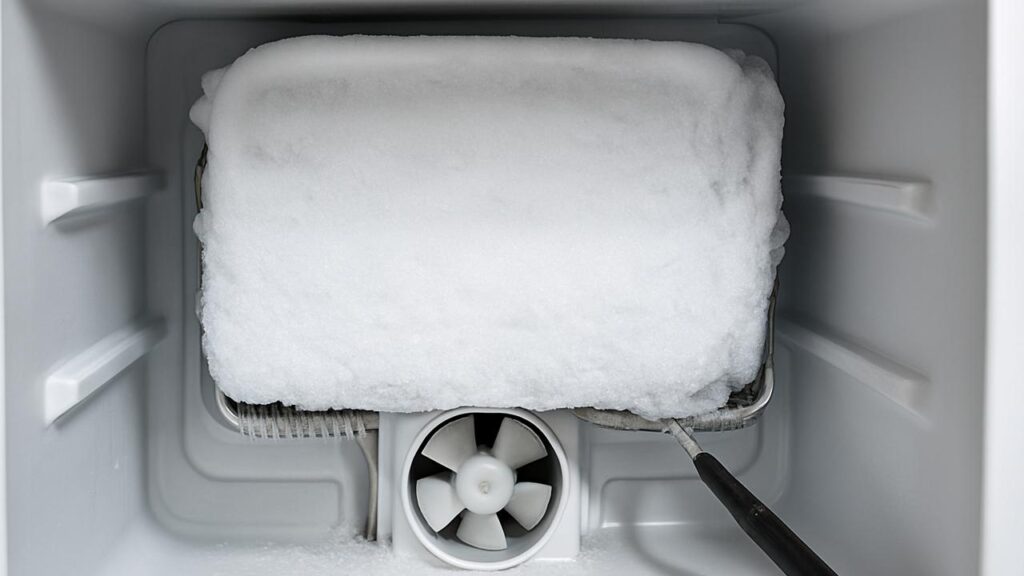
The Problem: If the automated defrost heater or timer fails, frost builds up on the evaporator coils in the freezer. Eventually, this frost becomes a solid, impenetrable block of ice.
- The Airflow Block: The internal fan cannot blow air through a solid wall of ice. The entire heat exchange process is smothered.
- The Result: You hear the fridge running perfectly, but absolutely no cold air circulates to the fresh food compartment.
How to Diagnose:
- Visual Check: Look at the back wall of the freezer. Is there a heavy buildup of frost or snow (not just on the food, but bulging out from the back plastic panel itself)?
- Manual Defrost Test: If you unplug the fridge, open the doors for 24 hours to melt the ice, and it works perfectly again for a few days before failing, you have confirmed a defrost system failure.
Related Issues: Leaks and Noises
When a refrigerator not cooling issue drags on, it frequently causes secondary side effects that can compound your problems and damage your kitchen floors.
- Water Leaks: If the defrost drain freezes up along with the coils, the melted condensation has nowhere to go. You might suddenly find your refrigerator leaking water on the floor, which requires flushing the drain tube.
- Clicking Noises: If the compressor overheats from dirty coils or failing electrical relays, it might struggle to start and emit a harsh metallic sound. Read our guide on a refrigerator making a clicking noise to check if your compressor is in danger.
Frequently Asked Questions (FAQ)
Why is my fridge light on but it’s not cooling?
How do I know if my compressor is bad?
Can I reset my refrigerator to fix the cooling?
Is it worth repairing a 10-year-old refrigerator?
Conclusion: Listen to Your Fridge
Hearing your refrigerator not cooling while the motor runs is a clear, undeniable sign that the cold air is being created by the compressor but trapped somewhere in the delivery system.
Your Action Plan:
- Check the Vents: Ensure vital airflow isn’t blocked by overcrowded food items.
- Clean the Coils: Remove years of dust to help the compressor breathe efficiently.
- Listen to the Fan: Put your ear to the freezer and ensure the internal fan is spinning and moving air.
By systematically checking these airflow paths and electrical sensors, you can usually find the blockage and restore the cold before your groceries spoil. For a broader look at all temperature issues, don’t forget to review our ultimate guide to refrigerator temperature problems.