
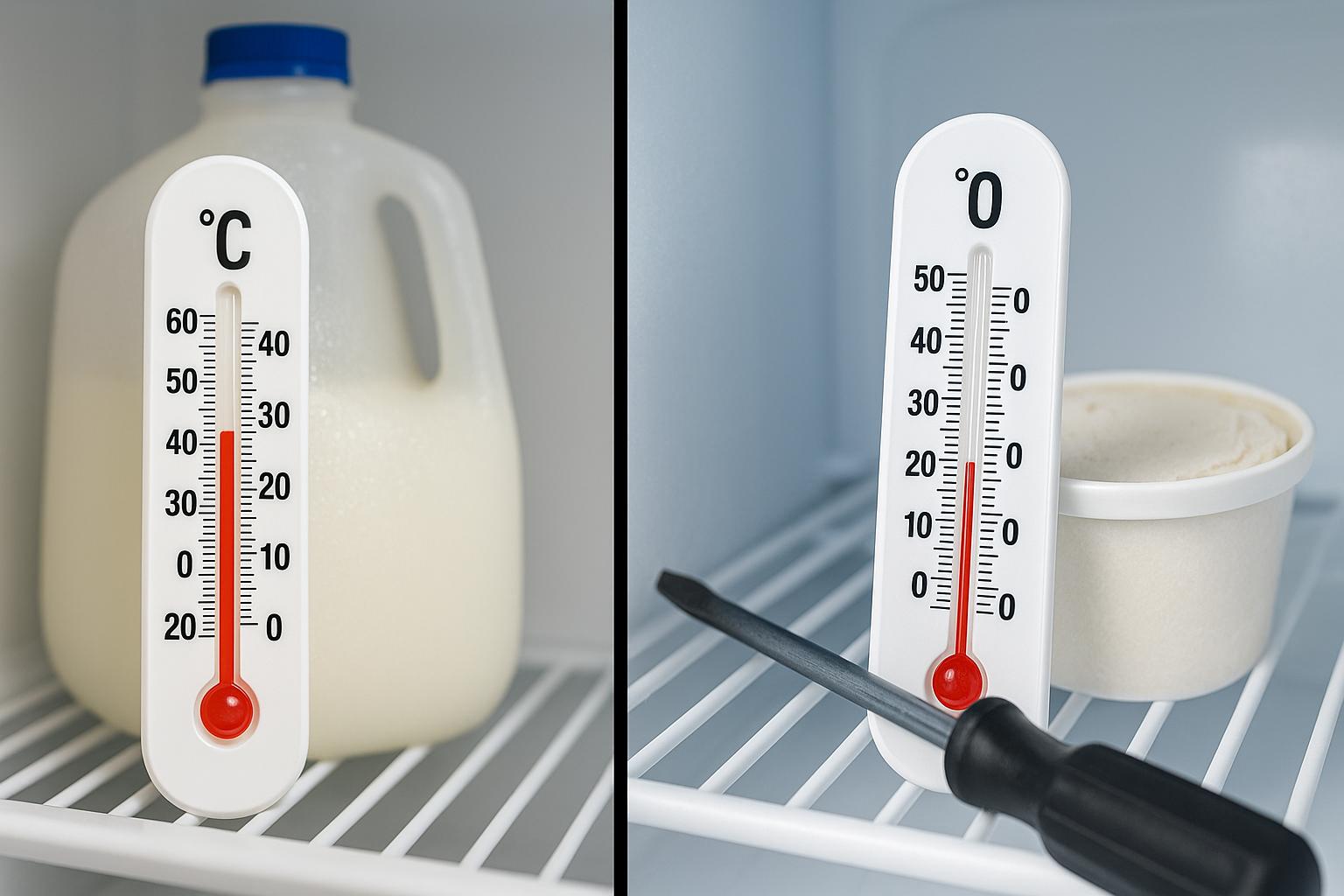
You open the freezer, and your ice cream is frozen solid. But when you open the fridge door to grab the milk, it feels lukewarm. This confusing scenario, where you find your refrigerator not cold but freezer is ok, is one of the most common appliance complaints we see.
It feels like a mystery. How can half the box be working perfectly while the other half is failing?
Here is the secret: Your refrigerator likely does not make cold air in the fridge section. It makes cold air in the freezer and pushes it into the fridge.
When you have a situation where the refrigerator not cold but freezer is ok, it almost always means that the airflow has stopped. The cold air is trapped in the freezer, unable to make the journey to your fresh food.
In this guide, we will walk you through the 5 reasons this happens, starting with the most likely culprit: the evaporator fan motor.
How Your Fridge Actually Gets Cold
To fix this, you first need to understand the airflow loop.
-
Production: The compressor and coils create cold air inside the freezer.
-
Circulation: An evaporator fan blows this cold air around the freezer.
-
Transfer: A small vent (the diffuser) opens up, and the fan forces some of that air into the fridge section.
-
Return: The air warms up in the fridge, sinks to the bottom, and flows back to the freezer to be cooled again.
If any part of this loop breaks, you end up with a frozen freezer and a warm fridge.
Cause #1: Evaporator Fan Failure (Why Refrigerator Not Cold But Freezer Is Ok)
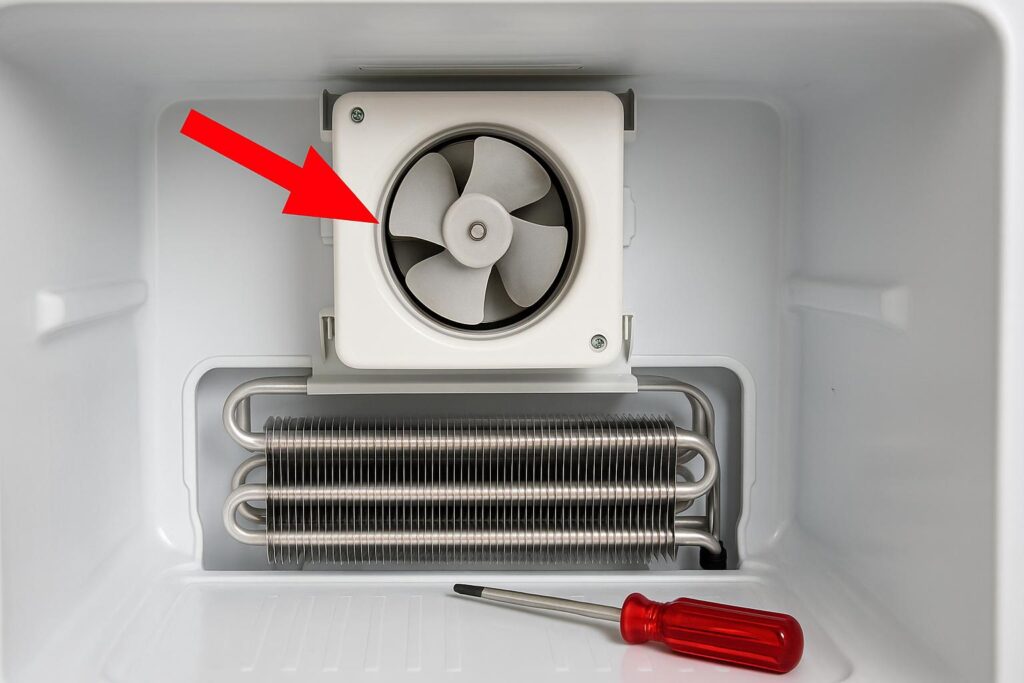
If you are searching for why your refrigerator not cold but freezer is ok, this is the first thing to check. The evaporator fan is the engine of your cooling system.
The Problem: The fan motor is located behind the back wall of your freezer. Its sole job is to blow cold air over the coils and push it into the fresh food compartment. If this motor burns out or gets stuck, the cold air sits stagnant in the freezer.
The Symptoms:
-
The freezer is freezing cold (maybe even too cold).
-
The fridge is 50°F or higher.
-
You do not hear the usual whirring noise of the fan coming from the freezer area.
How to Diagnose:
-
Open the Freezer: Leave the door open for a minute.
-
Listen: Do you hear a fan running?
-
Check the Switch: Press the door switch (the button that turns the light off). The fan should turn on when the door switch is pressed. If you hear silence (but the compressor is humming elsewhere), your fan is dead.
The Solution: You will need to perform an evaporator fan motor replacement.
-
Unplug the unit.
-
Remove the back panel inside the freezer (usually held by 2-4 screws).
-
Unplug the old fan and screw the new one into the bracket.
-
Test it before putting the panel back.
Cause #2: Frosted Over Evaporator Coils
Sometimes the fan is trying to work, but it is physically blocked by a wall of ice.
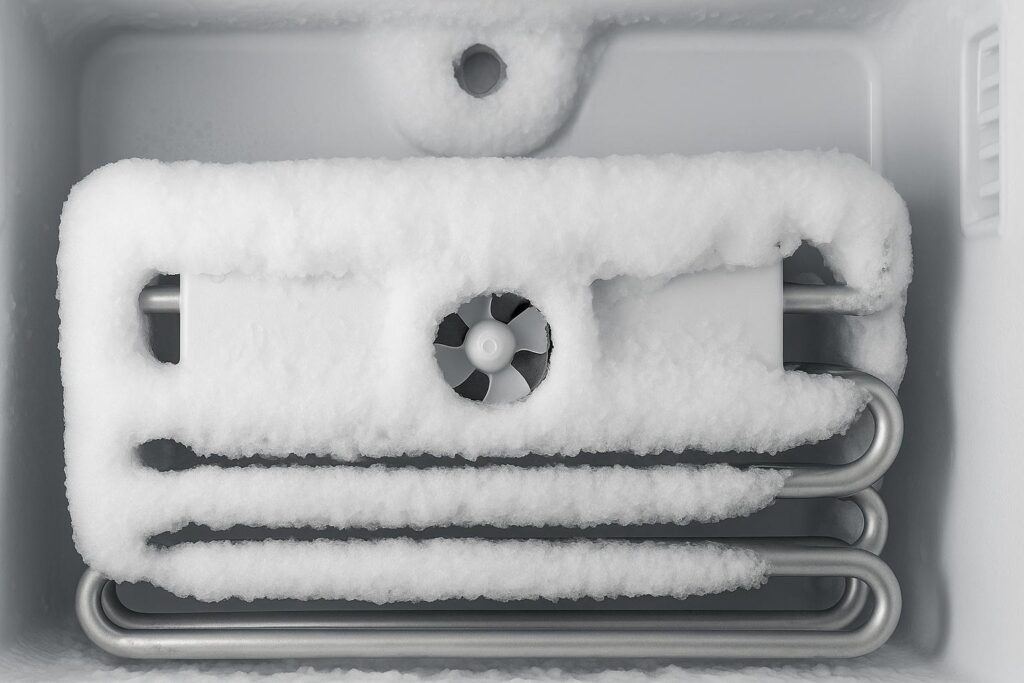
The Problem: Your fridge has a “defrost system” that melts frost off the cooling coils every 8-10 hours. If this system fails (bad heater, bad timer, or bad thermostat), ice will build up rapidly. Eventually, the ice gets so thick that it blocks the airflow passages or physically stops the fan blades from spinning.
The Symptoms:
-
You hear a loud “buzzing” or “ticking” noise (the fan blades hitting ice).
-
You see a layer of frost or snow on the back wall of the freezer.
-
This leads to the classic refrigerator not cold but freezer is ok scenario because no air can pass through the ice block.
How to Fix It:
-
Manual Defrost: The immediate fix is to unload your food and unplug the fridge with the doors open for 24 hours. This melts the ice and restores airflow temporarily.
-
Check the Heater: You likely need to replace the defrost heater assembly or the defrost thermostat. If you don’t fix the root cause, the ice will return in a few days.
Cause #3: A Bad Diffuser Causing Refrigerator Not Cold But Freezer Is Ok
If the fan is blowing and the coils are clear, the problem might be the “doorway” between the two compartments.
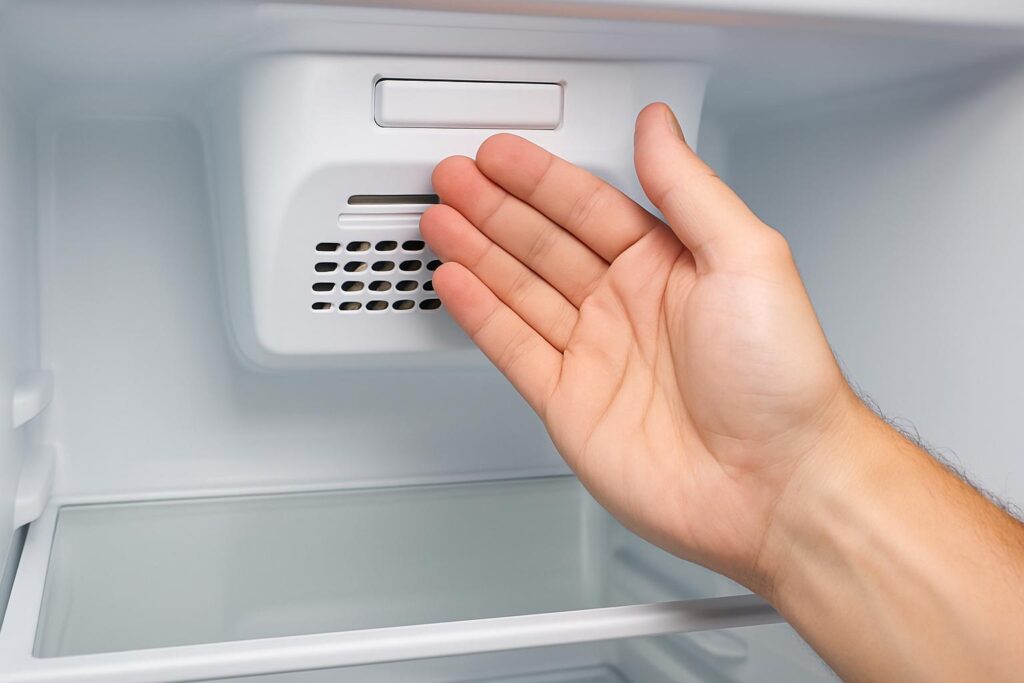
The Problem: The air damper (or diffuser) is a small motorized door located between the freezer and fridge. When the fridge gets warm, this door opens to let cold air in. If you have a bad refrigerator diffuser, it might be stuck in the CLOSED position.
The Symptoms:
-
The freezer is perfectly fine.
-
The fridge is warm.
-
You can hear the fan running in the freezer, but you feel zero airflow coming out of the vents in the top of the fridge.
How to Diagnose:
-
Visual Check: Locate the vent at the top-back of the fridge. Can you see the flap?
-
Feel the Air: Open the freezer door (to relieve air pressure) and put your hand over the fridge vent. If you suddenly feel air rushing in only when the freezer door is open, the return vents are blocked. If you feel no air ever, the diffuser is stuck closed.
The Solution: You cannot usually lubricate this part. You will need to buy a replacement damper control assembly. It is typically a simple swap involving a few screws and a wire harness.
Cause #4: Blocked Vents (Is Your Refrigerator Not Cold But Freezer Is Ok?)
Sometimes, the problem isn’t a broken part; it’s how you packed the groceries.
The Problem: Air needs to travel in a circle. It flows in from the top and flows out (returns to the freezer) through vents at the bottom. If you shove a loaf of bread or a bag of frozen peas in front of these return vents, the circulation stops. The air pressure builds up, and fresh cold air cannot enter.
The Fix:
-
Locate the Vents: Look for vents on the side walls or the bottom back wall of both compartments.
-
Clear the Path: Ensure there is 2-3 inches of clearance around every vent.
-
Organize: This simple mistake is a surprisingly common reason for a refrigerator not cold but freezer is ok diagnosis.
Cause #5: The Thermistor (Temperature Sensor)
This is the “brain” issue. The thermistor tells the main control board what the temperature is.
The Problem: If the thermistor in the fridge section fails, it might send a false signal. It could tell the computer, “I am at 35 degrees,” when it is actually at 55 degrees. The computer thinks the job is done and closes the damper door to save energy.
How to Fix It:
-
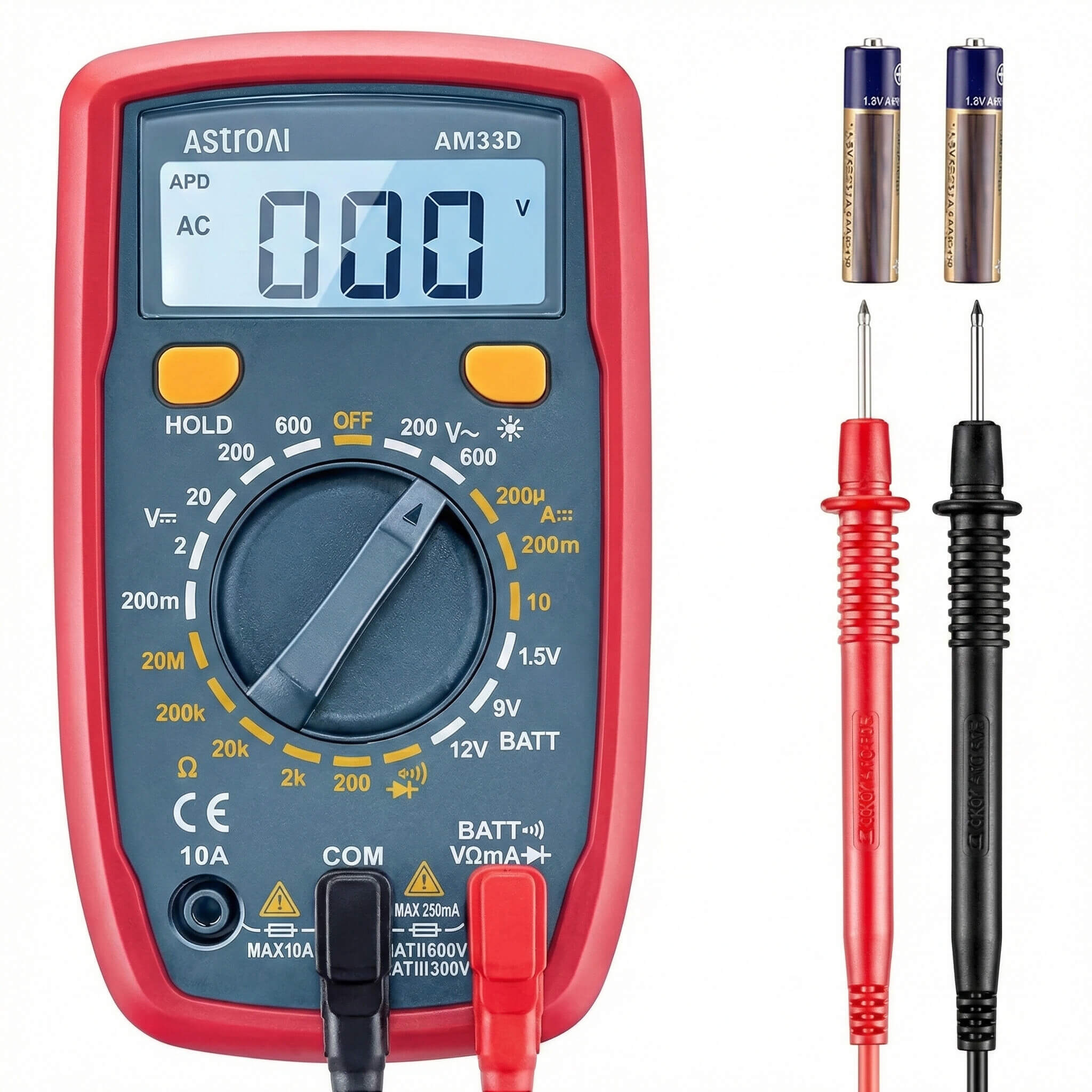
Test: You can test a thermistor with a multimeter if you know the resistance specs for your model.
-
Replace: It is a cheap part. If you suspect it, verify there are no error codes on the display first, then splice in a new sensor.
Related Problems: Noise and Leaks
When airflow is restricted, other systems struggle.
-
Clicking: If the compressor is running non-stop to try and cool the warm fridge, it may overheat. If you hear this, read our guide on refrigerator making a clicking noise to save your compressor.
-
Freezing: On the flip side, if the damper gets stuck open, you will have the opposite problem. If your milk is turning to ice, check our guide on refrigerator freezing food.
Frequently Asked Questions (FAQ)
-
Why is my fridge warm but the freezer is fine after a power outage? Often, a power outage causes the defrost timer to reset or the electronics to glitch. Try a “hard reset” by unplugging the fridge for 10 minutes. If it doesn’t recover, the sudden power surge may have damaged the evaporator fan motor.
-
Can dirty coils cause the fridge to be warm? Yes. Dirty condenser coils reduce the overall cooling power. The system will prioritize the freezer (where the coils are), leaving the fridge (“the second child”) warm. Always clean your coils every 6 months.
-
How much does an evaporator fan motor replacement cost? If you do it yourself, the part usually costs between $50 and $100. If you hire a pro, expect to pay $200 to $300 for the service call and labor.
-
Is it worth fixing a fridge that is not cooling? If the problem is just a fan motor ($50) or a defrost heater ($30), absolutely. These are cheap fixes. If the problem is a “sealed system” leak or a dead compressor (which also usually kills the freezer), it might be time to buy a new unit.
Conclusion: Restore the Airflow
Finding your refrigerator not cold but freezer is ok is stressful, but it is almost always an airflow issue, not a “dead fridge” issue.
Your Troubleshooting Checklist:
-
Listen to the Fan: Is the freezer fan running? If not, you need an evaporator fan motor replacement.
-
Check for Frost: Is the back wall snowy? You have a defrost problem.
-
Feel the Vents: Is air coming through? If not, check for a bad refrigerator diffuser.
By following these steps, you can get the cold air flowing again and save your milk from spoiling.