
You push the fridge door shut and walk away, only to hear it slowly creak back open a few seconds later. Dealing with a refrigerator door not closing properly is one of the most annoying kitchen problems.
It seems like a small issue, but a door that won’t seal is a silent budget killer.
When the door pops open, cold air escapes and warm air rushes in. This forces your compressor to run non-stop, spikes your electric bill, and leads to spoiled milk. Even worse, the humidity from the room enters the fridge, turning into frost that can jam your freezer. Usually, the problem is not a broken hinge. It is often gravity, friction, or a dirty seal.
In this guide, we will walk you through the 5 most common reasons for a refrigerator door not closing and show you how to fix refrigerator door gasket issues using simple tools like a hairdryer and petroleum jelly.
The Mechanics: Why the Door Should Close Itself
Before you start adjusting screws, you need to understand how the door is designed to work.
Refrigerator doors rely on two things: Gravity and Magnetism.
-
Gravity: Your fridge should be tilted slightly backward. When you let go of the door, gravity should gently pull it shut.
-
Magnetism: The rubber gasket is filled with magnetic strips. When the door touches the frame, the magnet snaps it tight to create an airtight seal.
If you have a refrigerator door not closing, one of these two forces is failing.
Cause #1: Invisible Obstructions (Why Your Refrigerator Door Not Closing)
This sounds obvious, but it is the culprit 50% of the time. Before you blame the hardware, blame the groceries.
The Problem: Modern fridges are packed with shelves, bins, and door organizers. If a single item is sticking out by half an inch, the magnetic seal cannot touch the frame.
-
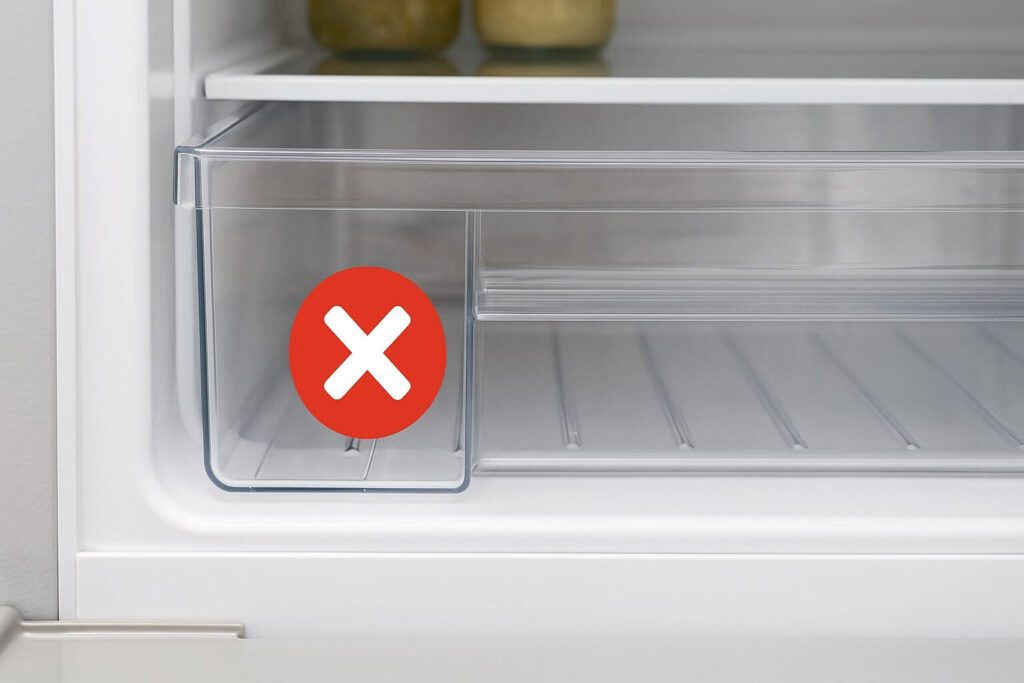
The Crisper Drawers: If a drawer isn’t pushed in 100% of the way, the door will bounce off it.
-
The Door Shelves: Large milk jugs or condiment bottles in the door bin can hit the food on the main shelves.
The Fix:
-
The “Bounce” Test: Close the door firmly. Does it bounce back immediately? That indicates a physical obstruction.
-
Clear the Path: Rearrange items. Push all drawers in until they click. Ensure no large boxes are hanging over the edge of the shelves.
Cause #2: A Dirty Gasket Causing Refrigerator Door Not Closing
If the path is clear but the door refuses to stick, check the rubber seal (gasket).
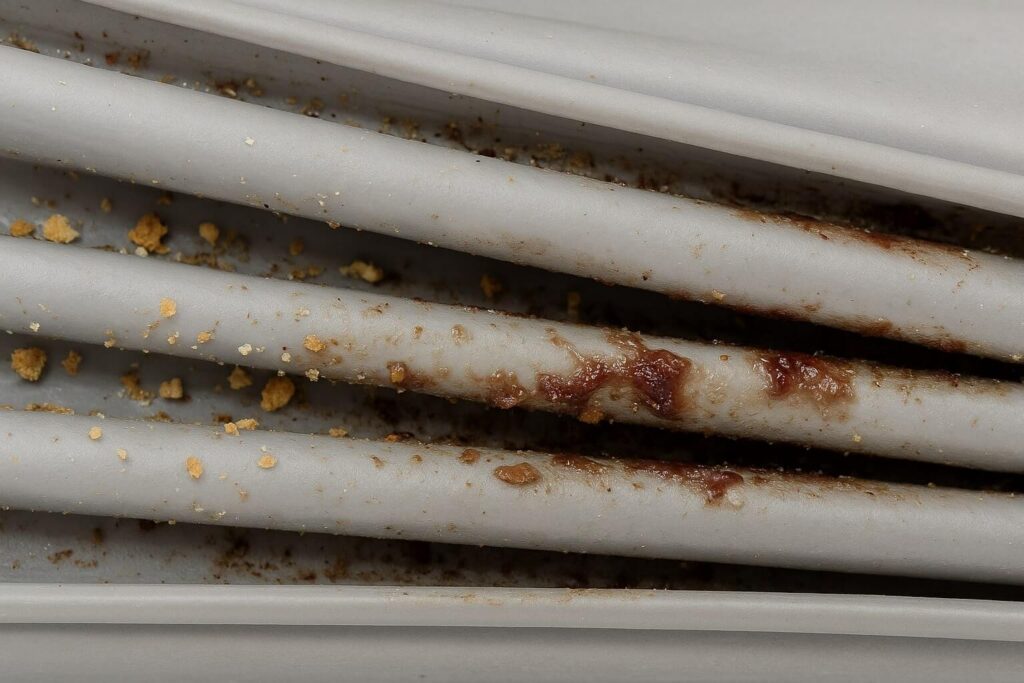
The Problem: The magnetic gasket needs a clean, smooth surface to seal against. Over time, sticky syrup spills, dried ketchup, and crumbs accumulate in the folds of the rubber.
-
The Stickiness: This gunk creates friction. Instead of sliding shut, the rubber gets stuck on the grime and pops back open.
-
The Magnetism: Thick layers of dirt weaken the magnetic pull.
How to Fix It:
-
Inspect: Look closely at the rubber folds. You will likely see dark grime.
-
Scrub: Mix warm water and dish soap. Use an old toothbrush to scrub deep inside the accordion folds of the gasket.
-
Wipe the Frame: Don’t forget to clean the metal face of the fridge where the seal touches.
-
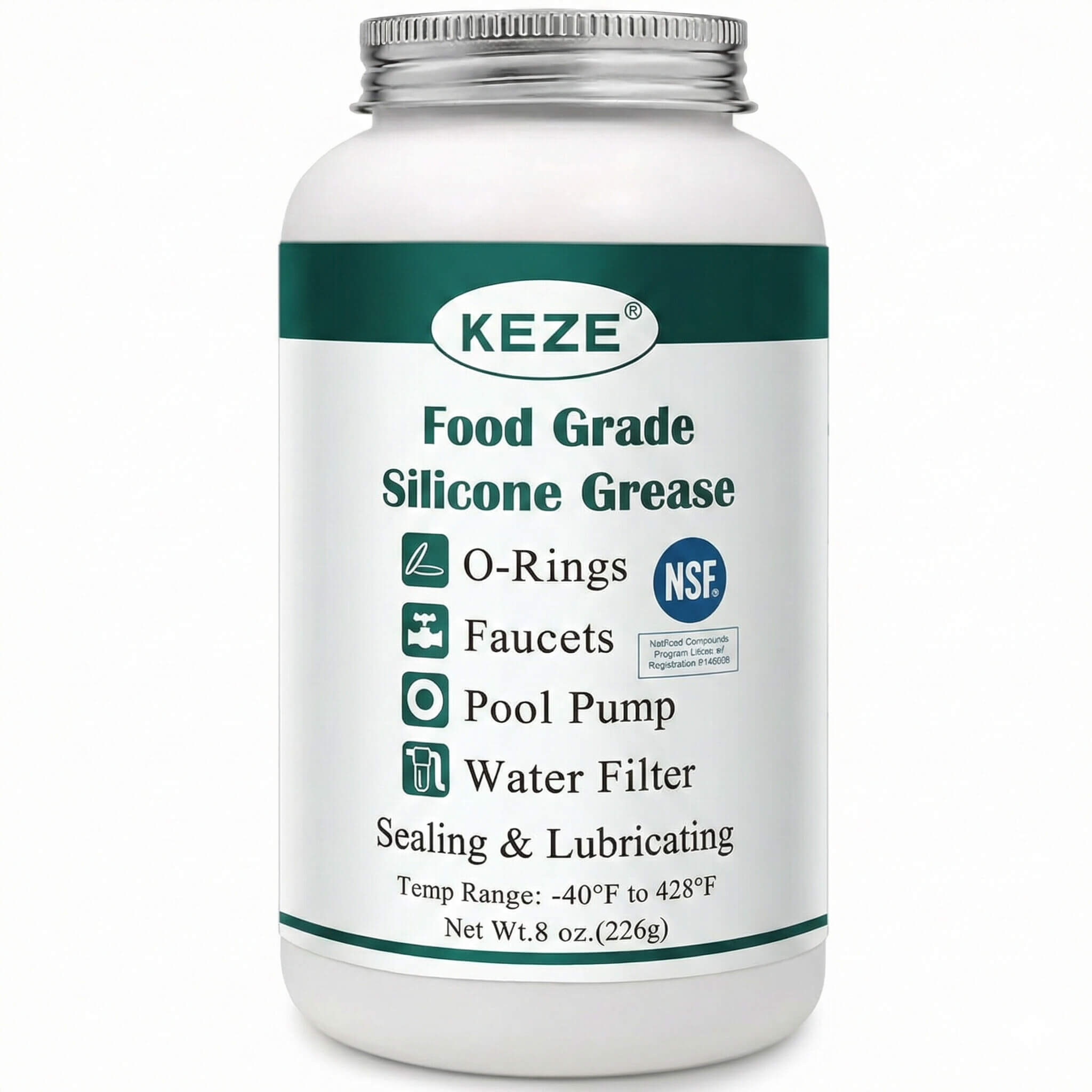
Lubricate: This is the secret pro tip. Apply a very thin layer of silicone grease or petroleum jelly to the hinge side of the gasket. This reduces friction and helps it slide shut smoothly.
Cause #3: The Refrigerator Is Not Level (Gravity Failed)
If the door hangs open instead of swinging shut, you have a gravity problem.
The Problem: A refrigerator is not supposed to be perfectly level. It is designed to tilt slightly backward. If your fridge is leaning forward, gravity pulls the heavy door open.
The Diagnosis:
-
Open the door about 45 degrees.
-
Let go.
-
Correct: The door should slowly swing closed on its own.
-
Incorrect: The door stays still or swings wider open.
The Fix:
-
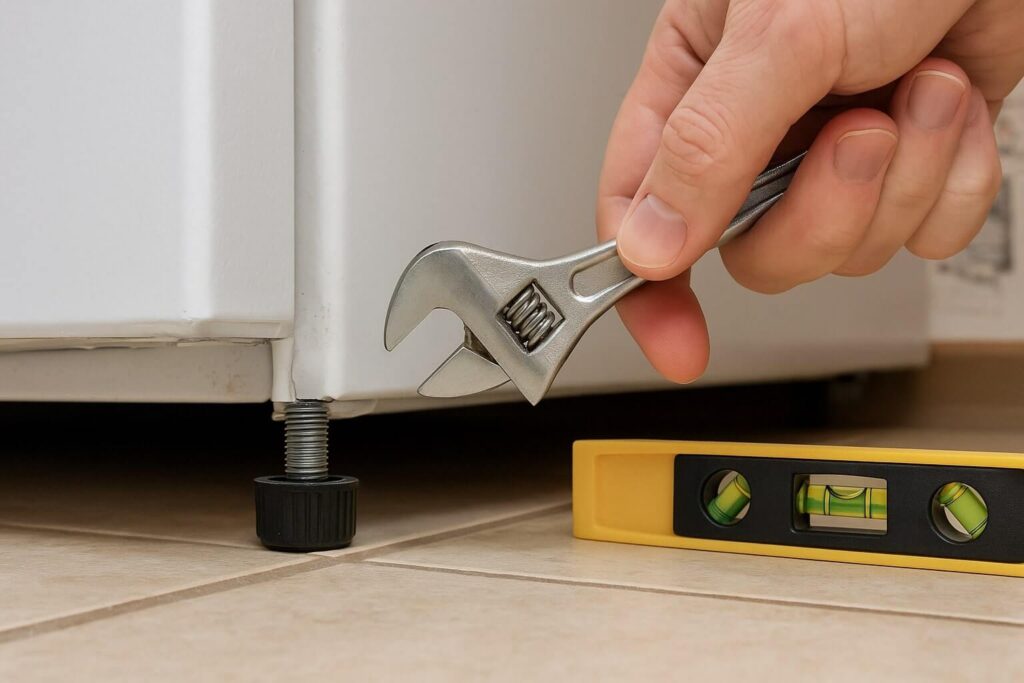
Remove the Kick-Plate: Snap off the plastic grille at the bottom front.
-
Find the Legs: Locate the adjustable leveling legs (feet).
-
Adjust: Use a wrench or pliers. Turn the legs to lower the back or raise the front.
-
Check with a Level: Place a bubble level on top of the fridge. The bubble should be slightly forward of center (indicating the fridge is leaning back).
Cause #4: Warped or Twisted Seals (How to Fix Refrigerator Door Gasket)
Sometimes the gasket is clean, but it is misshapen. This is common in older fridges or after moving a fridge.
The Problem: The rubber seal can get twisted, compressed, or dried out. If the rubber is hard and brittle, it won’t expand to meet the frame. This leaves a gap where cold air escapes.
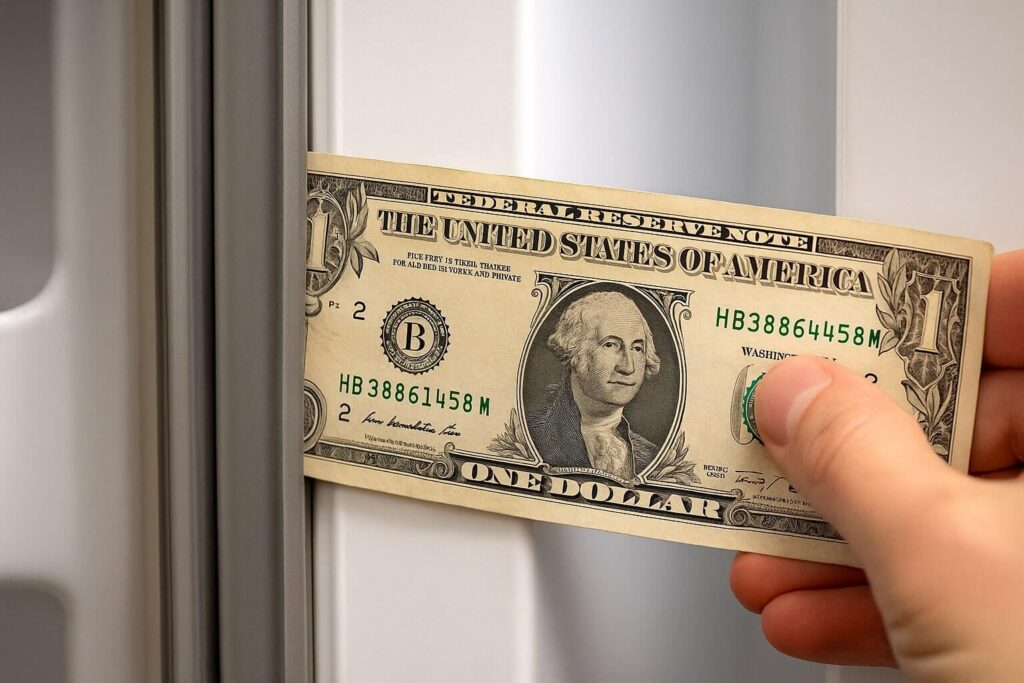
The “Dollar Bill” Test:
-
Close the door on a dollar bill.
-
Pull the bill out.
-
If there is drag/resistance, the seal is good.
-
If it slides out easily, the seal is weak or there is a gap.
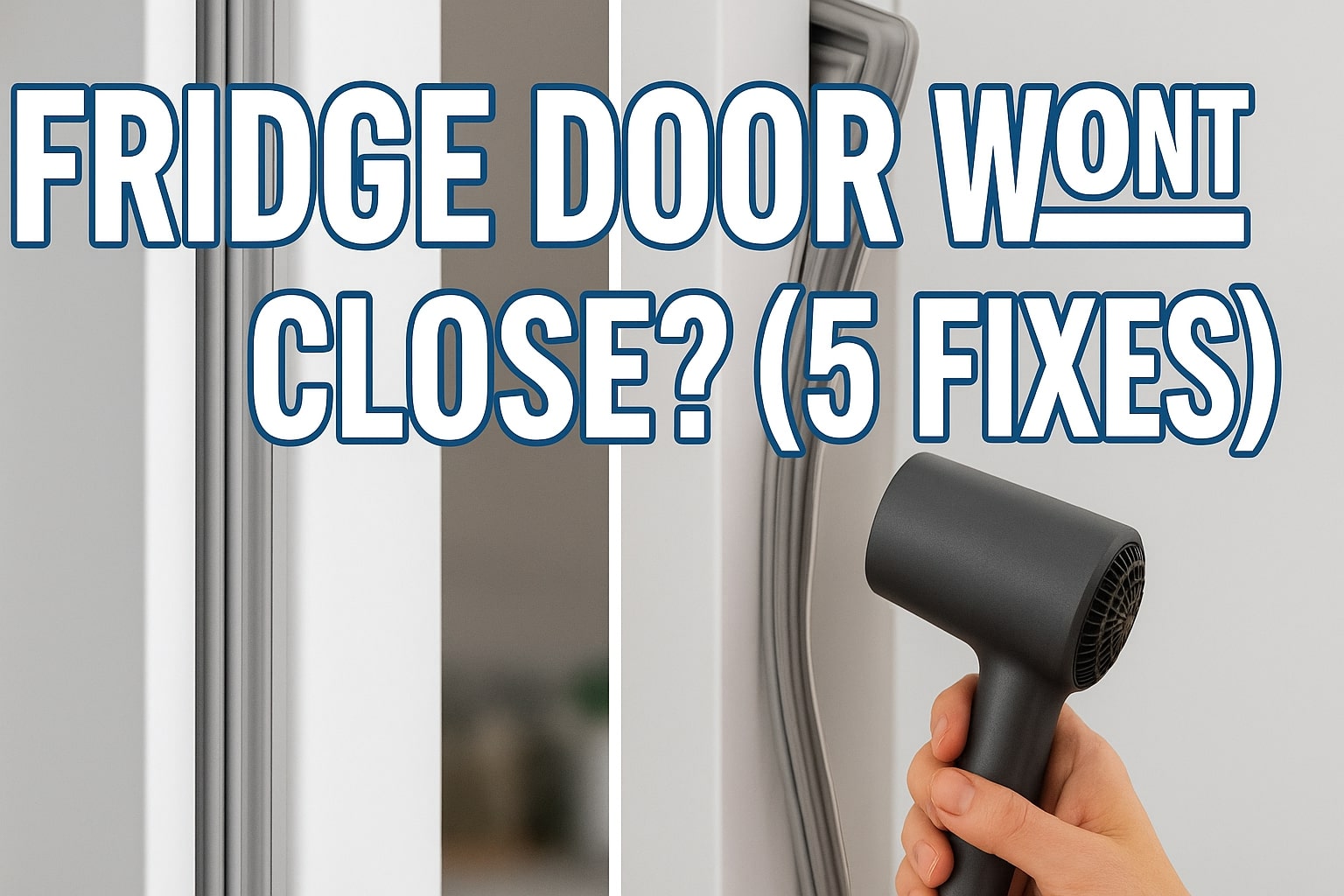
The Fix (The Hairdryer Trick): You can often reshape the rubber without buying parts.
-
Heat it Up: Use a hairdryer on low heat. Wave it back and forth over the warped section of the gasket for a few minutes.
-
Massage It: As the rubber gets warm and pliable, use your fingers to massage it back into shape, pulling it outwards so it meets the frame.
-
Cool Down: Close the door and tape it shut with masking tape for an hour while the rubber cools. It will “remember” the new shape.
Cause #5: Damaged Seals Causing Refrigerator Door Not Closing
If the gasket is torn, ripped, or crumbling, no amount of cleaning or heating will save it.
The Problem: A torn gasket lets warm air pour into the fridge. This is the primary cause of a refrigerator door not closing tight.
The Solution: You need a refrigerator door seal replacement.
-
Order the Part: Find your model number inside the fridge wall and order the specific OEM gasket. Universal gaskets rarely fit well.
-
Prep: Soak the new gasket in warm water or lay it in the sun to remove shipping kinks.
-
Remove Old Seal: Lift the old rubber. On most models, it is held in by a groove or hex screws. Peel it off.
-
Install New Seal: Press the new gasket firmly into the track, starting at the corners and working your way to the middle.
Related Symptoms: What Else Happens?
A door that won’t close triggers a chain reaction of other failures.
-
Constant Running: Because warm air is leaking in, the thermostat thinks the fridge is hot. This leads to a refrigerator running constantly, which kills your energy bill.
-
Frost Buildup: The humidity from the room turns into snow. If you see frost, read our guide on freezer not freezing to check for airflow blockages.
-
No Light: If the door switch isn’t pressed down fully because of a gap, you might think you have a refrigerator light not working issue.
Frequently Asked Questions (FAQ)
-
How do I know if my refrigerator door hinge is bent? If you lift up on the door handle and the door moves significantly (more than 1/4 inch), your hinge cam or bushing might be worn out. Look at the top hinge cover. If the plastic is cracked or the metal is bent, you may need a refrigerator door hinge kit.
-
Why does my fridge door pop open when I close the freezer? This is actually normal! When you slam the freezer door, it forces air through the internal ducts into the fridge section. This sudden pressure wave pops the fridge door open for a split second. However, gravity should pull it back shut immediately. If it stays open, you need to adjust the leveling legs.
-
Does petroleum jelly really fix a refrigerator gasket? Yes, for minor issues. A thin layer of petroleum jelly helps old, dry rubber create a suction seal against the metal frame. It is a great temporary fix for a stiff gasket, but it won’t fix a tear.
-
How much does a refrigerator door seal replacement cost? If you DIY, the gasket usually costs between $50 and $100, depending on the brand. If you hire a professional, expect to pay for both the part and labor, but you’ll get a guaranteed, perfect seal.
Conclusion: Shut the Door on the Problem
A refrigerator door not closing is a small problem with expensive consequences. Don’t ignore it.
Your Action Plan:
-
Clear the Way: Push the drawers in.
-
Clean the Seal: Scrub off the sticky grime.
-
Tilt it Back: Adjust the legs so gravity does the work.
-
Reshape: Use a hairdryer to fix warped rubber.
By fixing the seal, you stop the energy waste, save your food, and finally silence that annoying creaking sound.