
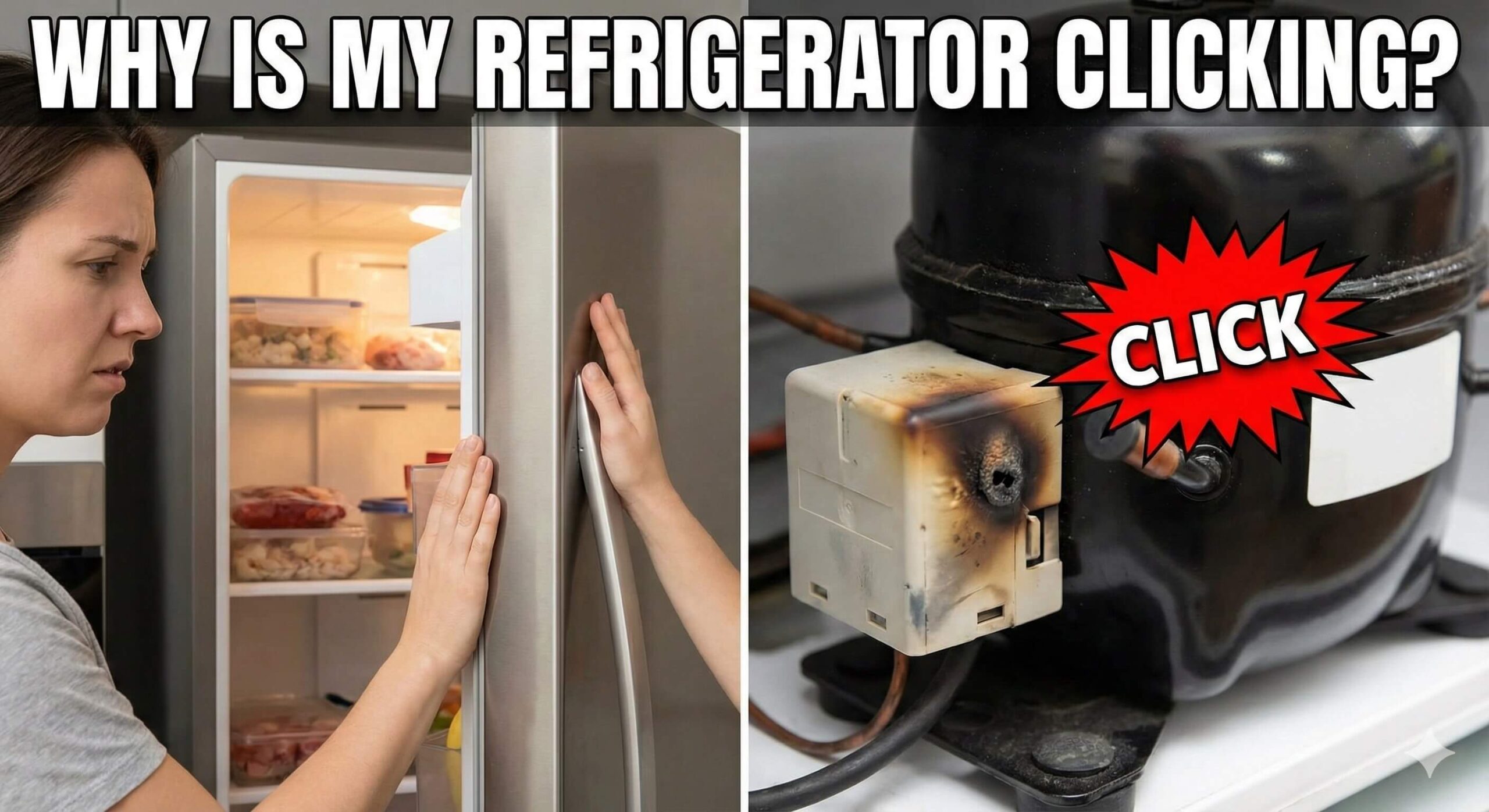
You are sitting in the kitchen, enjoying a quiet morning coffee, when you hear it: a loud, sharp “CLICK.” It is followed by a low, struggling hum that lasts for about ten seconds, and then—“CLICK.” If you are hearing this rhythmic refrigerator clicking sound, your appliance is trying to tell you something urgent.
That sound is the heartbeat of a cooling system in distress. More importantly, if you check the inside of your fridge, you will likely find that the temperature is rising. The fridge clicking not cooling scenario is the #1 “panic moment” for homeowners because it sounds expensive.
The good news? While it sounds like a catastrophic compressor failure, 90% of the time, it is actually a small, inexpensive plastic part called the Start Relay. In this comprehensive guide, we will walk you through exactly what that bad starter relay sound means and how to eliminate the refrigerator clicking sound yourself.
The Science Behind the Refrigerator Clicking Sound
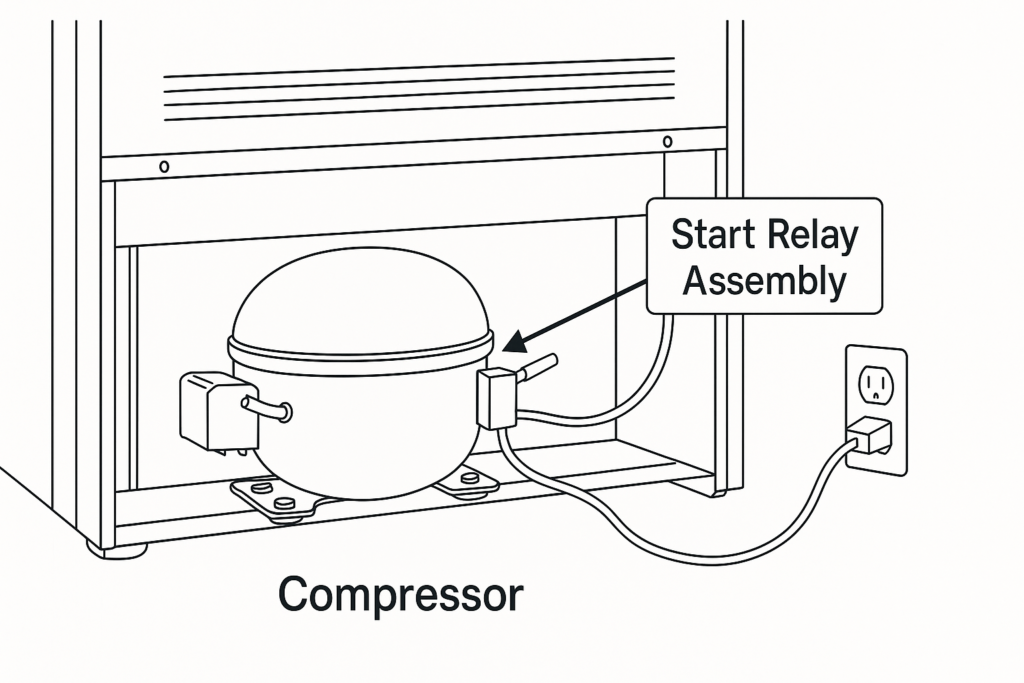
To fix the problem, you need to understand what is happening behind the machine. Your refrigerator’s compressor (the black tank in the back) is essentially a motor. Like a car trying to start in cold weather, this motor requires a massive surge of electricity to get moving from a dead stop.
This startup surge is managed by two small components attached to the side of the compressor:
- The Start Relay (PTC): This device temporarily routes power to the compressor’s “Start Winding” to give it the torque it needs to spin up.
- The Overload Protector: This is a safety switch. If the compressor gets too hot or draws too much electricity without starting, the overload protector heats up and physically bends a bi-metal strip to break the circuit.
So, Why the Clicking?
The refrigerator clicking sound you hear is actually the Overload Protector tripping. Here is the cycle of death:
- Attempt 1: The fridge tries to start. The Start Relay is broken, so the compressor gets power but can’t start spinning.
- Heat Build-Up: The stalled compressor draws massive amounts of electricity, causing it to overheat.
- The Click: The Overload Protector senses the heat and snaps open (“CLICK!”) to cut the power.
- The Reset: The system cools down for 3 minutes, snaps back, and the refrigerator clicking sound repeats.
Symptoms Accompanying the Refrigerator Clicking Sound
Before you start pulling the fridge away from the wall, look for these confirming symptoms. If you have a refrigerator clicking sound combined with these issues, you almost certainly have a relay problem.
1. The “Hum-Click-Silence” Rhythm
Listen closely. Do you hear a faint humming or buzzing noise immediately before the loud click? That hum is the sound of the compressor trying to run but failing. If you just hear a click without the hum, the compressor might not be getting power at all.
2. Warm Fridge, Warm Freezer
Since the compressor never actually starts, no cooling is happening. You will notice the freezer thawing first, followed by the fresh food section warming up.
3. The Compressor is Hot to the Touch
Warning: Be careful. If you touch the black compressor tank on the back of the fridge, it will be scorching hot—much hotter than normal. This is because it is constantly trying to start and failing.
Step 1: Accessing the Source of the Click
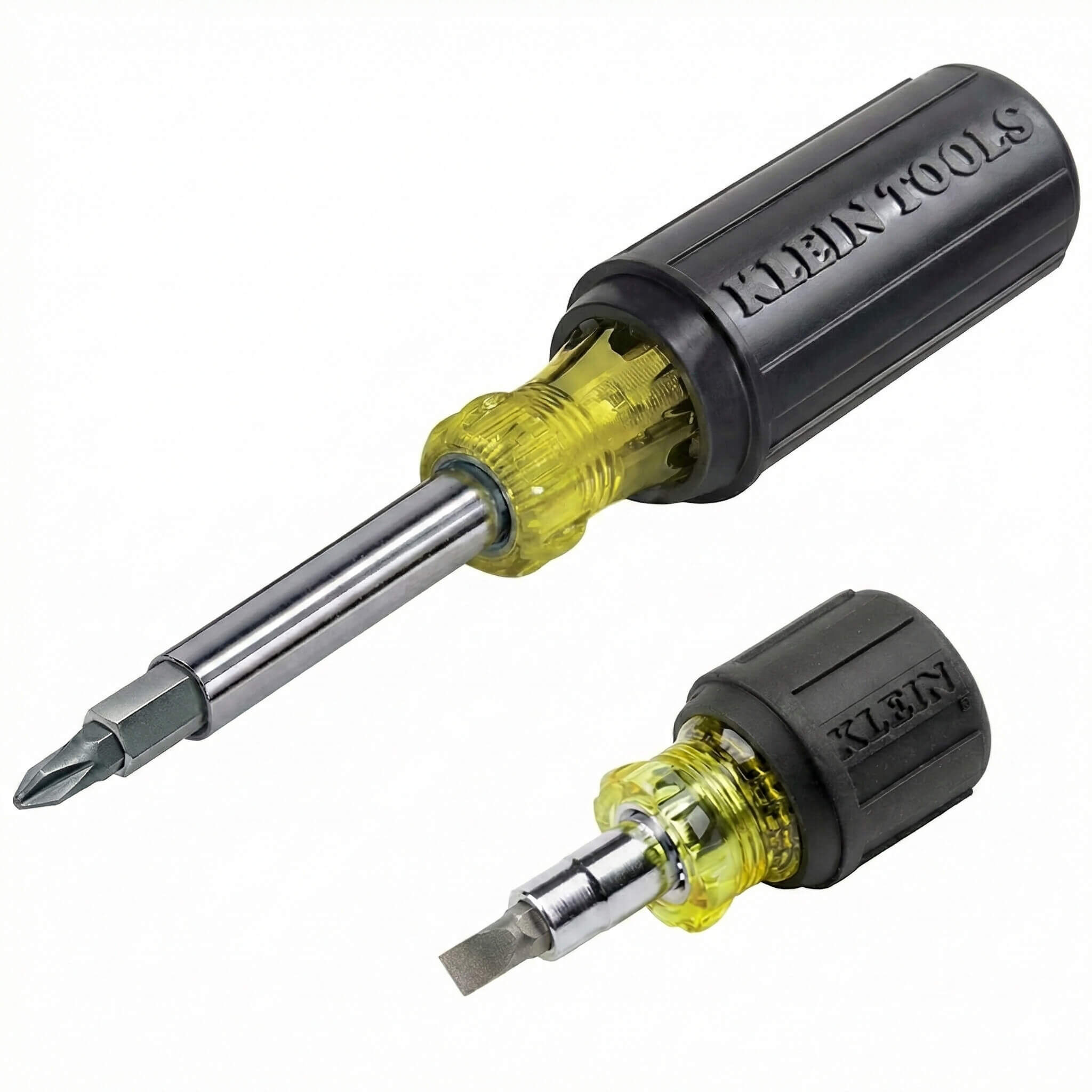
Ready to fix the refrigerator clicking sound? Let’s get into the repair. You will need a screwdriver (usually a Phillips or a 1/4″ nut driver) and possibly a pair of pliers.
Safety First
Unplug the refrigerator immediately. You will be working with live electrical components. Do not attempt this repair with the fridge plugged in.
Locate the Part
Pull the refrigerator away from the wall. Remove the lower back panel (usually cardboard or thin metal). Locate the compressor—it looks like a black, football-sized metal pot.
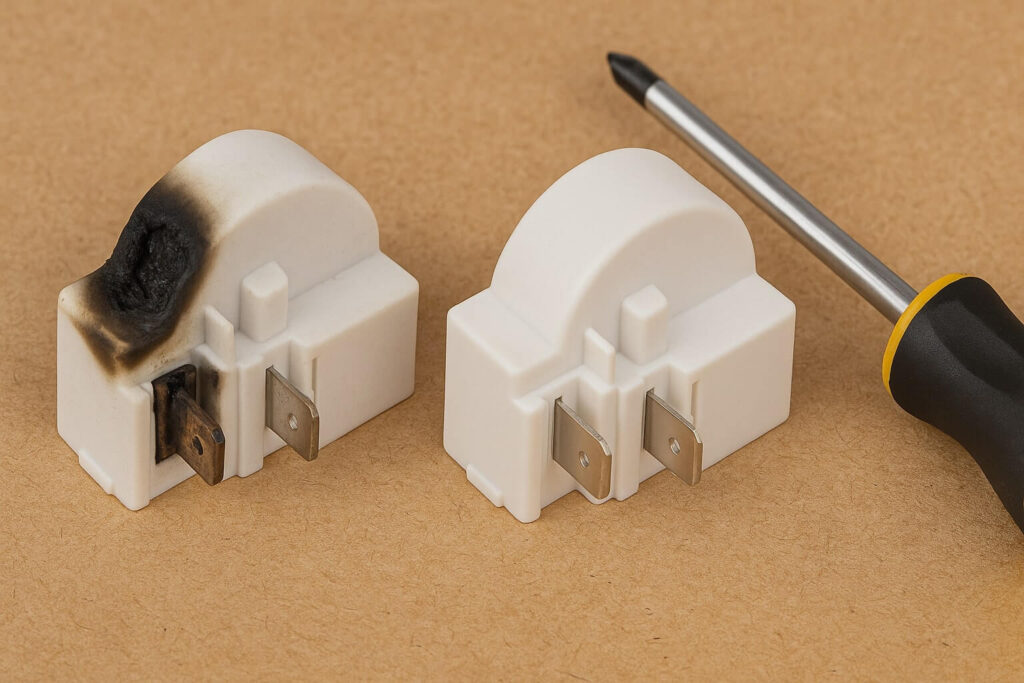
On the side of the compressor, you will see a plastic box with wires going into it. This is the Start Device Assembly. It contains the relay and the overload.
Remove the Relay
Depending on your model (Whirlpool, GE, Kenmore, etc.), the relay might be held on by a wire bail (a metal clip) or just friction.
- Remove the wire bail if present.
- Grip the plastic box firmly.
- Pull it straight off the compressor pins. It might be tight, so wiggle it gently side-to-side.
- Take a picture of the wiring before you disconnect anything!
- Unplug the wire harness from the relay.
Step 2: The “Shake Test” to Diagnose Refrigerator Clicking Sound
This is the “old school” trick that professional technicians use. It works best on older style relays, but often works on newer ones too.
The Test: Hold the removed relay near your ear and shake it like a maraca.
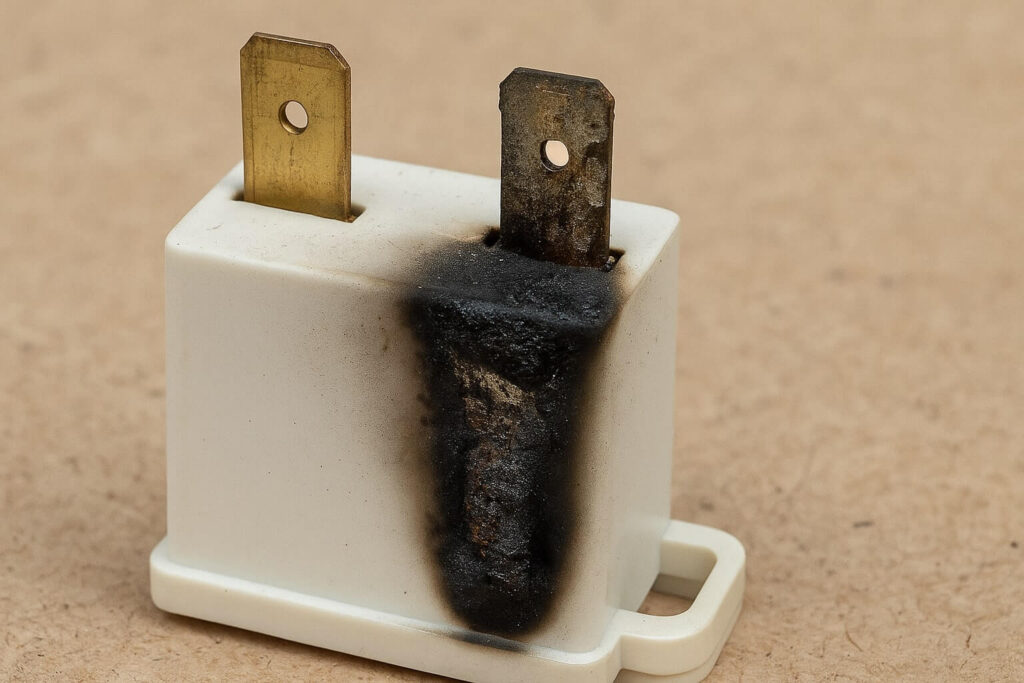
- If it rattles: The ceramic disc inside has shattered into pieces. The part is 100% bad. You have found the source of the refrigerator clicking sound. Order a new relay, pop it in, and your fridge will work.
- If it is silent: This does not prove the part is good. It just means it hasn’t physically shattered. It could still be electrically burnt out.
Step 3: Testing the Source of the Refrigerator Clicking Sound (Multimeter)
If your relay didn’t rattle, but you still suspect the bad starter relay sound is the culprit, you need to test for continuity.
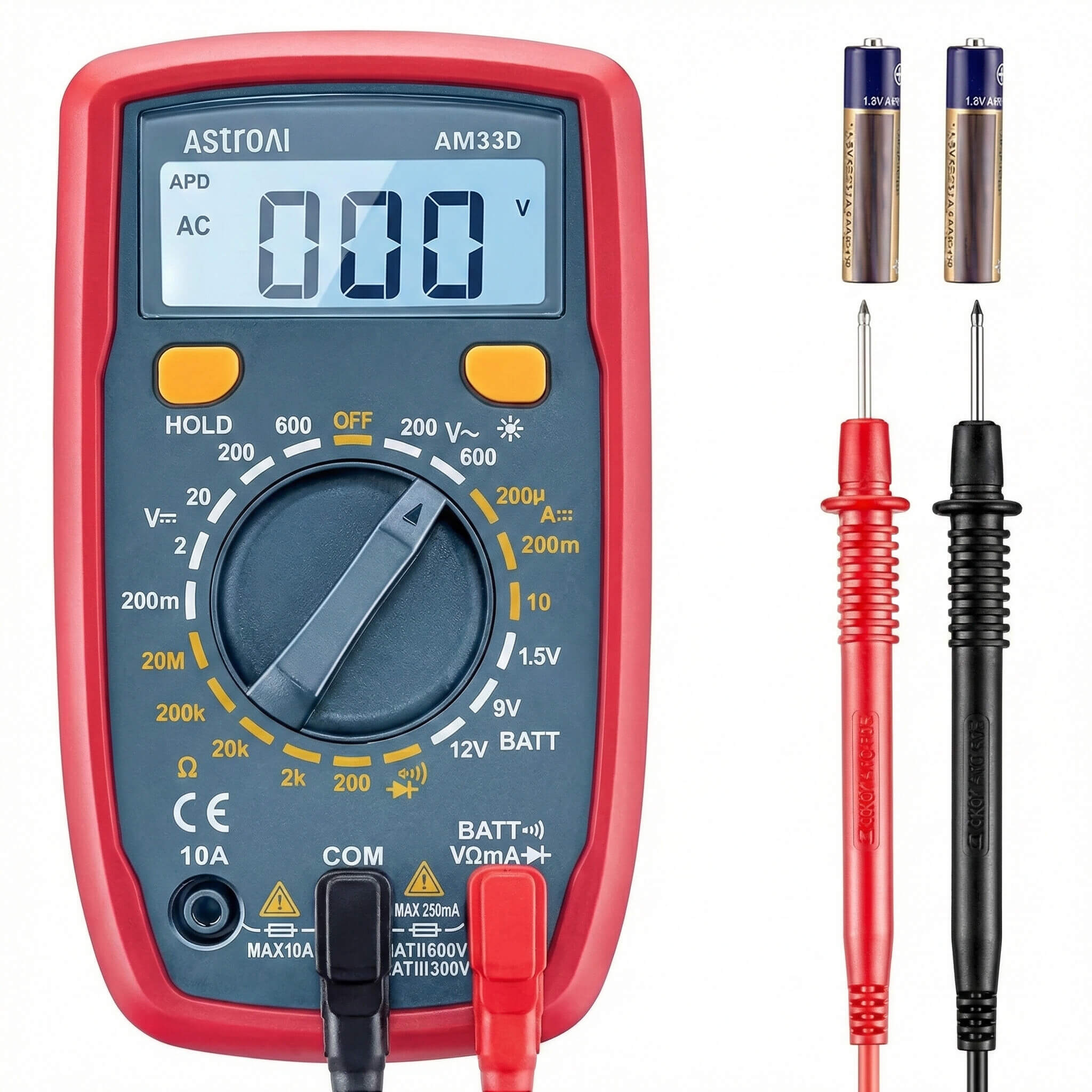
- Set your Multimeter: Turn the dial to the lowest Ohms (Ω) setting.
- Identify Terminals: Look at the relay. You will see holes labeled “S” (Start) and “M” (Run).
- Test Continuity: Put your probes into the Start and Run terminal holes.
- Good Relay: You should see a low resistance reading (usually between 3 and 12 Ohms).
- Bad Relay: If your meter reads “OL” (Open Loop) or Infinity, the internal circuit is fried. The relay is dead.

Step 4: The Solution (2 Options for Repair)
Now that you know the part is broken, you have two choices for replacement. This is a common point of confusion for DIYers trying to stop the refrigerator clicking sound.
Option A: The OEM Replacement (Best for Newer Fridges)
This involves buying the exact part number recommended by the manufacturer.
Pros: Guaranteed to match the compressor’s specifications.
Cons: Can be more expensive ($40-$80) and harder to find locally.
Option B: The “Hard Start Kit” / 3-in-1 (Best for Older Fridges)
If you have an older refrigerator (10+ years), or if the OEM relay is obsolete, you can install a Hard Start Kit (often called a 3-in-1). This device combines the Relay, Overload, and Start Capacitor into one unit.
Check Prices for 3-in-1 Hard Start Kits on Amazon
Scenario: “I Replaced the Relay but the Refrigerator Clicking Sound Continues”
This is the scenario no one wants to hear. You bought the new part, installed it perfectly, plugged the fridge back in, and… “CLICK.”
If you have a brand new relay and you are still hearing the refrigerator clicking sound, it points to one of two possibilities:
1. Dirty Condenser Coils
If your condenser coils are clogged with thick dust, the compressor cannot dissipate heat. It will overheat and trip the overload, causing a click, even if the relay is good.
2. A “Locked” Compressor
If the coils are clean and the relay is new, but the compressor still hums and clicks, the compressor itself is mechanically seized. The piston inside is stuck. Replacing a compressor is a major sealed system repair that typically costs $600 to $800.
FAQ: Common Questions About Refrigerator Clicking Sound
Is a clicking refrigerator dangerous?
It is not an immediate explosion hazard, but it is a fire risk. The overload protector creates a spark every time it opens. If there is dust or lint nearby, it could theoretically ignite.
How long will my food last if the fridge is clicking?
If the door remains closed, food in the fridge will stay safe for about 4 hours. A full freezer will hold temperature for about 48 hours. If you hear the clicking, you are on a countdown.
Conclusion: Don’t Let the Click Win
Hearing a refrigerator clicking sound is stressful, but it doesn’t always mean you need to drop $2,000 on a new appliance. In the vast majority of cases, it is simply a tired $20 relay.
Perform the shake test. Check the continuity. If the part is bad, swap it out. You might just feel like a hero when that compressor hums back to life and the cooling begins.
Is your compressor running fine, but the fridge is still warm? The problem might be airflow. Check out our guide on how to test the evaporator fan motor for the next step in troubleshooting.