

You press the water dispenser paddle. The motor hums and the valve clicks. But not a single drop of water comes out. Or perhaps your ice maker is trying to cycle, but the mold remains bone dry.
If you have already ruled out a clogged filter, you are likely dealing with a frozen refrigerator water line.
This is one of the most incredibly common issues in modern refrigerators, especially GE, Samsung, and Whirlpool models. Because the thin water lines route directly through the coldest parts of the appliance (the freezer door or the back wall), a slight drop in temperature or a lack of door insulation can instantly turn that liquid water into a solid ice plug.
Fortunately, the good news is that you don’t need to buy any expensive replacement valves right away. You just need to apply heat—carefully.
In this comprehensive guide, we will show you exactly how to thaw a freezer water line safely. We will systematically cover the “hairdryer method,” the “hot water syringe” trick, and the absolute best prevention steps to guarantee it never happens again.
💡 Mentor’s Diagnostic Hub
Physical blockages and hardware upkeep are the absolute foundation of appliance longevity. This specific guide serves as a core component of our comprehensive master series on diagnosing structural leaks, clearing frozen drains, and replacing physical hardware.
Anatomy of a Freeze: Where is the Ice?
Before you enthusiastically start melting things, you must accurately locate the blockage. A frozen refrigerator water line almost universally occurs in one of two highly specific spots.
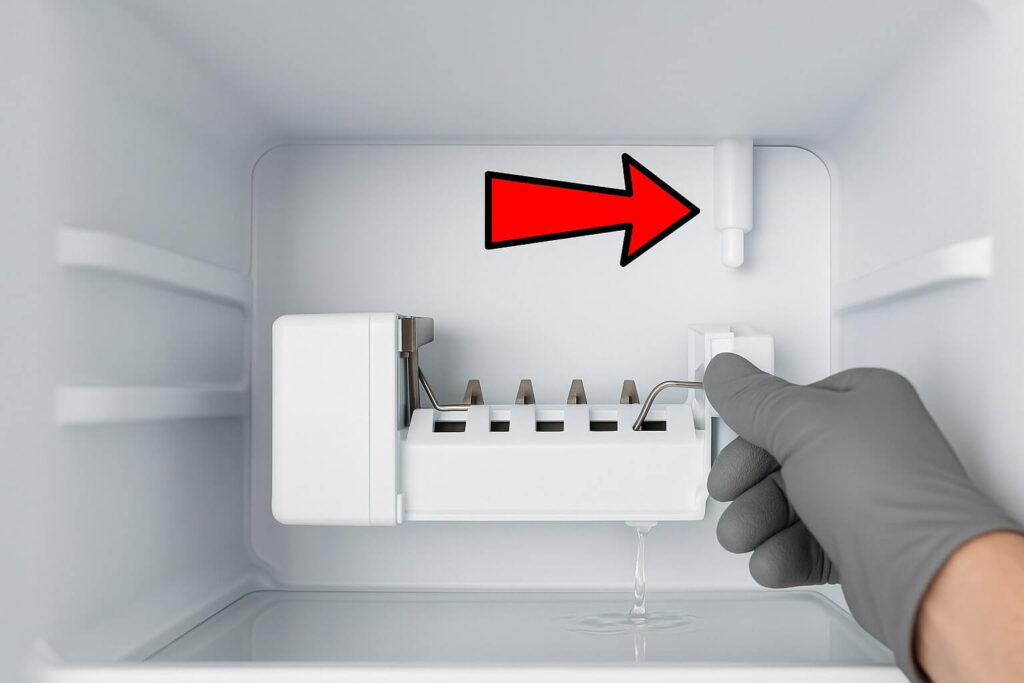
Spot #1: The Ice Maker Fill Tube
- Location: Inside the freezer, at the very top or back wall. It is a small tube (usually rubber or plastic) that actively hangs over the ice maker mold.
- Symptoms: The ice maker is not making ice, but the front door water dispenser flows perfectly fine.
- The Cause: Water trickles into the tube, and because the freezer is too cold (or water pressure is too low), the last few residual drops freeze directly at the tip, actively creating a solid “cork.”
Spot #2: The Water Reservoir / Door Line
- Location: Deep inside the refrigerator door insulation (highly common in GE/Samsung) or behind the lower crisper drawers where the water tank sits.
- Symptoms: The refrigerator water dispenser is not working. You clearly hear the rear valve humming, but absolutely nothing comes out of the paddle.
- The Cause: Frigid cold air from the freezer aggressively migrates into the fresh food door cavity, freezing the thin 1/4-inch plastic line solid.
Method 1: The “Turkey Baster” Method (For Ice Makers)
If your ice maker fill tube is specifically the part that is frozen, this is the absolute fastest and safest DIY fix.
Tools You Need:
- A standard turkey baster (or a clean oral syringe)
- A cup of hot (not boiling) tap water
- A thick catch towel
Step-by-Step Instructions:
- First: Remove the Ice Bin. Open the freezer and completely pull out the plastic ice bin so you can easily see the ice maker mechanics clearly.
- Second: Locate the Fill Tube. Look for the white or black tube protruding from the back or side wall, positioned directly over the ice mold. You will highly likely see a visible icicle hanging from it or solid ice packed directly inside the opening.
- Third: Apply Hot Water. Fill your turkey baster with hot tap water. Place the plastic tip firmly against (or slightly inside) the frozen tube. Forcefully squeeze the hot water directly into the tube.
- Finally: Catch the Runoff. Hold a towel or plastic cup directly underneath to catch the overflow water. Repeat this process 3 to 5 times. The hot water will violently melt the ice plug, and eventually, you will see the built-up water flow freely out of the tube and into the ice mold.
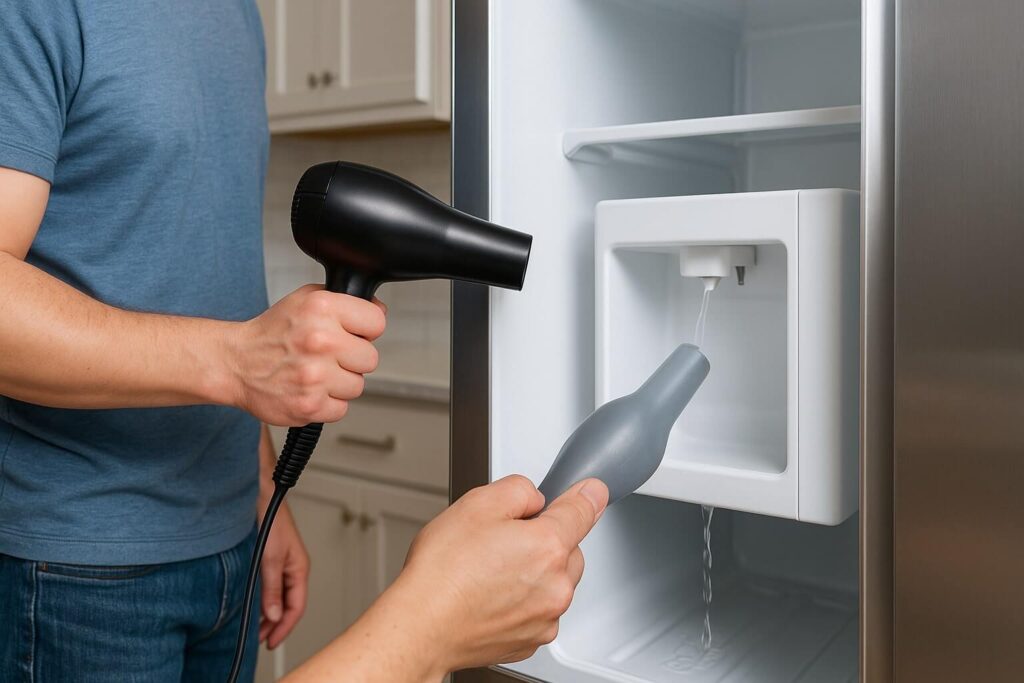
Method 2: The “Hairdryer” Method (For Door Dispensers)
If your water line inside the door is frozen, you physically cannot reach it with a hot water syringe. You must rely on radiant heat.
WARNING: This method strictly requires patience. Do NOT use an industrial heat gun or an open flame. You will instantly melt the cosmetic plastic liner of your refrigerator door, which costs hundreds of dollars to replace. Use a standard bathroom hairdryer on strictly medium heat.
Step 1: Locate the Frozen Spot
On most French-door refrigerators (like GE and Samsung models), the physical freeze almost always happens in the bottom door hinge or directly behind the exterior dispenser control panel.
Step 2: Prep the Area
Open the refrigerator door. If there is a removable plastic shelf or bin sitting directly in front of the dispenser area, carefully remove it. Leave the heavy door wide open (this ambient room air actively helps the line warm up faster).
Step 3: Apply Heat
- Point your hairdryer directly at the inner door liner (the inside plastic part of the door) exactly behind where the exterior dispenser sits.
- Keep the hairdryer constantly moving. Never hold it stationary in one single spot for more than a few seconds.
- Wave it back and forth continuously for 5 to 10 minutes.
- Safety Check: Touch the plastic frequently with your bare hand. If it feels too hot to touch, turn the dryer off and let it cool. You want the plastic comfortably warm, not melting.
Step 4: Test the Flow
Every 2 minutes, stop heating and actively press a glass against the dispenser to try to draw water. Once the internal ice plug melts enough to break loose, the city water pressure will suddenly shoot it out. Run 2 to 3 full cups through the system to forcefully clear out any remaining slush.
Method 3: The “Ice Surrender” Tool (The Pro Fix)
If you suffer from a frozen line that happens constantly, or one that is so deeply buried inside the door insulation that a hairdryer simply cannot reach it, you must upgrade to a specialized plumbing tool.
🛠️ Recommended Tool:
Ice Surrender Frozen Water Line Tool
Why you need this: A hairdryer works for surface freezes, but this highly specialized, high-pressure syringe features an extra-long, flexible catheter that snakes deep into the dispenser nozzle to melt stubborn internal ice plugs safely in under 30 seconds.
- How it works: It utilizes a highly flexible, incredibly thin plastic tube connected directly to a high-capacity hot water syringe.
- The Fix: You literally snake this thin catheter straight up inside the frozen dispenser nozzle from the outside of the door. You then aggressively inject boiling hot water directly against the face of the ice clog deep inside the insulation.
- Why use it: It definitively fixes the problem in under a minute without dangerously heating up your entire plastic door liner with a hairdryer.
Why Did My Water Line Freeze? (And How to Prevent It)
Successfully unclogging the line is only half the battle. If you don’t actively change the environmental conditions, the water will inevitably freeze solid again in exactly 24 hours.
1. The Freezer is Too Cold
The absolute most common cause is a main freezer thermostat set aggressively below 0°F (-18°C).
- The Fix: Check your digital temperature settings. Immediately raise the freezer temperature to exactly 0°F or 5°F. This temperature is still perfectly safe for long-term food storage, but it is usually warm enough to stop the microscopic 1/4-inch lines from freezing.
2. The Insulation Has Failed
In some older GE and Samsung French doors, the dense foam insulation inside the door cavity naturally breaks down over time, actively allowing freezing air to touch the unprotected water line.
🛠️ Advanced Preventative Fix:
Refrigerator Water Line Foil Heater Kit
Why you need this: If your internal door insulation has permanently failed, this specialized foil heater splices directly into your door wiring to keep the plastic line permanently warm, effectively ending the recurring freeze cycle forever.
3. Low Water Pressure
If your overall water pressure is low (frequently due to a severely clogged internal carbon filter), the water moves incredibly slowly through the lines. Slow-moving water freezes exponentially faster than highly pressurized, fast-moving water.
- The Fix: Replace your old, dirty water filter immediately. Ensure your home’s main saddle valve is turned completely open.
4. The “Energy Saver” Feature
Some premium fridges feature a hidden mullion heater in the door flange to prevent exterior condensation sweating. This specific heater inadvertently helps keep the internal water line warm.
- The Fix: If your fridge has an “Energy Saver” button on the display panel, turn it OFF. Turning “Energy Saver” on intentionally turns this vital heater off to save electricity, frequently causing the line to freeze overnight.
Frequently Asked Questions (FAQ)
Will the water line thaw on its own if I just unplug the fridge?
Can I use antifreeze or salt in the water line to melt the ice?
Why does my GE refrigerator water line keep freezing constantly?
I completely thawed the line, but still no water comes out. Now what?
Conclusion: Get the Water Flowing Again
A frozen refrigerator water line is incredibly annoying, but it is rarely a fatal, appliance-ending flaw. It is usually just a simple physical sign that your freezer is running just a little too efficiently.
Your Professional Action Plan:
- Identify: Is it the internal ice maker (the top fill tube) or the front dispenser (the insulated door line)?
- Thaw: Use the highly targeted Turkey Baster method for open fill tubes or the patient Hairdryer method for sealed doors.
- Prevent: Immediately raise your digital freezer temperature to exactly 0°F and ensure you turn off the “Energy Saver” mode.
By carefully applying radiant heat or hot water, you can confidently clear the solid blockage and get your ice and water freely flowing again without ever paying for a highly expensive professional service call.