
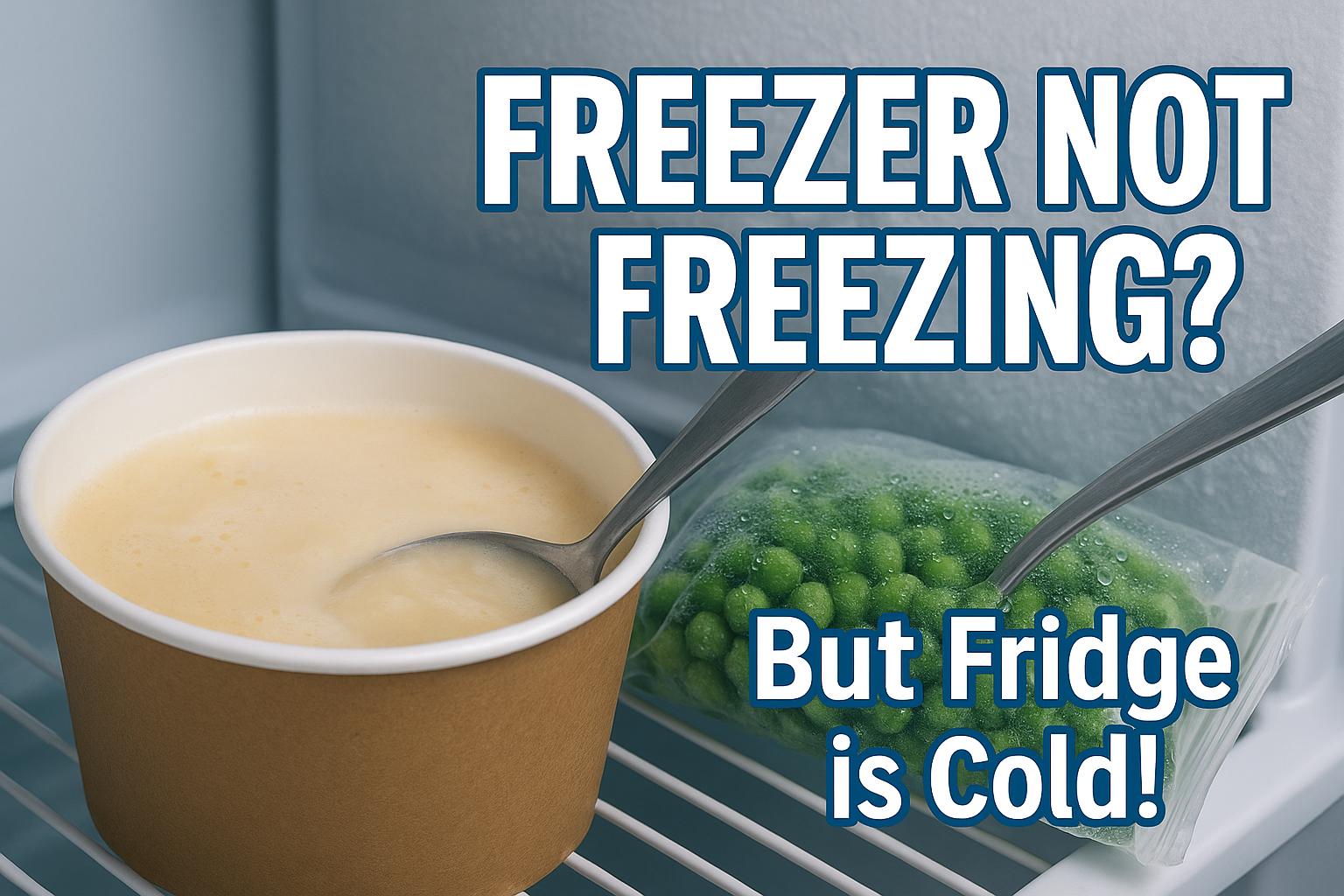
Is your freezer not freezing even though the fresh food fridge section seems perfectly cold? It is a confusing and highly stressful discovery. You reach in to grab some frozen peas for dinner, only to find them squishy. You check the ice cream, and it’s completely melted into soup.
This specific temperature imbalance—where the ice cream is soft in the freezer but your drinks are perfectly chilled in the fridge—usually indicates that the sealed cooling system is working, but only partially.
If you find your freezer not cold enough to keep things solid, don’t panic and immediately assume you need to buy a brand new appliance. The problem is rarely a dead compressor. It is almost always an airflow restriction, a failed sensor, or a deferred maintenance issue that you can solve yourself.
In this comprehensive diagnostic guide, we will walk through the 5 most common reasons for this frustrating split temperature issue and show you exactly how to fix them fast before you lose hundreds of dollars in groceries.
💡 Mentor’s Diagnostic Hub
Dealing with multiple cooling issues? A warm freezer is just one symptom of an airflow failure. Learn how to diagnose every part of your appliance’s sealed system and electronics.
How One Appliance Manages Two Different Temperatures
To fully understand why the freezer is failing while the fridge is simultaneously working, you need a quick crash course in basic refrigeration thermodynamics.
Most standard residential refrigerators do not have two separate cooling systems. They have one mechanical compressor and one set of cooling coils (the evaporator), which are usually hidden entirely behind the back plastic wall of the freezer compartment.
- The sealed system creates intensely cold, sub-zero air directly on the evaporator coils inside the freezer first.
- A motorized evaporator fan aggressively blows this newly chilled air around to freeze your food.
- A small, mechanical vent door (called an air damper) opens slightly to let a carefully regulated trickle of that freezing air drop down into the fresh food section to maintain it at 37°F.
The Core Takeaway: If your fridge is currently cold, the main cooling engine (the compressor and Freon gas) is clearly working. The problem is that the system has lost its cooling efficiency and simply cannot drive the temperature all the way down to 0°F, or the cold air is physically blocked from circulating within the freezer box itself.
Cause #1: Blocked Vents Causing Freezer Not Freezing
Before you grab a screwdriver or order expensive parts, take a close look at how you packed your groceries. This is the absolute easiest fix and the most common reason for a freezer not freezing properly in a busy household.
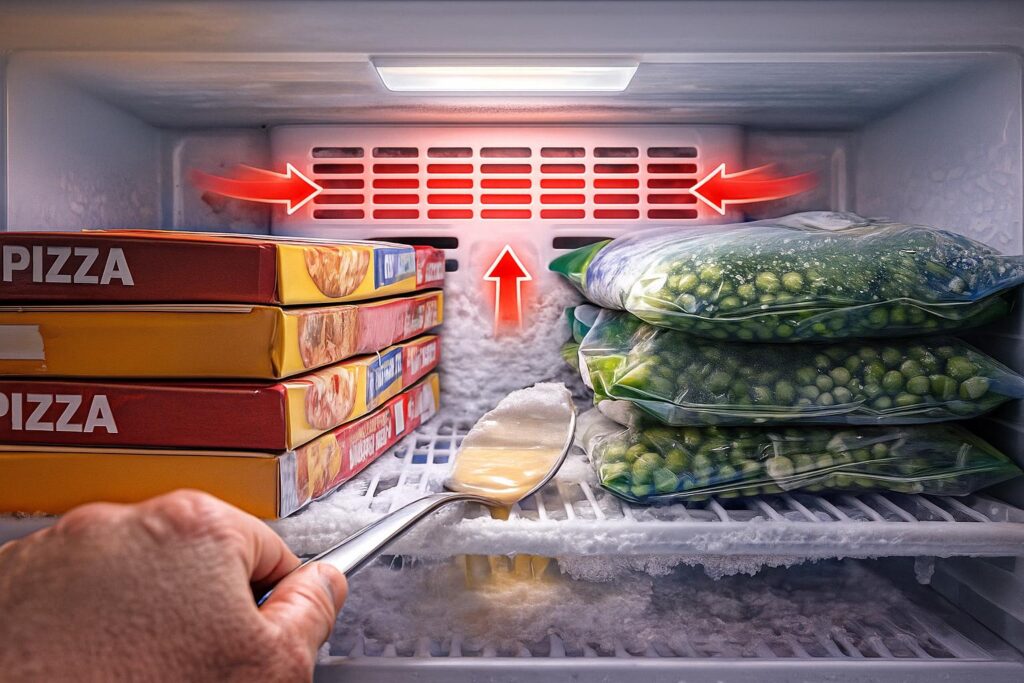
The Problem: For your freezer to maintain a constant 0°F (-18°C), the sub-zero air must circulate endlessly. The evaporator fan blows cold air out from the back wall vents. This air needs to travel over the frozen food to absorb ambient heat, and then travel back to a return vent at the bottom to be re-cooled.
If you shove a massive, flat pizza box, a large bag of frozen chicken, or tightly packed loaves of bread directly against these slatted vents, you instantly choke off the air circulation. The cold air is trapped behind the wall.
The Symptoms:
- Items pushed near the very back wall might be frozen solid, but items stored near the front door are rapidly thawing.
- You find your ice cream soft in the freezer door shelves, but hard as a rock if placed in the deep rear corner.
- The fridge section below seems completely unaffected because the damper is still siphoning off the trapped cold air.
How to Fix It:
- Locate the Vents: Look closely for the slatted plastic vents on the back wall and floor of your freezer.
- Create Immediate Space: Ensure there is at least 2 to 3 inches of completely clear airspace between your food packaging and the vents. Air must be allowed to cascade down.
- Do Not Overpack: A freezer needs to be roughly 75% full for maximum thermal efficiency, but packing it 100% full creates dangerous, stagnant warm pockets.
Cause #2: Dirty Condenser Coils Leading to Freezer Not Freezing
If the internal vents are clear and the food is organized, the next most likely issue is severe deferred maintenance under the appliance.
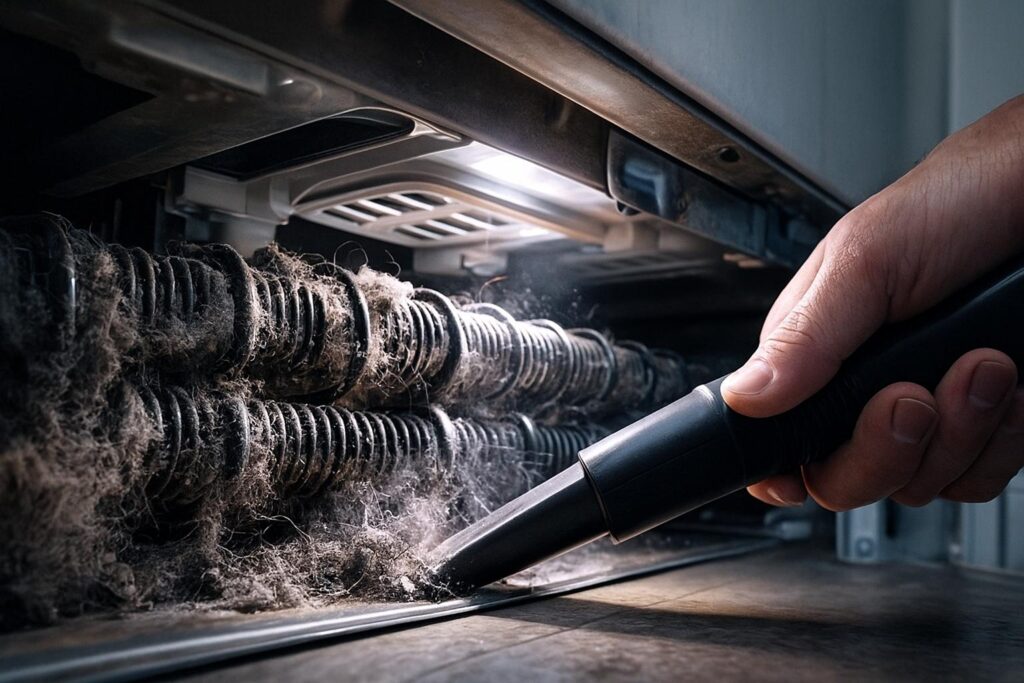
The Problem: Your refrigerator makes cold inside by actively releasing heat to the outside. It does this through winding black metal tubes called condenser coils, usually located at the very bottom or along the exterior back wall of the fridge. If these coils are heavily coated in an insulating blanket of thick dust and pet hair, they physically cannot release that heat into your kitchen air.
The Result: The compressor overheats and has to run constantly just to survive. It manages to keep the fresh food fridge cool (which only requires a mild 37°F), but it simply cannot generate the intense thermodynamic power needed to drop the freezer down to the required 0°F. This results in a freezer not cold enough to hold a freeze.
How to Fix It: Cleaning these coils is the absolute best thing you can do for your appliance’s lifespan and energy efficiency.
- Unplug the refrigerator from the wall outlet.
- Remove the plastic kickplate at the bottom front (or access the machine panel on the rear).
- Use a specialized coil cleaning brush and a vacuum hose to gently scrub and remove the thick blanket of dust from between the metal tubes. You can review our full step-by-step guide on how to clean refrigerator coils here.
Cause #3: The Temperature Settings Are Incorrect
Sometimes the root of the problem is as simple as an accidentally bumped dial or a confused digital display.
The Problem: The ideal, FDA-recommended temperature for a residential freezer is strictly 0°F (-18°C). If your mechanical controls were accidentally bumped up to 10°F or 15°F by a large item of food, your groceries will simply not stay solidly frozen. Ice cream is particularly sensitive to temperature swings and will quickly get soft and soupy at anything above 6°F to 10°F.
The Fix:
- Check the Controls: Locate your primary temperature controls (usually located on the ceiling of the fridge interior or externally on the front door dispenser).
- Adjust Colder: Set the freezer to its recommended setting (often labeled “Recommended,” “Normal,” or “0”). If it is already there, manually bump the freezer setting one or two notches colder.
- Wait 24 Hours: It takes a full 24 hours for the dense plastic walls and heavy insulation to stabilize at the new internal temperature. Do not expect instant, magical results. Use a standalone appliance thermometer to verify.
Cause #4: Defrost System Failure and Freezer Not Freezing
If your freezer has thick, visible ice buildup growing on the back wall, but the food sitting right next to it is soft, you have a classic automated defrost problem.
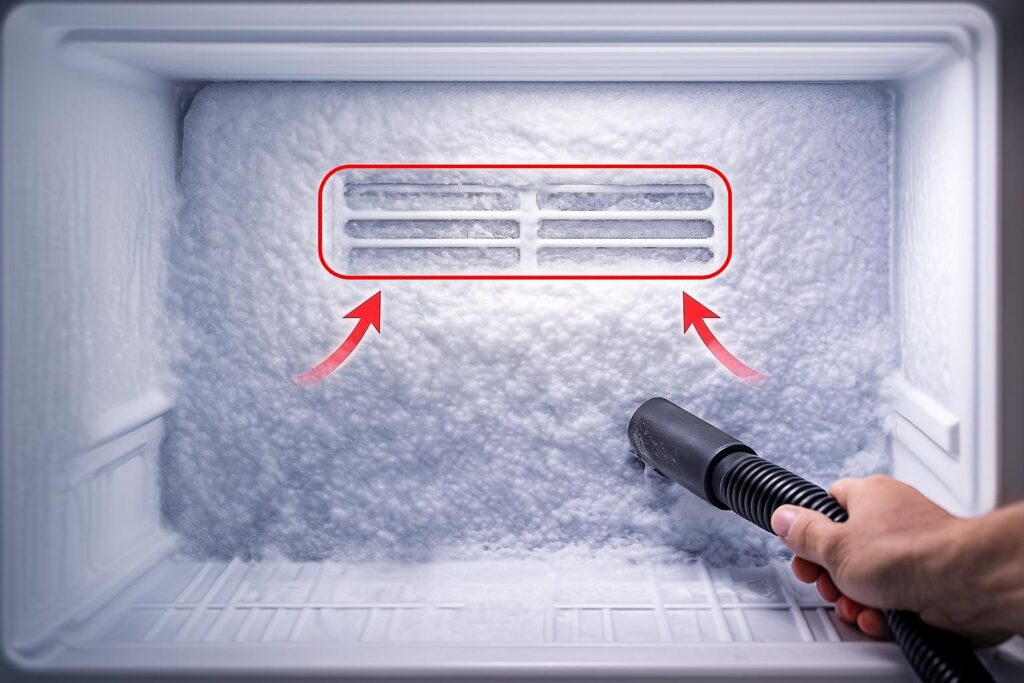
The Problem: Your freezer has silver cooling coils completely hidden behind the rear plastic panel. These coils naturally get frosty from pulling humidity out of the air. To prevent ice blockages, every 8 to 12 hours, a glass heating element turns on for about 20 minutes to safely melt this frost away.
If the electronic defrost heater, defrost timer, or the bi-metal defrost thermostat fails, this essential melting cycle never happens. The frost slowly builds up over several weeks until it forms a massive, solid igloo of ice entirely encasing the coils.
The Effect: This solid ice actually acts as a thermal insulator. The fan blows air over the block of ice instead of the super-cold aluminum coils. The circulating air never gets cold enough to freeze food solid, resulting in a freezer not freezing correctly, even though the fridge section manages to siphon off just enough cool air to survive.
How to Diagnose:
- Visual Check: Look closely at the back plastic wall inside your freezer. Do you see a heavy layer of white frost or snow bulging out of the air vents? If yes, this is definitively your problem.
- Manual Defrost Test: Unload your food into coolers and unplug the fridge. Leave the doors wide open for 24 to 48 hours to completely melt the hidden ice block. Plug it back in. If it works perfectly for a week and then the problem slowly returns, an electrical defrost part has failed and requires replacement.
Cause #5: A Weak or Failing Evaporator Fan Motor
The cold air is being made, but it simply isn’t moving.
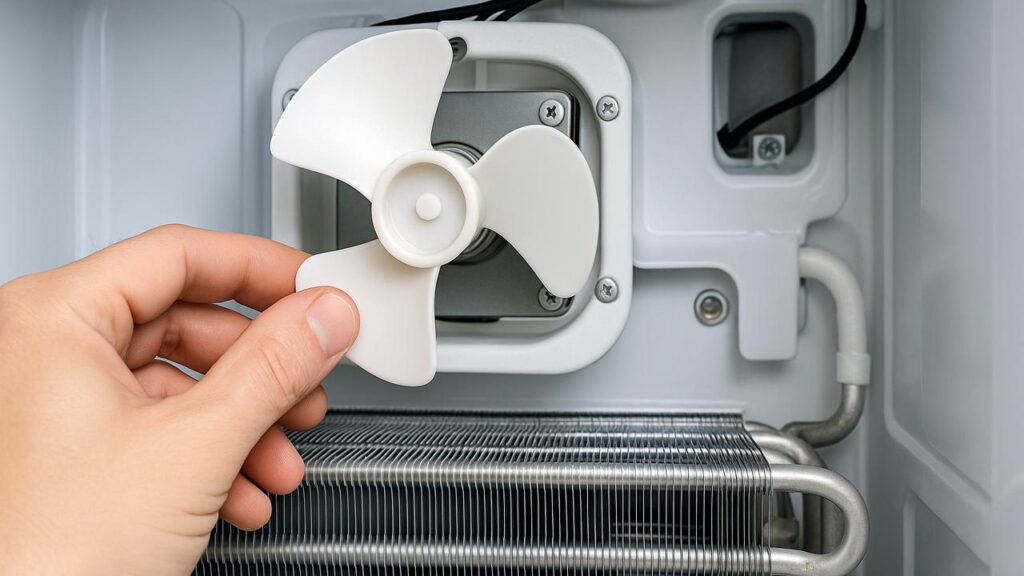
The Problem: The evaporator fan is located inside the freezer, directly behind the back panel. Its sole mechanical job is to pull the cold air off the freezing coils and forcefully circulate it throughout the entire compartment.
If this electrical motor bearings wear out and it spins weakly, or if ice is physically blocking the plastic blades from turning, the heavy cold air just sits stagnant in the very back of the freezer. The main temperature sensor (thermistor) thinks it’s cold enough and prematurely shuts off the compressor, leaving the rest of the freezer box far too warm.
How to Check It:
- Open the Door: Open the freezer door wide.
- Press the Switch: Locate the small plunger button or switch on the door frame that controls the interior light. Press and hold this switch down firmly to trick the fridge into thinking the door is shut.
- Listen Closely: You should hear the fan motor immediately kick on and feel a rush of cold air. If you hear dead silence, or a loud, painful grinding noise, the fan motor is dying and you need to order an evaporator fan replacement. Learn more about how to test evaporator fan motors here.
Related Symptoms: What Else to Look For
A freezer not freezing issue rarely happens in a vacuum. It often comes with other diagnostic clues.
- The Opposite Problem: Are you having the exact inverse issue, where the freezer is completely dead but the fresh food section is freezing your lettuce? Read our master guide on refrigerators that run but won’t cool to diagnose a bad start relay or a failed thermistor.
- Strange Noises: Is the freezer making a loud, aggressive humming or buzzing sound while failing to freeze? This almost always indicates a fan blade physically hitting ice buildup. Check our guide on a refrigerator making a clicking noise to rule out a dying compressor.
- Constant Running: Is the heavy fridge engine running 24/7 in a desperate attempt to get cold? This almost always points to dirty condenser coils suffocating the system. See exactly why your refrigerator is running constantly.
Frequently Asked Questions (FAQ)
Is food safe to eat if my freezer is not freezing properly?
Why is there frost forming on my food if the freezer isn’t even cold?
How long does it take a freezer to get cold again after fixing it?
Could my warm freezer be caused by a freon leak?
Conclusion: Restore the Chill
Discovering your freezer not freezing while the fridge section continues to work is highly alarming, but it is usually a sign of inefficient airflow or poor heat exchange, rather than a total, catastrophic sealed system failure.
Your Quick Action Plan:
- Rearrange: Check and clear the internal air vents immediately.
- Clean: Vacuum the condenser coils underneath or on the back of the unit.
- Inspect: Check the back wall of the freezer for heavy, solid frost buildup indicating a failed defrost heater.
By systematically addressing these common airflow and maintenance issues, you can usually get your freezer back down to zero safely and save your expensive ice cream from a soupy fate.