

Waking up to a silent kitchen and a puddle of water is deeply frustrating. Consequently, a dead refrigerator means you face severe refrigerator electrical problems. These issues range from a simple loose wall plug to complex control board failures. In fact, a failed circuit board can easily mimic a dead compressor.
Electrical repairs intimidate many homeowners. After all, electricity is invisible and dangerous. However, manufacturers build appliances logically. Therefore, you can isolate the exact power failure by following a strict testing sequence.
This advanced guide shows you the exact professional diagnostic path. Furthermore, certified technicians use these same steps in the field. We cover everything from the basic wall outlet test to using a digital multimeter. Crucially, always unplug your appliance before touching any internal wiring. Electrical repairs involve high voltage. As a result, consult a professional immediately if you feel uncomfortable testing live voltage.
💡 Mentor’s Diagnostic Hub
While electrical troubleshooting is a critical skill, many major failures actually stem from neglected hardware. Specifically, this guide connects with our comprehensive master series on maximizing lifespan, physical upkeep, and structural hardware repairs.
Step 1: Identify the Symptoms (The Triage Phase)
Before you pull the heavy fridge away, observe its behavioral symptoms. Typically, refrigerator electrical problems usually manifest in three distinct ways. Identifying the correct category saves you hours of unnecessary testing.
The Total Blackout
First, the interior lights remain dark. Additionally, the digital door display is blank. All fans remain completely silent. Ultimately, the unit appears completely dead. This symptom points to a primary power supply issue or a catastrophic control board failure.
Intermittent Operation
Second, the fridge works perfectly for a few hours, then shuts off entirely. Alternatively, the interior lights flicker heavily when the compressor kicks in. Usually, this points to a failing component drawing too much amperage. It can also mean the thermal overload switch is overheating.
Component-Specific Failure
Finally, the interior lights turn on, and the compressor hums. However, one specific electrical component refuses to work. For example, the ice maker won’t cycle. Perhaps the evaporator fan motor inside the freezer won’t spin. In this case, the main power works fine, but the isolated circuit is broken.
Identifying these symptoms provides your diagnostic roadmap. For instance, if the interior lights blaze brightly but nothing else runs, your wall outlet works perfectly. Therefore, you must turn your attention to the thermostat, defrost timer, or main control board.
Step 2: Advanced Electrical Safety Protocols
Before proceeding further, you must establish an absolute baseline of safety. Appliance repair inherently involves 120 volts of alternating current (AC). Consequently, one wrong touch can result in severe physical injury. Always verify that the plug is completely removed from the wall. Do not simply trust the “power off” button located on the front digital display.
Furthermore, if you must test live voltage at the main control board to verify incoming power, you must wear specialized Class 0 insulated electrical safety gloves. Ensure the floor beneath you is completely dry, and never lean your bare arm against the metal frame of the appliance while testing. Ultimately, taking an extra two minutes to physically secure your environment prevents catastrophic accidents.
Step 3: Check the Power Supply (The Rule of Simplicity)
Appliance repair technicians share a common rule: Never assume the power is on. Indeed, you would be shocked at how many “broken” refrigerators are just slightly unplugged. Therefore, before you blame the expensive appliance, you must verify the electricity source.
Testing the Wall Outlet and Polarity
Refrigerators draw massive electrical current. Specifically, this happens during the initial fraction of a second when the compressor piston starts moving. Over several years, the metal contacts inside a standard wall outlet weaken. Moreover, they can wear out or slightly melt. Consequently, this creates a loose, high-resistance connection.
- The Lamp Test: First, plug a working lamp into the exact same wall outlet. If it doesn’t turn on, your house wiring is the problem.
- The Safe Voltage Check: Alternatively, some DIYers fear using a multimeter on a live outlet. A safe alternative is a Non-Contact Voltage Tester Pen. Simply tap the plastic tip against the outlet slot. It flashes red and beeps loudly if high voltage is present.
🛠️ Recommended Safety Tool:
Non-Contact Voltage Tester Pen
Why you need this: A safe, touch-free way to instantly verify if a wall outlet or wire is carrying live, high-voltage current before you begin any electrical repairs.
- Voltage Verification: For a definitive answer, use a digital multimeter to measure AC Voltage for an accurate test. Insert the probes into the outlet slots. Ideally, you should see a steady reading between 110 Volts and 120 Volts. Lower readings cause the sensitive control boards to glitch. As a result, the compressor motor will physically stall and overheat.
Inspecting the Refrigerator Power Cord
Moving the appliance frequently damages power cords. First, check the entire thick grey cord for severe kinks. Look for pinch points or mouse chew marks. Next, closely examine the three metal prongs on the plug. Deep, black burn marks indicate a severe electrical arc. Ultimately, you must replace the cord completely if you see melted plastic.
Step 4: Inspect Circuit Breakers and GFCI Outlets
A tripped household circuit breaker protects your home. Essentially, it cuts power to prevent electrical fires. If your refrigerator electrical problems involve repeated power cuts, the appliance is leaking raw electricity to the ground.
The GFCI Outlet Conflict
Modern kitchens feature GFCI (Ground Fault Circuit Interrupter) outlets along the countertops. Primarily, these protect against water-related shocks. However, you should not plug refrigerators into GFCI outlets. Heavy compressor motors possess a natural, harmless current leakage during start-up. Unfortunately, this leakage easily nuisance-trips a sensitive GFCI outlet. Consequently, a tripped outlet leaves you with spoiled food. Instead, plug your refrigerator into a dedicated, standard 15-amp or 20-amp circuit.
Resetting the Breaker Correctly
Go directly to your home’s main electrical panel if the fridge is dead. Find the breaker labeled “Kitchen” or “Refrigerator.” Usually, a tripped breaker rests in the middle position and feels spongy. To fix this, push the switch firmly to the OFF position until it clicks. Next, push it firmly back to the ON position. If the breaker immediately trips again, you have a hard dead short. Typically, a grounded compressor motor or a shattered defrost heater causes this.
Step 5: Examine Electronic Control Boards and Sensors
Old refrigerators relied on simple mechanical dials and loud gear timers. Today, however, manufacturers build them like highly advanced computers. They utilize complex Electronic Control Boards (PCBs). In essence, this board acts as the central brain. It receives data from temperature sensors and sends voltage to the cooling components.
Visual Inspection of the Main PCB
You will typically find the main control board behind a small metal access panel on the exterior back. Some models hide it inside a plastic housing mounted to the interior ceiling.
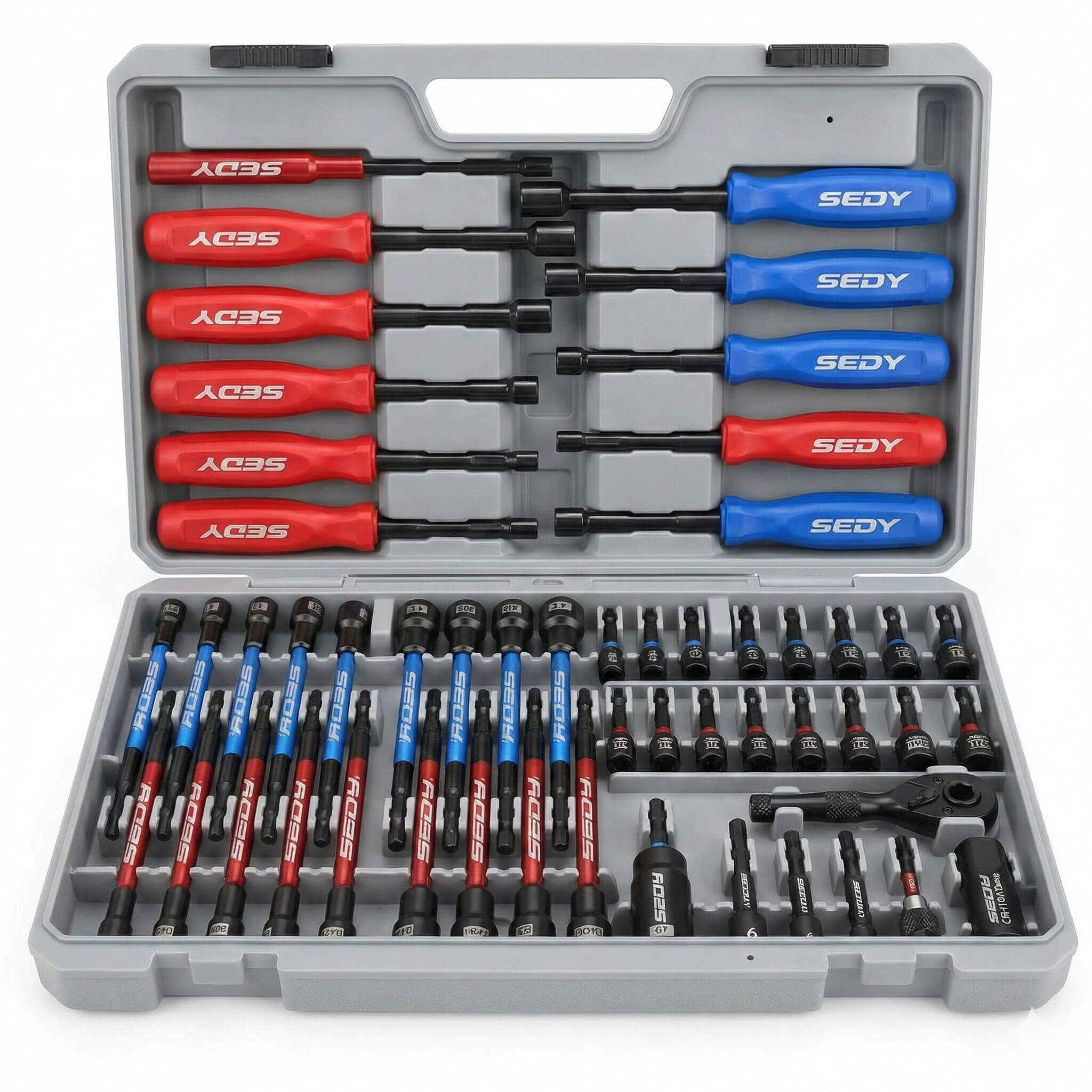
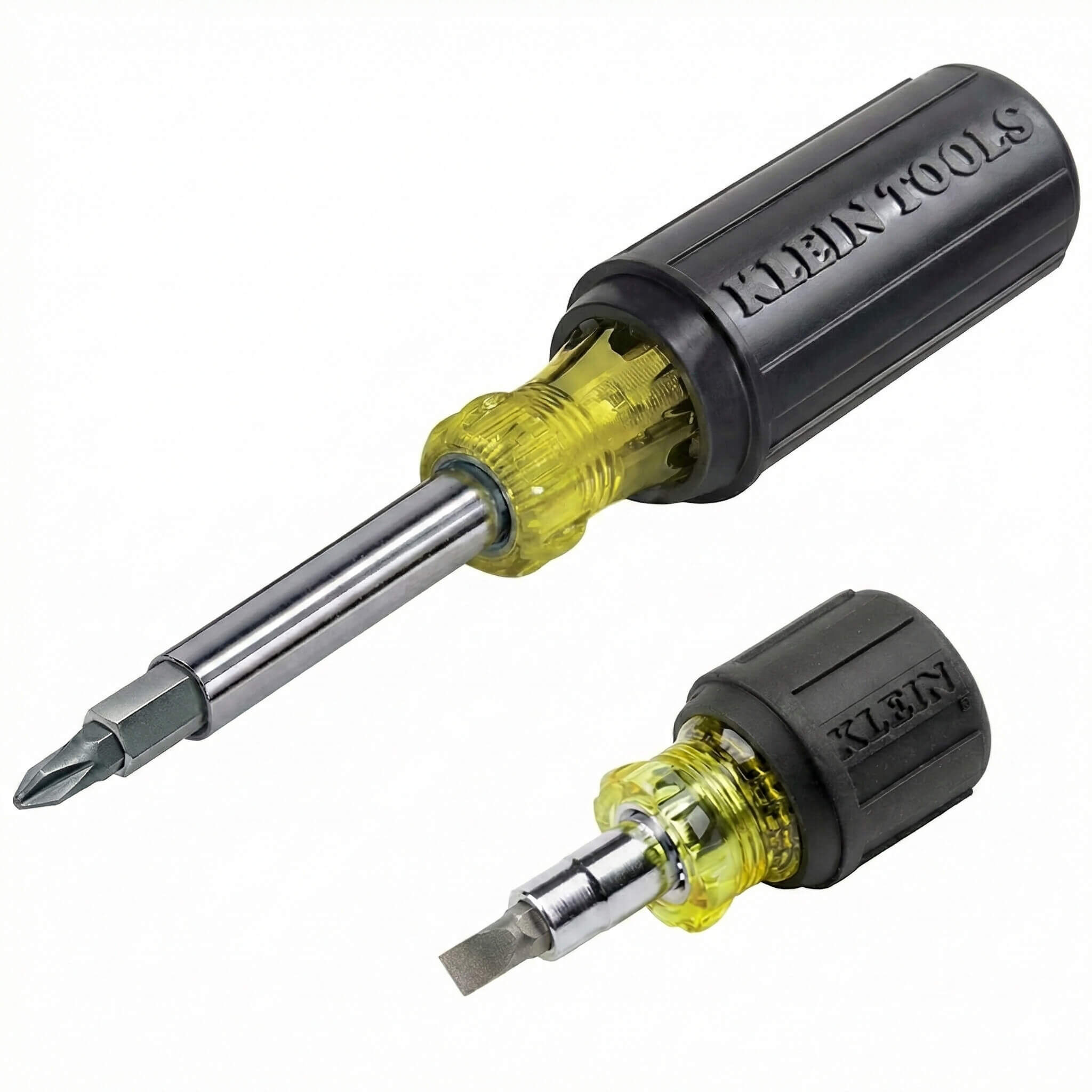
🛠️ Essential Hardware Tool:
Why you need this: Factories secure almost all exterior panels with 1/4-inch hex head screws. A magnetic driver prevents stripping screws and stops you from dropping them deep inside the motor compartment.
Inspect the board safely using these steps:
- First, unplug the refrigerator from the wall to eliminate shock hazards.
- Next, remove the access panel and visually examine the green circuit board. Look for obvious signs of catastrophic electrical trauma.
- Specifically, search for heavily blackened or scorched areas on the fiberglass. Check the cylindrical capacitors. They should have perfectly flat metal tops. If they bulge, they are ruined.
- Finally, conduct a smell test. A sharp, harsh, metallic ozone smell confirms a fried circuit board. We deeply analyze this in our chemical smell guide.
Understanding the Inverter Control Board
If you own a modern LG, Samsung, or high-end GE Profile, your appliance likely utilizes a highly advanced Linear or Inverter Compressor. Unlike older models that only turn on or off, these compressors function exactly like a car’s gas pedal, ramping speeds up and down smoothly. Consequently, they require a completely separate, dedicated circuit board known as the Inverter Board.
This specialized board sits directly next to the Main PCB on the back of the fridge. It takes standard 120V AC wall power and physically converts it into low-voltage DC power to safely run the delicate compressor. Therefore, if the Main PCB sends the signal to cool, but the Inverter Board is fried from a power surge, the compressor will remain completely dead. You must check the tiny LED diagnostic light physically mounted on the Inverter Board; if it blinks a specific number of times, it is actively communicating an error code that you must look up in the technical manual.
Testing Temperature Sensors (Thermistors)
Thermistors are small electronic sensors buried inside the fridge walls. They constantly measure the air temperature. Subsequently, they report this data back to the main board. If a thermistor physically fails, the control board receives a blind reading. As a result, the board might mistakenly think the fridge is freezing cold. It then refuses to send electrical power to the compressor.
Test these sensors precisely using a digital multimeter on the Ohms resistance setting. Locate the manufacturer’s specific Tech Sheet to find the correct resistance chart. You often find this folded under the bottom front hinge. The sensor’s resistance should drastically change as you warm it in your hand.
Step 6: Decoding Digital Error Codes
Before manually tearing into the electrical components, you must consult the digital brain. Modern appliances will literally tell you what is wrong. If your control board detects an open circuit, a shorted sensor, or a stalled fan motor, it will immediately flash a highly specific alphanumeric code on the front display panel.
For example, if a Samsung refrigerator flashes “22 E” or “22 C,” it is definitively telling you that the primary evaporator fan motor is completely locked up or the wiring harness is disconnected. Similarly, an LG displaying “ER IF” indicates a severe malfunction strictly within the ice maker fan circuit. By specifically referencing your manufacturer’s technical manual, you can instantly pinpoint the exact electrical failure without wasting hours guessing.
Step 7: Test Internal Components with a Multimeter
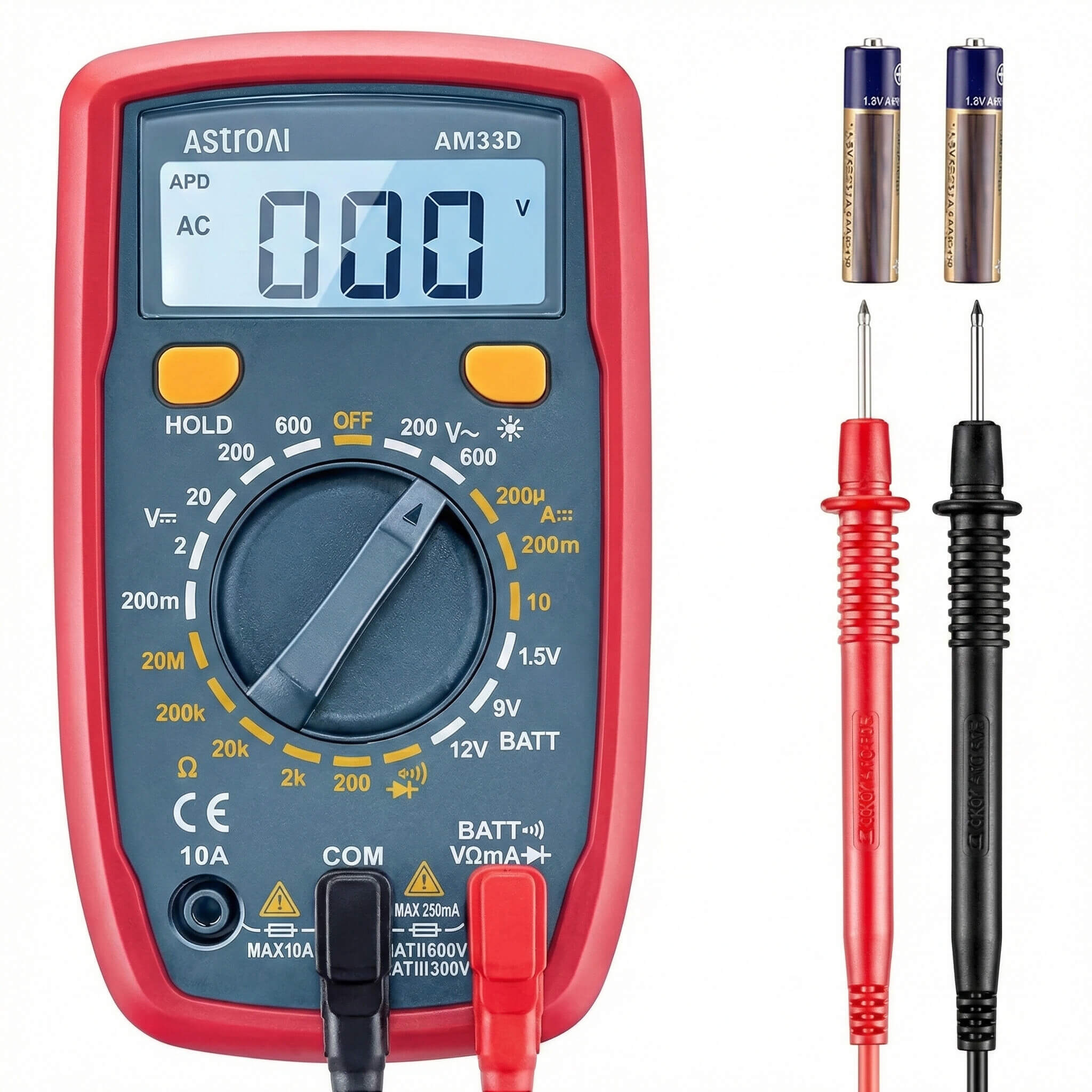
You have confirmed that 120 Volts of clean power reaches the refrigerator. If the machine still refuses to cool, you must test the individual electrical components. A high-quality Digital Multimeter is your most valuable diagnostic tool here. Indeed, it is the single most critical investment for DIY appliance repair.
🛠️ Master Diagnostic Tool:
Why you need this: The single most critical investment for DIY appliance repair. This allows you to safely test compressor windings, defrost heaters, and verify live wall voltage.
1. Testing the Compressor Windings
The large, black compressor at the bottom rear is a sealed electrical motor. It features three metal terminal pins arranged in a triangle. Test the electrical continuity between these pins. Ultimately, this determines if the internal copper wiring has melted or snapped.
- First, set your multimeter to the Ohms (resistance) setting.
- Then, test the resistance between the Common and Run pins. Next, test the Common and Start pins. The sum of those two readings should exactly equal the resistance between the Start and Run pins. A reading of “OL” means the internal wire snapped. Consequently, the compressor is dead.
- Finally, perform the ground test. Place one multimeter probe on a bare metal copper pipe. Touch the other probe to each of the three terminal pins individually. If your meter beeps, the internal electrical windings melted. They are touching the metal outer casing. This highly dangerous “short to ground” constantly trips your house breaker.
2. Testing the Start Relay and Capacitor
If the compressor pins test perfectly fine, check the small plastic component plugged directly onto them. This is the PTC Start Relay. This tiny device handles massive amounts of electrical current. As a result, it burns out incredibly frequently.
Does your fridge make a clicking noise every three minutes without starting? If so, the relay is the prime suspect. Pull it off the compressor and shake it next to your ear. It rattles like broken glass if the ceramic thermistor disc shattered. Fortunately, this is a cheap and fast DIY fix.
🛠️ Recommended Replacement Part:
Why you need this: Revive a dead compressor cheaply and quickly. This specific kit safely kickstarts almost all major residential refrigerator brands when the factory relay inevitably shatters.
3. Testing the Defrost Heater
A complex network of silver evaporator coils hides behind the back freezer wall. A high-voltage heating element attaches to the bottom of these coils. Normally, this heater turns on daily to melt away frost.
The circuit breaks if the internal filament snaps. Unplug the fridge and locate the heater wire harness. Test it for electrical continuity. It is broken if you find no continuity. Consequently, a broken heater creates a massive ice wall. This blocks the evaporator fan and stops all cold airflow.
4. Testing the Magnetic Door Switch
If your ice maker suddenly refuses to dispense ice, or the internal cooling fan absolutely will not turn on when the door is open, you very likely have a failed door switch. Modern refrigerators utilize a highly sensitive magnetic “reed switch” embedded directly in the door frame. When the door closes, the magnet completes the circuit, telling the computer to turn off the lights and engage the fan. However, if this switch burns out, the fridge behaves as if the door is permanently wide open, completely paralyzing the cooling cycle.
Step 8: Inspect Wiring Harnesses and Connectors
Constant physical vibration destroys internal appliance wiring. The heavy compressor vibrates the metal frame over many years. Meanwhile, internal wires actively rub against sharp metal edges. This friction completely wears through the protective rubber insulation. Bare copper wire eventually exposes itself.
The Door Hinge Choke Point
Modern French-door models feature digital ice dispensers built into the door. A massive wiring harness runs completely through the hollow door hinge. Opening and closing this heavy door bends these wires thousands of times a year. They eventually snap inside the hinge. As a result, this causes the display panel to go dark.
Moisture and Corrosion
Refrigerators operate as inherently wet environments. You might experience a clogged defrost drain (see our comprehensive leaking water guide). That overflowing moisture actively seeps into plastic electrical connector blocks. Subsequently, water creates green copper corrosion. This generates massive electrical resistance, heat, and component failure. Therefore, always inspect plastic wire connectors for melting signs.
Step 9: The Master “Hard Reset” Procedure
Modern refrigerators function as large computers. Their internal software occasionally glitches or hangs. Neighborhood power outages or severe lightning storms often lock the system in an infinite logic loop.
Why You Need a Hard Reset
Do not immediately spend hundreds of dollars ordering replacement control boards. Instead, perform a complete electronic Hard Reset first. This clears the motherboard’s memory cache.
The 4-Step Reset Process
- First, unplug the refrigerator cord directly from the wall outlet. Do not just turn it off at the digital display panel.
- Next, leave it completely unplugged for exactly 10 to 15 minutes. This extended resting time is critical.
- Then, press and hold the mechanical interior light switch for 30 solid seconds while the unit is unplugged. This actively forces the large control board capacitors to rapidly bleed off stored electrical energy. It wipes the computer memory completely blank.
- Finally, plug the machine firmly back into the wall outlet. Listen closely for the distinct click of the relays engaging. The compressor and fans will then start their boot sequence.
Step 10: When to Contact a Professional Technician
Basic electrical troubleshooting is highly accessible for an enthusiastic DIYer. However, refrigerator repair possesses hard limits. Safety and technical complexity must take priority.
Recognizing Your Limits
Stop testing and call a certified appliance technician if you lack safety equipment. Do not proceed if you lack a high-quality digital multimeter. Navigating live 120-volt wiring requires absolute confidence. Ultimately, the risk of lethal electrical shock outweighs the repair savings.
Complex Mechanical Failures
Sometimes the compressor runs smoothly and draws the correct amperage. The fans spin at high speed. Yet, the interior remains at room temperature. You have a mechanical failure, not an electrical one. This indicates a toxic refrigerant leak or a destroyed compressor valve. Therefore, technicians require specialized welding torches and EPA-regulated Freon tanks to repair this.
Software Programming Requirements
You might correctly diagnose a failed electronic control board. However, be aware that many modern replacement boards arrive completely blank. They require a specialized software “Jig” to program the board. You must match the code to your specific refrigerator model. A technician must finalize the installation if you lack these programming instructions.
Conclusion: Mastering the Refrigerator Circuit
In conclusion, diagnosing refrigerator electrical problems relies on a process of systematic elimination. An appliance is not magic; it requires a continuous, unbroken path of electricity. Power travels from the wall, through the control board brain, down to the mechanical compressor muscles. You must patiently check the power source and verify the circuit breakers. You visually inspect the control board for burn marks. Finally, you utilize a multimeter to test the internal components. This process accurately narrows down the precise fault.
Your Action Plan:
- Verify the Outlet: Always prove the wall has power first.
- Perform a Hard Reset: Unplug the unit for 15 minutes to clear digital software glitches.
- Listen for the Click: Diagnose start relay failures using sound and rattle tests.
- Test for Continuity: Use a multimeter on fans, heaters, and compressor pins.
By following these exact diagnostic steps, you save hundreds of dollars on unnecessary parts. You can correctly identify whether you need a simple twenty-dollar relay switch or a licensed professional. Start simple, work methodically, and always respect the power of high voltage electricity.