
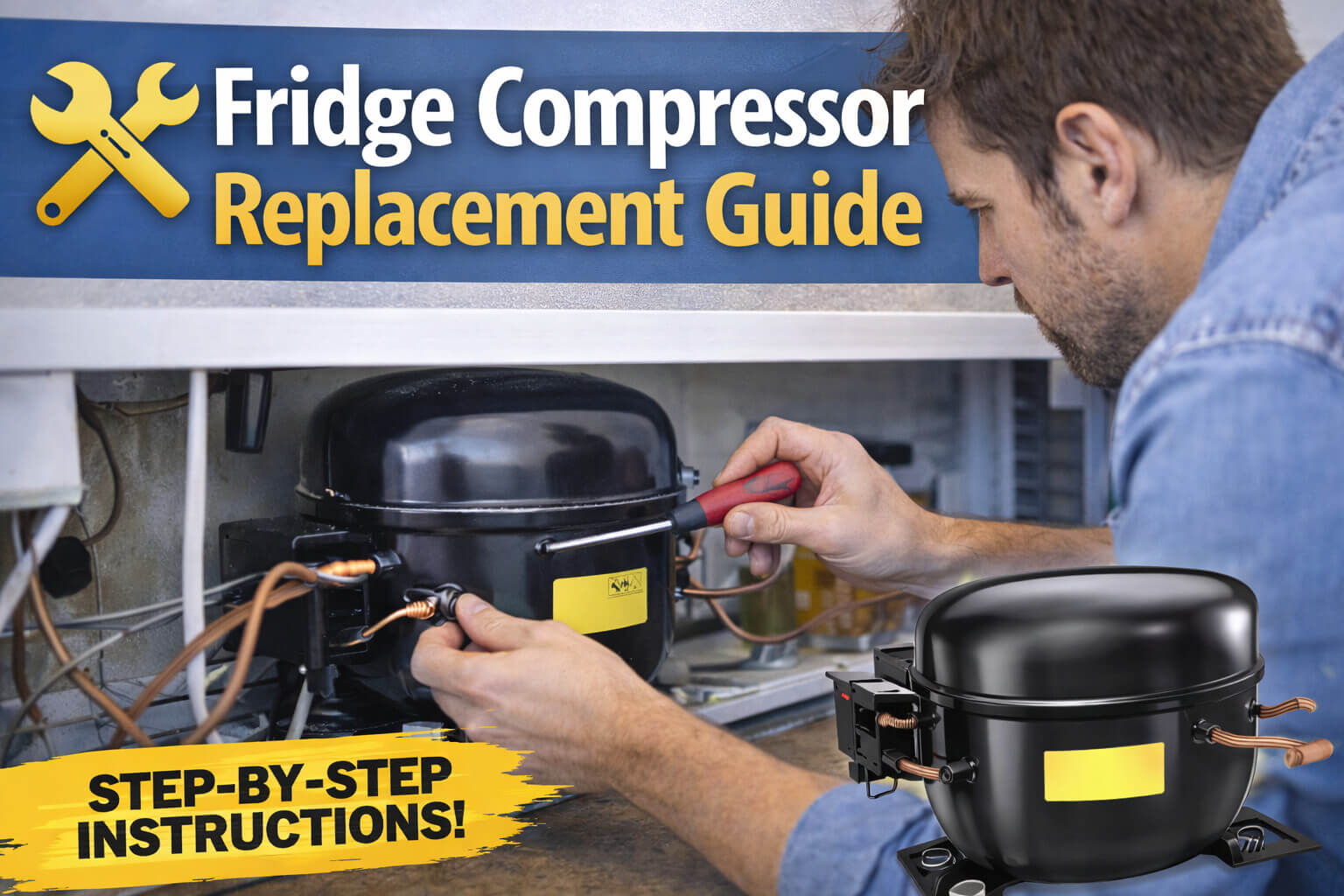
Replacing a compressor is the “heart transplant” of appliance repair. It is the most difficult, expensive, and technical job you can perform on a refrigerator. If your compressor has mechanically seized or shorted out, the fridge is essentially dead weight until this component is swapped.
This fridge compressor replacement guide is designed for advanced DIYers and technicians who want to understand the rigorous process of sealed system repair. Unlike changing a lightbulb, this requires specialized tools, brazing torches, and strict adherence to EPA refrigerant regulations.
Fast & Reliable Appliance Repair Services.
Get expert advice on your cooling issues immediately.
Average wait time: < 2 minutes
Available 24/7 for Emergency Support
Phase 1: Safety & Legal Warning
Stop! Read This Before Proceeding.
In the United States, handling refrigerant (Freon) is regulated by the EPA under Section 608 of the Clean Air Act. It is illegal to knowingly vent refrigerant into the atmosphere. You must use a recovery machine to capture the old gas.
Furthermore, this repair involves an open flame (brazing) near flammable insulation and potentially flammable refrigerants (like R600a/Isobutane). Always have a fire extinguisher nearby and ensure proper ventilation.
Phase 2: The Misdiagnosis Trap
Before you spend $300+ on a new compressor and vacuum pump, you must be 100% certain the old one is dead. 80% of “failed” compressors are actually just failed Start Relays.
- The Click Test: If your compressor clicks every few minutes but doesn’t start, the issue is likely the inexpensive start relay, not the motor itself. (Read: How to Diagnose a Clicking Fridge).
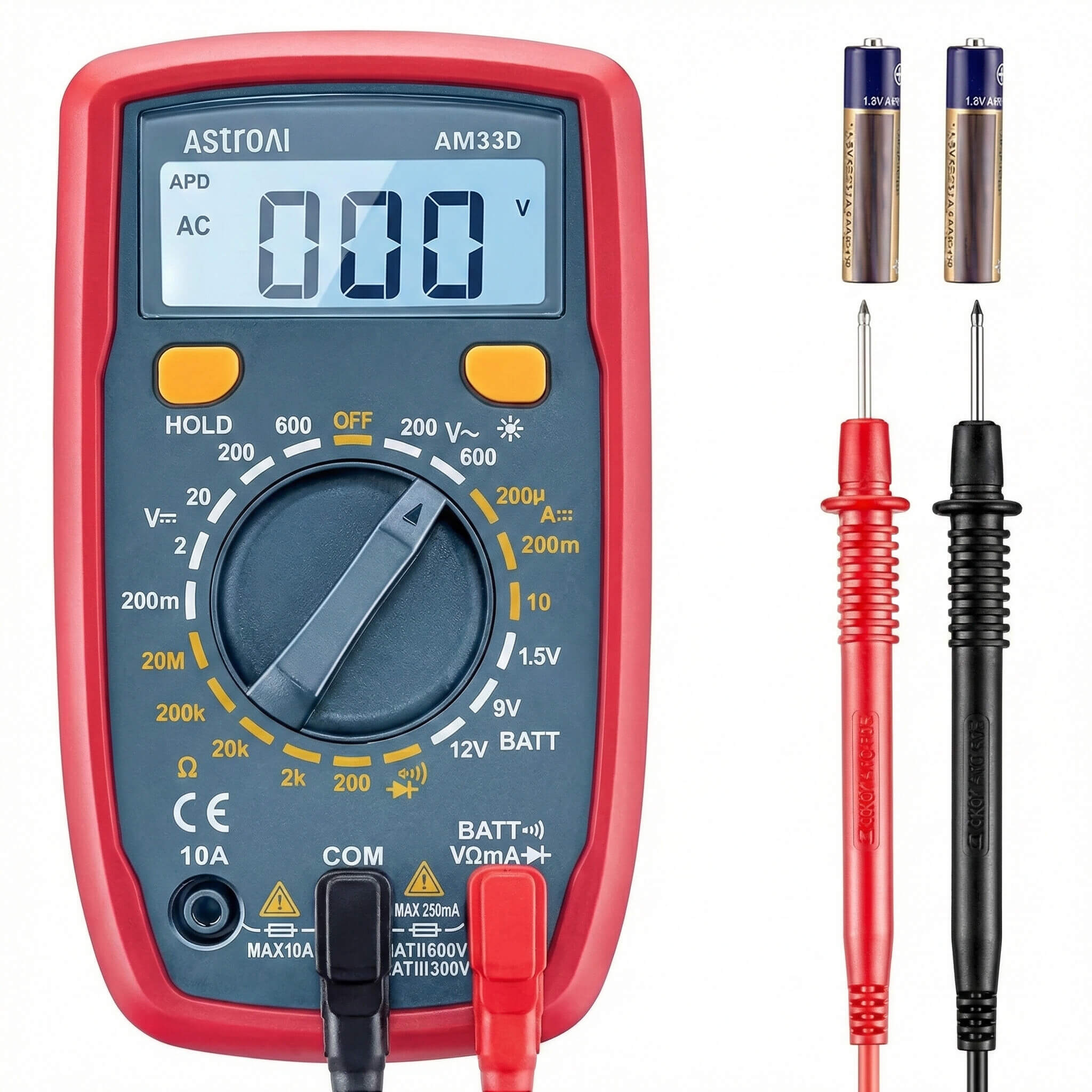
- The Ohms Test: Use a multimeter to measure resistance between the three pins on the compressor. If you read “Open Line” (Infinity) or “0.0” (Short), the compressor is dead.
Phase 3: The “Burnout” Check (Crucial)
If your old compressor died due to an electrical burnout, the internal oil has likely turned into sludge and acid. If you connect a new compressor to this acidic system, the acid will eat the new windings, and the new unit will fail within weeks.
The Acid Test: When you cut the lines, smell the refrigerant oil. If it smells acrid (like rotten eggs), you have a burnout. In this case, you must install a “Suction Line Filter Drier” to trap the acid and perform a nitrogen flush.
🛠️ Diagnostic Essential:
Why you need this: A $15 test can save a $300 compressor. Simply dip the strip into the old oil to verify if the system is clean enough for a new heart.
Phase 4: Required Tools (The “Sealed System” Kit)
You cannot use standard hand tools for this job. You are working with high-pressure gas and copper lines.
🛠️ Essential Tool #1: Vacuum Pump
Single Stage Rotary Vane Vacuum Pump
Why you need this: Before adding new Freon, you must remove 100% of the air and moisture from the lines. A vacuum pump pulls the system into a deep vacuum (microns), ensuring the new compressor doesn’t fail immediately.
🛠️ Essential Tool #2: Manifold Gauge Set
R134a/R410a AC Manifold Gauge Set
Why you need this: These gauges allow you to monitor the high-side and low-side pressures during the recharge process. You cannot guess—you must measure.
Phase 5: The Replacement Procedure
Step 1: Removal of the Old Unit
Using a tube cutter, cut the suction (large) and discharge (small) copper lines connected to the old compressor. Do not use a hacksaw, as copper filings can clog the system. Unbolt the compressor from the frame and remove the electrical harness.
Step 2: The Filter Drier (Mandatory)
Crucial Rule: Whenever you open the sealed system, you must replace the Filter Drier. This small copper bullet traps moisture. If you reuse the old one, moisture will freeze in the capillary tube, blocking the flow of cooling gas.
Step 3: Brazing (Welding)
Place the new compressor in the bay. Connect the copper lines. You will need an oxy-acetylene or MAPP gas torch to braze the connections using silver solder sticks.
- Safety: Use a heat shield to protect the back of the fridge.
- Nitrogen Sweep: Pros flow low-pressure nitrogen through the lines while brazing to prevent oxidation (soot) from forming inside the pipes.
Step 4: The Nitrogen Pressure Test
Before you waste expensive refrigerant, you must check your welds.
- Hook up a tank of Nitrogen to your manifold gauges.
- Pressurize the system to 150 PSI.
- Watch the needle for 10 minutes. If it drops even slightly, you have a leak in your braze joints. Use soap bubbles to find it and re-braze.
Step 5: Pulling a Vacuum
Connect your manifold gauges and vacuum pump to the service valve. Turn on the pump.
- The Goal: You want to pull the system down to at least 500 Microns.
- The Wait: Let the pump run for 30–45 minutes. Moisture boils off in a vacuum. If you skip this, the compressor will die within a month.
Step 6: Weighing in the Charge
Refrigerators are critical charge systems. You cannot just “add gas until it’s cold.”
- Check the model tag inside the fridge for the exact refrigerant weight (e.g., “R134a 4.50 oz”).
- Place your refrigerant bottle on a digital scale.
- Open the valve and let the gas flow until the scale shows exactly the weight removed.
Phase 6: Wiring the New Compressor
Wiring can be confusing because new universal compressors often have different pin layouts than the original.
- Common (C): Usually the top pin (or bottom, depending on the triangle layout).
- Start (S): Connects to the Capacitor/Relay.
- Run (R): Connects to the main power line.
Standard vs. Inverter:
If you are replacing an LG Linear or Samsung Inverter compressor, you may need to update the refrigerator’s software using a specialized “Jig” tool. Without this update, the main computer board may not communicate correctly with the new compressor, causing it to stall.
Summary: Is It Worth It?
Sealed system work is expensive. Use the “50% Rule” before starting.
| Factor | Recommendation |
|---|---|
| Fridge Age < 5 Years | Repair. The unit has plenty of life left. |
| Fridge Age > 10 Years | Replace. Other parts (fans, boards) will fail soon. |
| High-End Built-In (SubZero) | Repair. Replacement cost ($10k+) justifies the repair. |
| Standard Top-Freezer | Replace. The repair costs more than a new unit. |