
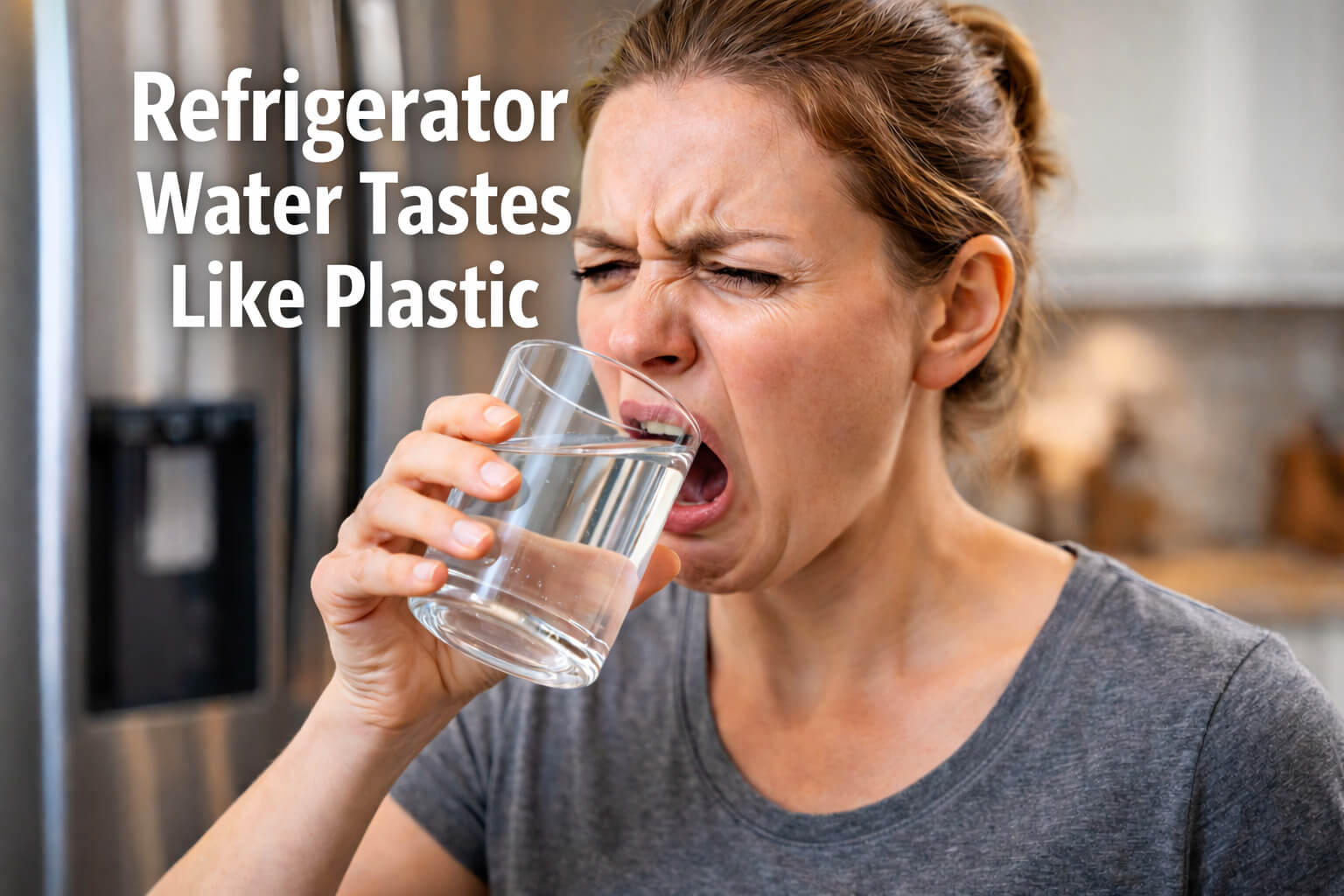
There are few things more disappointing than filling a glass with ice-cold water on a hot day, only to take a sip and taste melted plastic, harsh chemicals, or stale rubber. You bought a refrigerator with a filtration system to improve the quality of your tap water, not to make it unpalatable.
The good news is that this flavor rarely indicates that the water is toxic. Instead, it is almost always a reaction between the water and the materials it touches—specifically the plastic tubing, the filter media, or the supply line connecting your fridge to the wall. This issue is most common in brand-new refrigerators, but it can also strike immediately after you replace a refrigerator water filter or return from a long vacation.
In this guide, we will provide a step-by-step diagnostic procedure to determine exactly why your refrigerator water tastes like plastic. We will cover how to identify the source (house vs. fridge), the correct “Pulse Flush” technique for new filters, and why upgrading your supply line is the #1 permanent fix for bad taste.
Phase 1: The “Sensory” Diagnosis
Not all bad tastes are created equal. Before you start unscrewing hoses or buying parts, you need to analyze the flavor profile. Your tongue is a surprisingly accurate diagnostic tool that can tell you which component is failing.
1. The “Garden Hose” Taste (Plastic/Rubber)
If the water tastes distinctively like vinyl, a rubber tire, or a swimming pool toy, the issue is almost certainly the tubing. Water is a universal solvent. If it sits stagnant in a low-quality plastic tube for too long, it will leach chemical compounds (VOCs) from the tube walls.
- Likely Culprit: The water supply line running from your kitchen wall to the fridge, or the internal polyethylene reservoir tank.
2. The “Chemical” or Bitter Taste
If the water tastes medicinal, bitter, sharp, or slightly metallic, this is often a filter issue. Activated carbon filters work by adsorption. However, loose carbon dust or the binding agents used in cheap filters can taint the water initially.
- Likely Culprit: A new filter that wasn’t flushed properly, or a generic “knock-off” filter that is degrading.
3. The “Garlic/Onion” Taste (Odor Transfer)
If the water tastes like last night’s leftovers, the problem isn’t the water—it’s the air. Refrigerator water reservoirs are located inside the fresh food compartment. Plastic is semi-permeable to odors. If the evaporator fan motor is circulating smells from uncovered food (like onions or tuna), the water tank will eventually absorb that taste.
- Likely Culprit: Old food, no baking soda, or a dirty air filter.
The #1 Cause: The Water Supply Line
If your refrigerator water tastes like plastic, 80% of the time, the fault lies behind the refrigerator, not inside it.
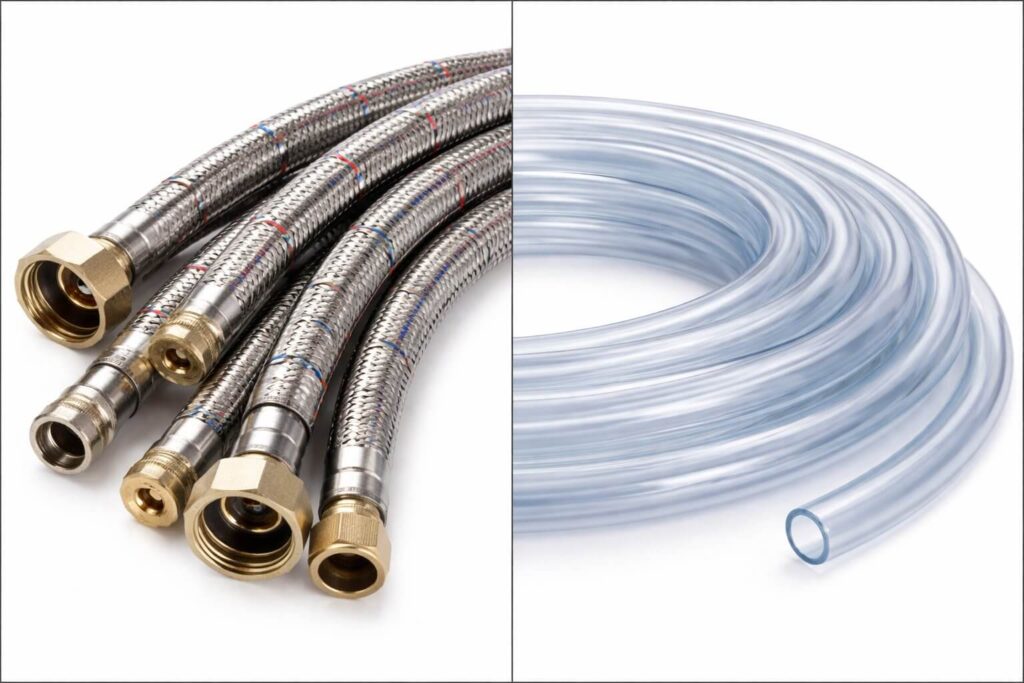
Many homes use cheap, translucent plastic (PEX or vinyl) tubing to connect the fridge to the wall valve. Over time, or if the tubing gets warm—often due to the heat generated by the compressor (especially if the fridge is clicking every few minutes or working too hard)—the plastic degrades. This “off-gassing” infuses the water with that distinct garden hose flavor.
The Solution: Braided Stainless Steel
To permanently solve this, you must replace the plastic line with a Braided Stainless Steel supply line. These lines have an inner core made of food-grade PVC that is shielded from heat and light by the steel armor, preventing leaching.
🛠️ Recommended Upgrade:
Icemaker Water Supply Line (Braided Stainless Steel – 10ft)
Why you need this: It puts a steel barrier between your water and the heat of the compressor, preventing the “plastic” taste leaching that occurs with cheap vinyl tubing.
The “New Filter” Phenomenon
Did the bad taste start immediately after you installed a new filter? Ironically, the device meant to clean your water can briefly ruin it if not installed correctly.
The Carbon Dust Factor
Inside your filter is a block of activated carbon made from coconut shells or coal. During shipping, this block vibrates, creating fine black dust. If you drink the first glass of water from a new filter, you are drinking this loose dust. While not toxic, it tastes bitter and chemically.
The Fix: The “4-Gallon Pulse Flush”
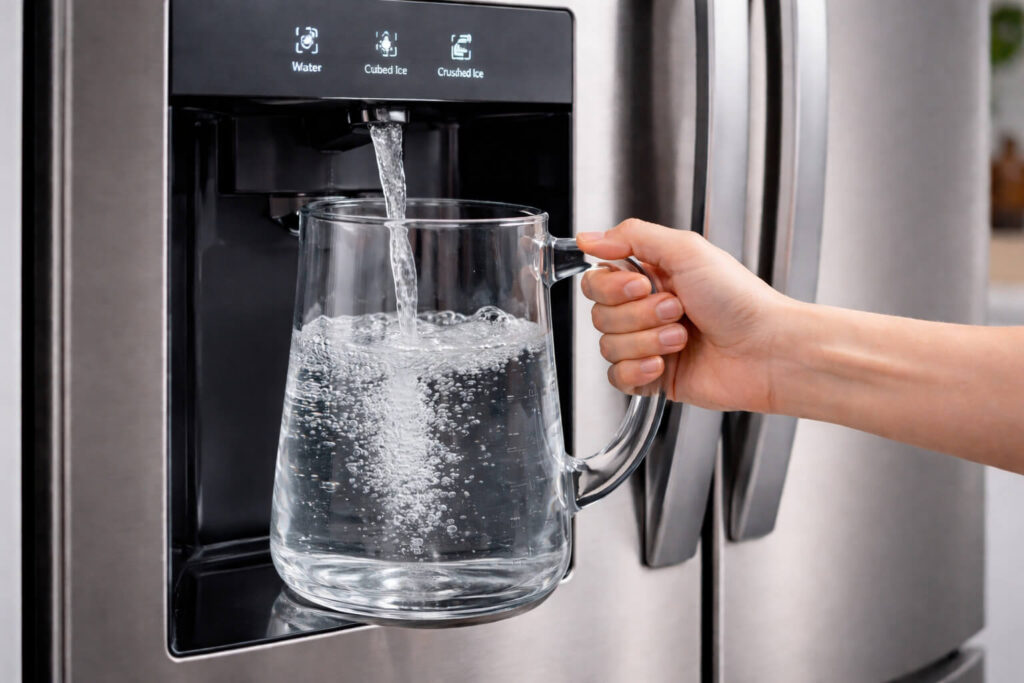
Most manufacturers recommend flushing 3 to 4 gallons of water through a new filter. Do not ignore this. Simply running a steady stream isn’t enough to dislodge stubborn particles.
The Pulse Method:
- Press the dispenser paddle for 30 seconds.
- Release it and wait for 5 seconds.
- Repeat this cycle until you have filled a 5-gallon bucket (or about 60–70 cups).
This “stop-and-go” motion creates a water hammer effect inside the cartridge, shaking loose the air bubbles and carbon fines trapped in the corners of the filter housing.
The Hidden Trap: Stagnant Water
Modern refrigerators have a water reservoir tank coiled up inside the fridge door or behind the crisper drawers. This tank holds about 2–3 cups of water to ensure the first glass you pour is cold.
The Problem: If you go on vacation, or if you only drink water once every few days, that water sits inside a plastic coil for 48+ hours. The plastic taste concentrates in that sitting water.
- The Test: Pour one glass and dump it out. Pour a second glass and taste it.
- The Result: If the second glass tastes crisp and clean, your issue is simply stagnation. You need to use your dispenser more frequently to keep the water fresh.
The “Construction Dust” Issue (Brand New Fridges)
If your refrigerator is brand new (less than 1 month old), the entire internal system is coated in manufacturing residues, dust, and assembly lubricants. The plastic tubing is also fresh and “off-gassing” (releasing trapped gasses from the manufacturing process).
- The Fix: A new fridge requires a massive initial flush. You may need to flush 5 to 10 gallons of water through the system over the first week to fully wash out the “new car smell” from the internal plumbing.
- Patience: It can take up to 72 hours for the plastic taste to dissipate in a brand-new unit as the materials settle. During this time, ensure your temperature is stable by testing the refrigerator thermostat to make sure the unit isn’t running too warm, which can exacerbate plastic off-gassing.
The Isolation Test: Is It the Fridge or the House?
If you have changed the filter, flushed the lines, and the water still tastes awful, you must determine if the problem is the refrigerator or your home’s water supply. This test requires a bucket and a wrench.
Step-by-Step Isolation:
- Pull the refrigerator away from the wall carefully.
- Turn off the water valve at the wall (usually clockwise).
- Disconnect the water supply line from the back of the fridge (not the wall).
- Point the supply line into a bucket and have a helper turn the water valve back on briefly.
- Taste the water in the bucket.
The Analysis:
- Bucket Water Tastes Bad: The problem is outside the fridge. It is your house plumbing or the supply line connecting the wall to the fridge. Replace the supply line with stainless steel immediately.
- Bucket Water Tastes Good: The supply is fine. The contamination is happening inside the refrigerator (bad filter, dirty reservoir, or degrading internal tubing).
The “Ice Cube” Factor: Why Ice Tastes Worse
Sometimes the liquid water tastes okay, but the ice tastes terrible. This is due to a process called sublimation.
Ice cubes sit in the bin for days or weeks. Over time, they shrink (sublimate) and absorb every odor in your freezer. This is especially common if you have temperature fluctuations caused by a bad defrost heater or if the freezer door is left slightly ajar.
Old Ice Syndrome:
Ice is food. It has an expiration date. If you haven’t used the ice in the bottom of the bin for a month, it will taste like stale plastic and freezer burn.
Fix: Dump the entire ice bin once a month. Wash the bin with warm soapy water and let it start fresh.
Summary: The Flavor Troubleshooting Table
| Taste Profile | Likely Cause | The Fix |
|---|---|---|
| Plastic / Garden Hose | Vinyl Supply Line | Install Stainless Steel Line |
| Bitter / Chemical | New Filter / Carbon Dust | Flush 4 Gallons of Water |
| Medicinal / Chlorine | Generic “Fake” Filter | Replace with OEM Filter |
| Garlic / Onion / Stale | Odor Transfer | Add Baking Soda / Dump Ice |
| New Fridge Plastic | Off-gassing | Wait 72 Hours + Heavy Flush |
Frequently Asked Questions
Is it dangerous to drink water that tastes like plastic?
Generally, no. While the taste is unpleasant, it usually comes from non-toxic food-grade tubing (like PEX) off-gassing or leaching minute amounts of compounds that the human tongue is highly sensitive to. However, to minimize chemical ingestion, we strongly recommend replacing plastic supply lines with braided stainless steel.
I flushed the filter, but it still tastes bad. Now what?
If you have flushed 4+ gallons and the taste persists, remove the filter and install the Filter Bypass Plug (the cap that came with the fridge). Taste the water. If the bad taste is gone, the filter you bought was defective or a counterfeit. Return it and buy an OEM version.
Does baking soda actually help with water taste?
Yes, indirectly. Refrigerator water absorbs odors from the air inside the fridge. By placing an open box of baking soda in the fresh food compartment and the freezer, you neutralize the airborne acids (from food) before they can be absorbed into your water tank and ice cubes.