
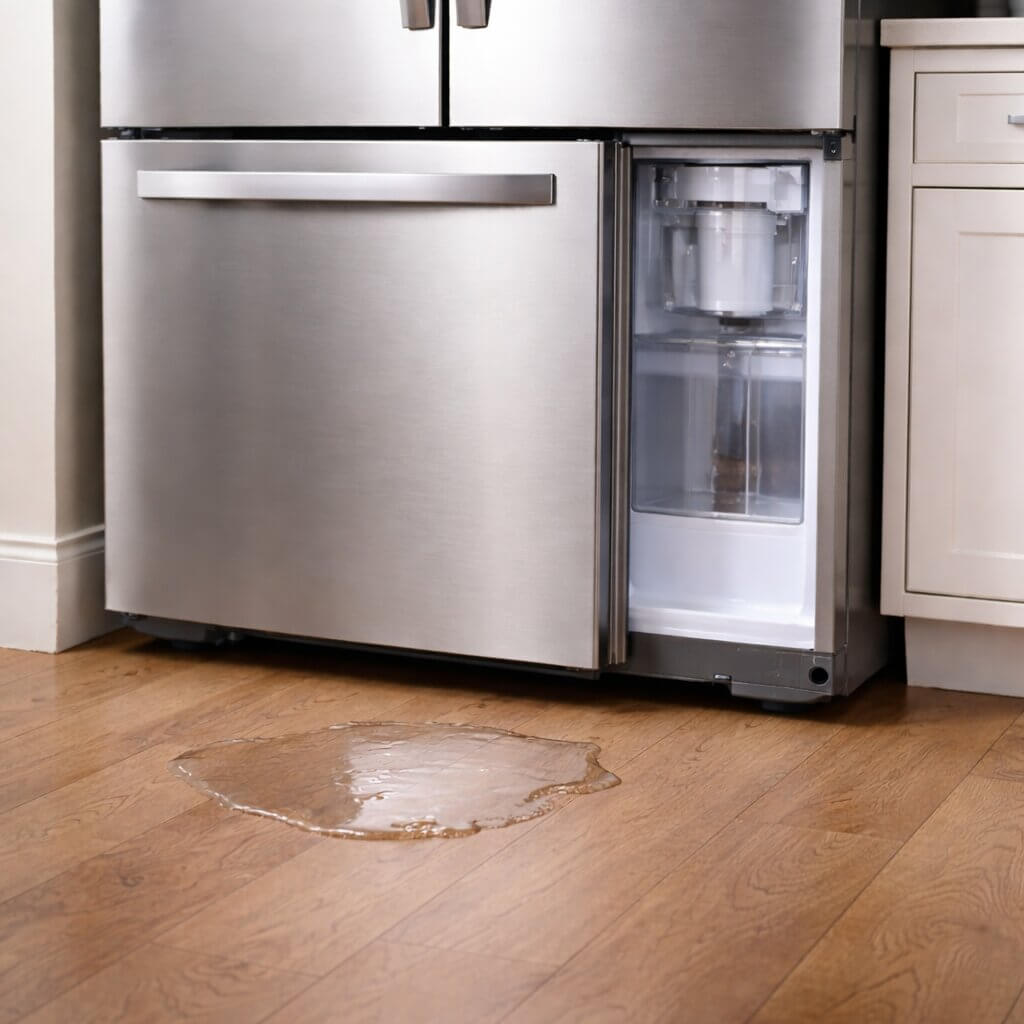
You did everything right. You bought a fresh filter, twisted it into place, and reset the warning light. But an hour later, you walk into the kitchen only to find a puddle forming at the base of your refrigerator. If your Samsung fridge is leaking after a new filter installation, you aren’t alone—this is one of the most common issues reported by Samsung owners.
A leak in the water system isn’t just a nuisance; it’s a constant drip that can warp expensive hardwood floors, ruin cabinetry, and cause hidden mold growth. In most cases, the leak isn’t caused by a “broken” fridge, but rather a simple seal failure, trapped air pressure, or a mismatch in parts. In this 1,500-word guide, we will walk through every possible cause—from pinched O-rings to cracked housings—and show you how to stop the dripping for good.
💡 Mentor’s Diagnostic Hub
Post-installation leaks are almost always related to the seal or the line pressure. If your filter is leaking because you had to use force to get it in, you may have damaged the manifold. Check our Stuck Samsung Filter Guide for preventative tips. For a complete overview of the entire water system, please refer to our main pillar guide.
Why Does My Samsung Fridge Leak ONLY After a Filter Change?
It seems counterintuitive. Why would a brand-new part cause a leak when the old, dirty one didn’t? The answer lies in pressure and precision. When you remove an old filter, you break a pressurized vacuum. When you install the new one, the refrigerator’s water valve must re-seat perfectly against the new cartridge. If anything is off by even a fraction of a millimeter, the 60-80 PSI of water pressure in your home will find the path of least resistance—usually out of the side of the filter housing.
Reason 1: Damaged, Twisted, or Dry O-Rings
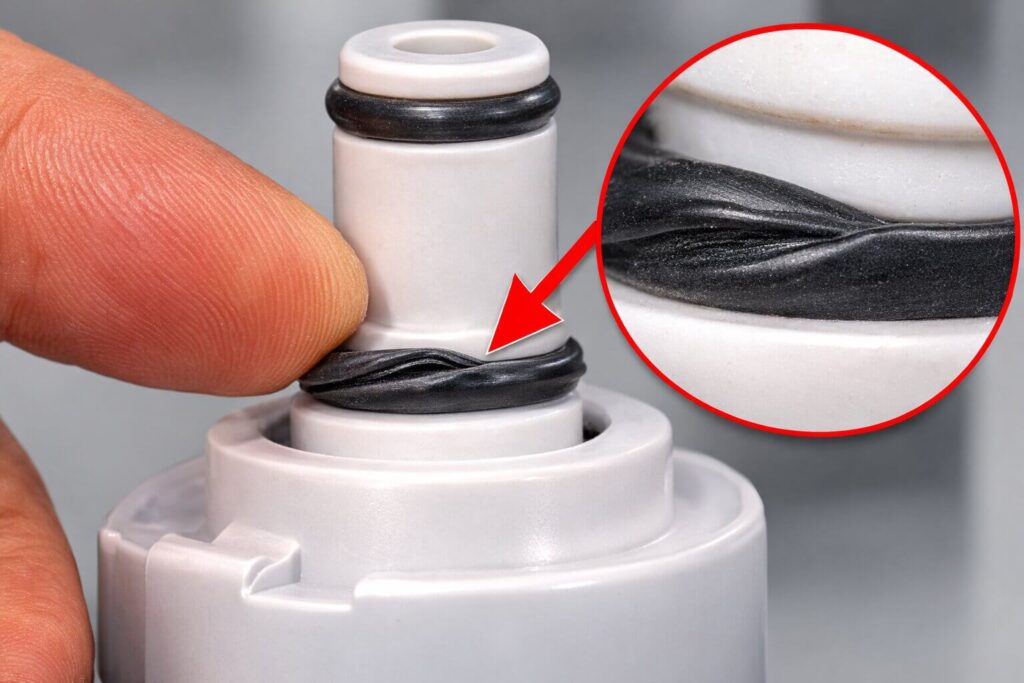
The “O-rings” are the two small, black rubber circles at the tip of the filter. They are the only thing standing between your kitchen floor and a high-pressure water spray. Because the filter housing is tight, these rings experience significant friction during installation.
The “Pinched” Seal
If the O-rings are dry, they can “grab” onto the plastic wall of the housing as you twist. Instead of sliding into place, the rubber rolls out of its groove or gets pinched. A pinched O-ring creates a gap where water can bypass the seal entirely.
The “Generic Filter” Problem
If you purchased a cheap, off-brand filter, the O-rings are often made of lower-quality rubber that is either too thin (allowing leaks) or too thick (causing them to snap during installation). Always inspect the O-rings before sliding the filter into the fridge.
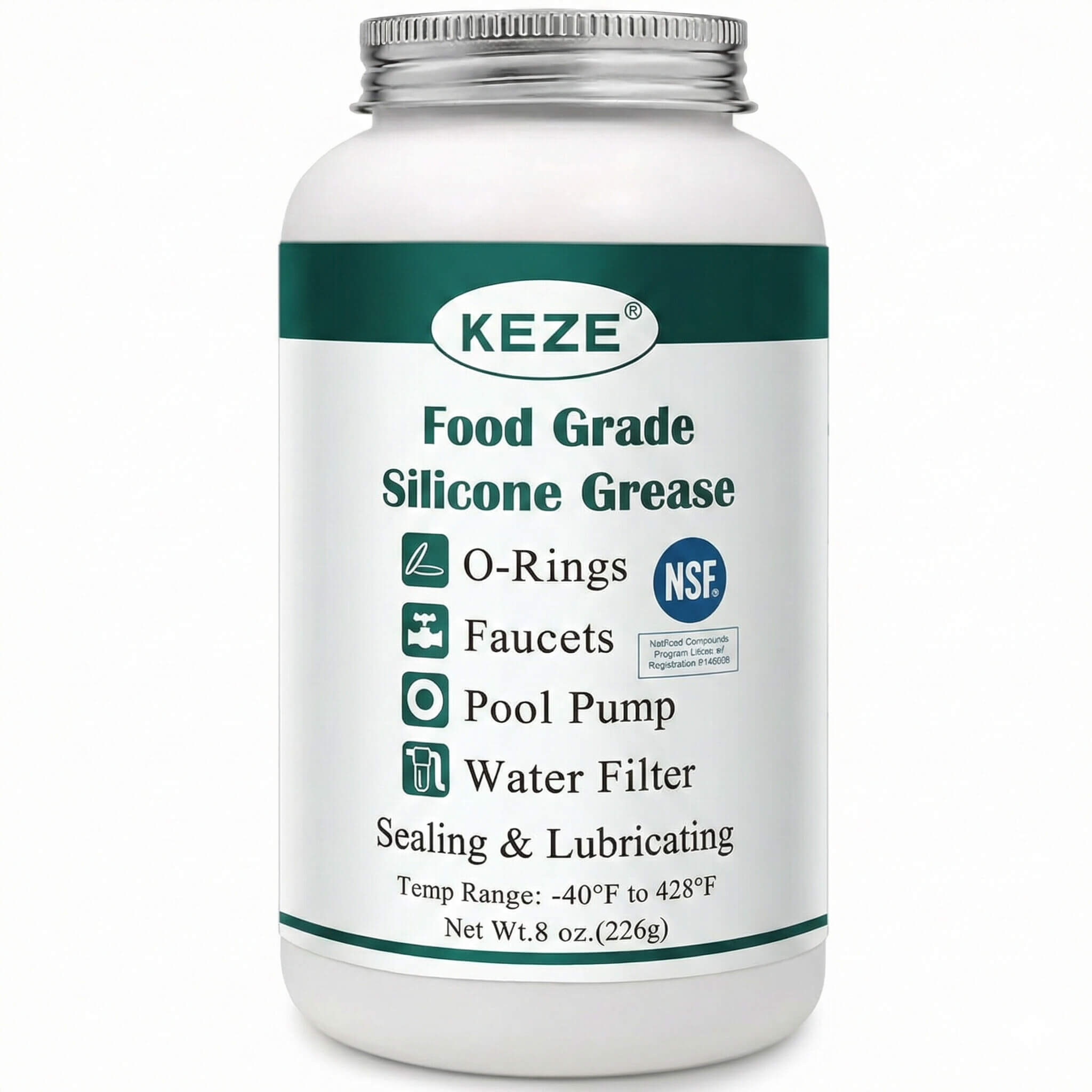
The Fix: Remove the filter and inspect the rings. If they look dry or twisted, apply a tiny amount of food-grade silicone grease (plumber’s grease) to the rubber. This provides the lubrication needed for the filter to seat properly without the rubber catching. Warning: Never use Vaseline or WD-40, as petroleum-based products will melt the rubber over time.
Reason 2: Trapped Air in the Water Line
This is the most common cause of a “dripping dispenser.” When you swap filters, air enters the water line. Air is compressible, while water is not. That trapped air pocket acts like a spring, holding pressurized water in the line. When you stop dispensing, that “air spring” continues to push water out of the nozzle for several minutes.
The Fix: The 3-Gallon Flush
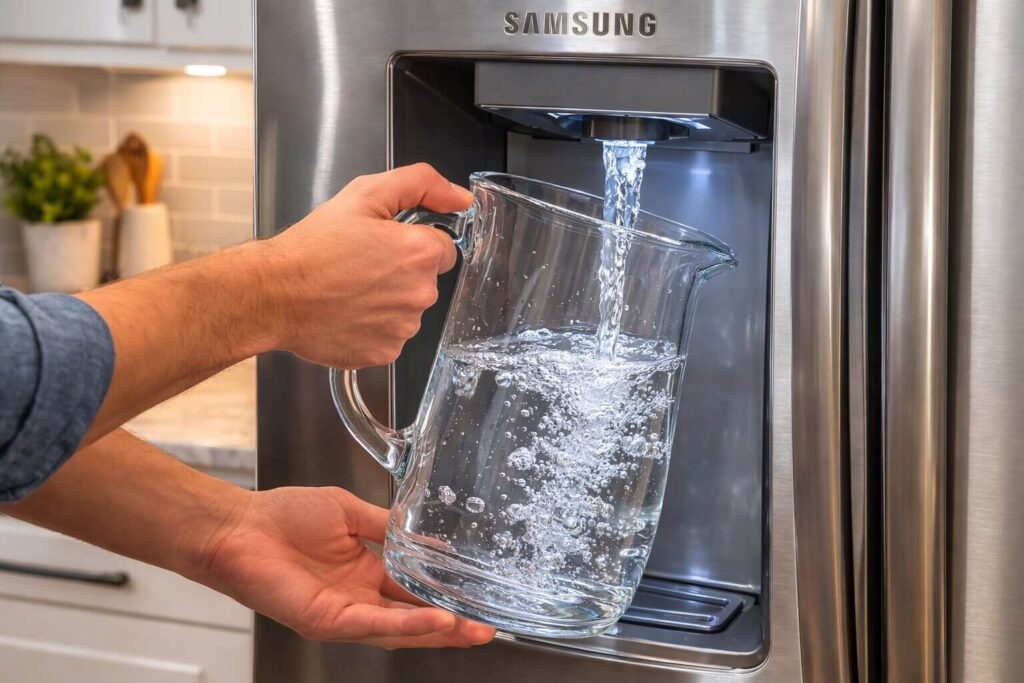
You must purge the air from the system. Grab a large pitcher and dispense at least 3 gallons of water. Don’t just do it all at once; dispense for 30 seconds, stop for 10 seconds, and repeat. You will hear sputtering, hissing, and “coughing” from the dispenser—this is the air escaping. Once the air is gone, the “spring” effect disappears, and the dripping will stop.
Reason 3: A Cracked Filter Housing (The Manifold)
If you find water pooling inside the refrigerator, specifically under the crisper drawers where the filter is located, the plastic housing (also called the manifold) might be cracked. This typically happens if the previous filter was stuck and required significant force or pliers to remove.
The manifold is made of injection-molded plastic. Hairline cracks are often invisible to the naked eye until they are under pressure. When you install a new filter with fresh, tight O-rings, it increases the internal pressure on the manifold walls, causing the crack to “open up” and leak.
The Fix: The Flashlight Test
Remove the water filter and dry the inside of the housing completely with a paper towel. Shine a bright flashlight inside the “tunnel” where the filter goes. Look for thin, white “stress marks” or visible vertical cracks. If you see water seeping from the plastic walls rather than the nozzle, the entire Water Filter Case Assembly must be replaced.
Samsung Genuine Filter Housing (Manifold)
Why you need this: If your housing is cracked, no amount of O-ring grease will stop the leak. Replacing the manifold is a 30-minute DIY job that involves unscrewing the back panel and reconnecting two water lines.
Reason 4: Improper Alignment (The “Not Quite Locked” Leak)
Samsung filters have a very specific “locking” point. On many models, you have to turn the filter exactly 90 degrees until the “lock” icon on the filter aligns with the arrow on the fridge. However, if the water pressure wasn’t relieved before installation, the filter may feel locked when it is actually only 80% of the way there.
If the filter isn’t fully rotated, the water inlet and outlet ports don’t align perfectly. This causes water to “spray” against the side of the filter head instead of going into the filter, leading to a massive leak inside the fridge.
The Fix:
- Turn off the water supply behind the fridge.
- Dispense water until it stops (to relieve pressure).
- Remove the filter and reinstall it, ensuring you twist it until you feel a firm “click” or the icons align perfectly.
- Turn the water back on and watch the housing for 60 seconds.
Comparing Filter Models: HAF-CIN vs. HAF-QIN
Samsung uses two main filter shapes, and using a “close enough” version will almost always result in a leak.
- HAF-CIN (DA29-00020B): The round, cylindrical filter used in most French Door models before 2021.
- HAF-QIN: The “square-top” filter used in newer Bespoke and 4-Door Flex models. (Need help finding it? Check our Bespoke Filter Replacement Guide).
The HAF-QIN has three locking teeth, while the HAF-CIN has two. If you try to force the wrong one in, you will shatter the internal locking mechanism of the manifold. Always check your model number inside the door before buying.
Frequently Asked Questions (FAQ)
Can I use the fridge without a water filter to stop the leak?
Why is my water dispenser sputtering after a filter change?
Conclusion: Stay Calm and Check the Seals
A Samsung fridge leaking after a new filter is almost always a solvable DIY problem. Before you call a $200 repairman, remember the three-step checklist: Lubricate the O-rings with silicone grease, Purge the air by flushing 3 gallons, and Inspect the housing for cracks. By following these steps, you’ll protect your kitchen floors and ensure your family has access to clean, filtered water without the mess.