
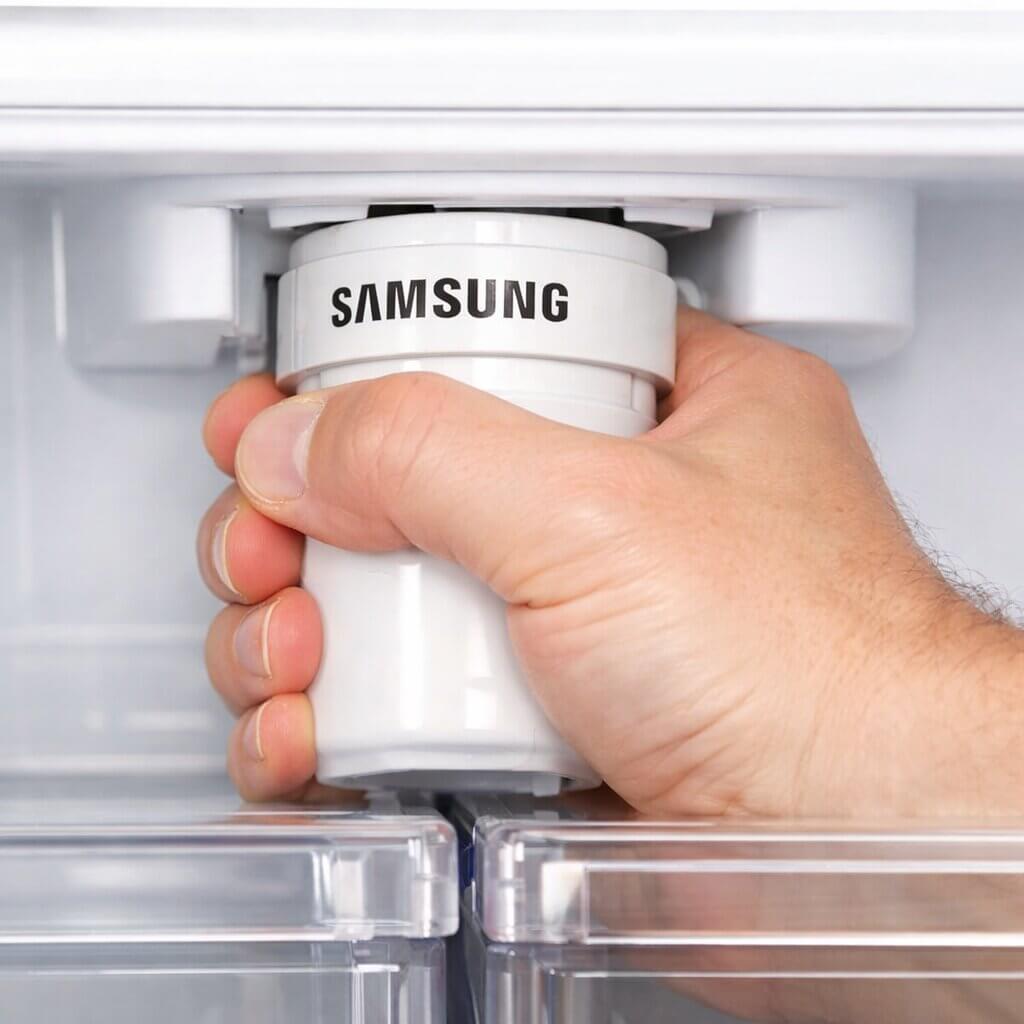
You have done this a dozen times before. You open the refrigerator door, grab the round knob of your water filter, and give it a firm twist to the left. Only this time, it doesn’t budge. You grip it harder, twist with all your arm strength, and suddenly you hear the terrifying sound of the plastic housing beginning to creak and groan. Stop.
If you are currently standing in your kitchen with a Samsung water filter stuck permanently in its housing, step away from the appliance. Do not apply blind brute force. The internal water manifold holding that filter is made of relatively thin injection-molded plastic. If you snap it, you are looking at a massive kitchen flood and a $300+ repair bill to replace the entire assembly.
Filters do not magically glue themselves into the refrigerator. They become physically jammed for three very specific scientific reasons: extreme hydraulic line pressure, swollen rubber O-rings, or heavy calcium scale cementing the plastic threads together. In this guide, we will walk you through five professional, escalating techniques to safely break that bond and remove your jammed cartridge without destroying your fridge.
💡 Mentor’s Diagnostic Hub
Removing a stuck filter is a common hurdle in routine appliance maintenance. This guide is a core component of our comprehensive master series on Samsung plumbing systems. Once you get it out, make sure you are buying the correct replacement shape by checking our main guide.
Method 1: The Golden Rule (Relieve the Line Pressure)
In 80% of all cases involving a jammed water filter, the cartridge is actually just trapped by immense water pressure. Your home’s plumbing is constantly forcing 60 to 80 PSI of water into that tiny plastic cylinder. This intense pressure causes the filter to physically expand outward, aggressively binding its plastic locking teeth tightly against the internal tracks of the manifold.
You cannot fight 80 PSI of hydraulic pressure with your bare hands. You must neutralize it.
- Turn off the water supply: Pull your refrigerator forward and locate the quarter-turn shut-off valve on the wall behind it. Turn it completely clockwise to shut the water off. (If you don’t have a valve behind the fridge, check under your kitchen sink).
- Bleed the line: This is the most crucial step. Go to the front of your refrigerator and press a glass against the water dispenser paddle. Hold it there for 10 to 15 seconds.
- Listen for the hiss: You will hear a hiss of air, a few drops of water will fall, and then the dispenser will go completely dead. You have just dropped the internal pressure to zero PSI.
- Try twisting again: Go back to the filter. With the pressure completely gone, the plastic teeth will relax. In most cases, the filter will now effortlessly twist counter-clockwise and slide right out.
Method 2: The “Push and Wiggle” Technique
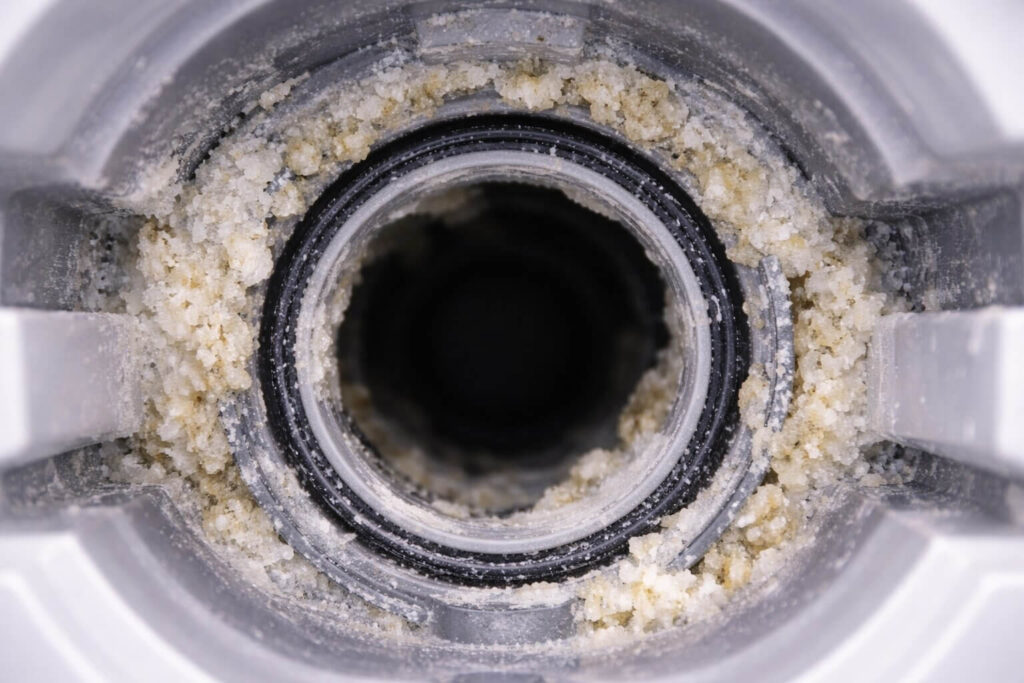
If the water is off, the pressure is bled, and the filter is still stubbornly refusing to turn, you are likely dealing with calcium scale. Hard water minerals slowly build up on the plastic tracks over the course of six months, acting like a natural cement.
To break this calcium bond, you need to use a specific motion. Do not just blindly twist left.
Instead, grab the filter and push it firmly inward, directly toward the back of the refrigerator. While maintaining that heavy inward pressure, rapidly wiggle the filter up and down, and side to side. You are trying to physically crack the brittle calcium deposits holding the locking teeth in place. After 10 seconds of aggressive wiggling and inward pushing, attempt to twist it sharply to the left.
Method 3: The Towel and Two-Handed Grip
Sometimes the issue is simply a lack of friction. The plastic knob of a Samsung filter is incredibly smooth, and if your hands are even slightly damp from the condensation inside the fridge, you cannot generate enough torque to break the seal of the swollen rubber O-rings.
Do not use bare hands. Grab a dry, highly textured microfiber towel or a rubber silicone jar opener pad from your kitchen drawer. Wrap it completely around the exposed plastic knob of the filter. Place both hands over the towel, squeeze as hard as you can to maximize surface friction, and twist counter-clockwise.
Method 4: The Slip-Joint Pliers Technique
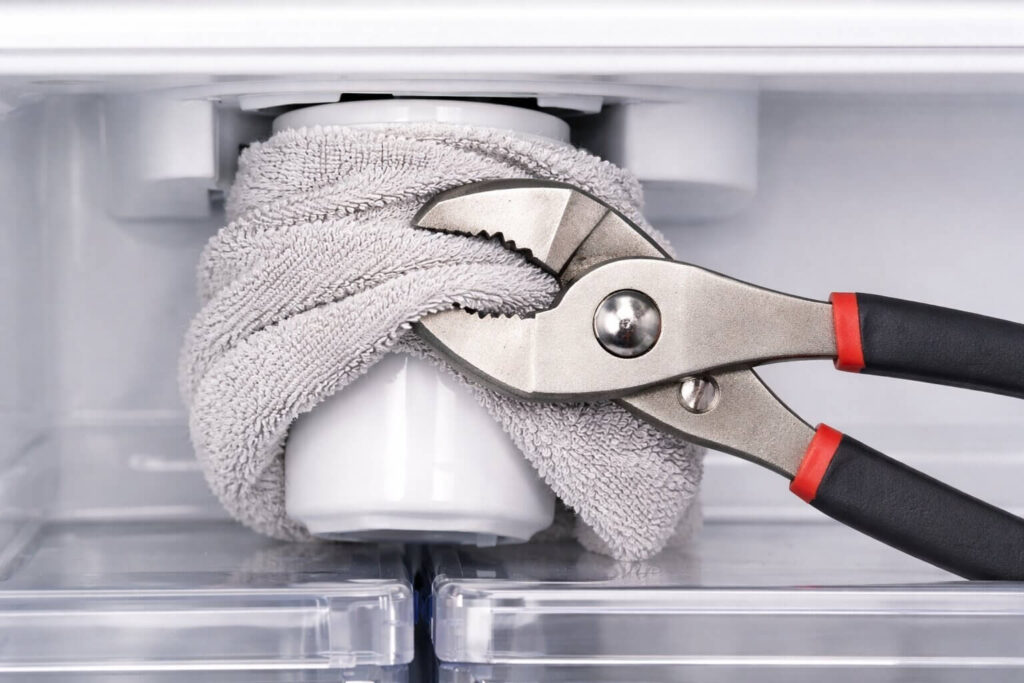
If manual gripping has completely failed, it is time to escalate to mechanical leverage. However, you must execute this step with extreme caution to avoid crushing the plastic housing and permanently trapping the filter.
You need a pair of adjustable slip-joint pliers (often called Channellocks). Do not use standard needle-nose pliers, as they will simply bite into and chew up the soft plastic.
- Adjust the jaw width of your slip-joint pliers so they open wide enough to easily accommodate the thick plastic filter knob.
- Take a thick rag or an old t-shirt and wrap it tightly around the filter knob. This cloth acts as a vital protective barrier between the sharp metal teeth of the pliers and the brittle plastic.
- Clamp the pliers firmly over the rag-covered filter. Do not squeeze the handles with maximum crush force; you only want enough grip to stop the pliers from slipping.
- Apply slow, steady, controlled pressure to the left (counter-clockwise). Do not jerk it. Once the seal breaks, you will feel a distinct “pop.” Remove the pliers and pull the filter out by hand.
Adjustable Slip-Joint Pliers (Rubber Jaws)
Why you need this: If you are afraid of cracking the plastic filter with standard metal teeth, specialized soft-jaw or rubber-coated slip-joint pliers will give you massive mechanical twisting leverage while protecting your expensive appliance from damage.
Method 5: The Worst-Case Scenario (Replacing the Manifold)
If you have bled the pressure, wiggled it, and put pliers on it, but the filter absolutely refuses to turn a single millimeter—or worse, if you hear the internal plastic snapping—you have reached the point of no return. The locking teeth on the filter have permanently fused or broken off inside the tracks.
At this stage, attempting to rip it out will only cause a massive water leak. (If this happens, immediately check our guide on diagnosing a Samsung fridge leaking after a new water filter). You must order a completely new “Water Filter Manifold Assembly” specific to your Samsung model number. This involves removing the back panel of the refrigerator, disconnecting the 1/4-inch water lines, unscrewing the entire plastic housing from the interior cabin, and replacing the whole unit (which comes with a new filter already installed).
Why Do Samsung Filters Get So Jammed?
Once you finally wrestle the stuck cartridge out of your fridge, you want to make absolutely sure it never happens again. Here are the two primary culprits to avoid:
1. Counterfeit or Cheap Generic Filters
The number one cause of a permanently jammed filter is buying a cheap, $15 knockoff from an unverified eBay or Amazon seller. Samsung machines their factory OEM filter locking teeth to exact millimeter tolerances. Cheap generic factories often mold their locking teeth just a fraction of a millimeter too thick.
You might be able to force that cheap filter *in*, but the oversized teeth will permanently wedge themselves into the manifold tracks, making it mathematically impossible to twist back out six months later. Always stick to the correct genuine OEM Samsung filter shape or highly reputable, certified brands like Waterdrop. (See our rigorously tested list of the best generic Samsung DA29-00020B replacements for safe options).
2. Severe Hard Water Scale
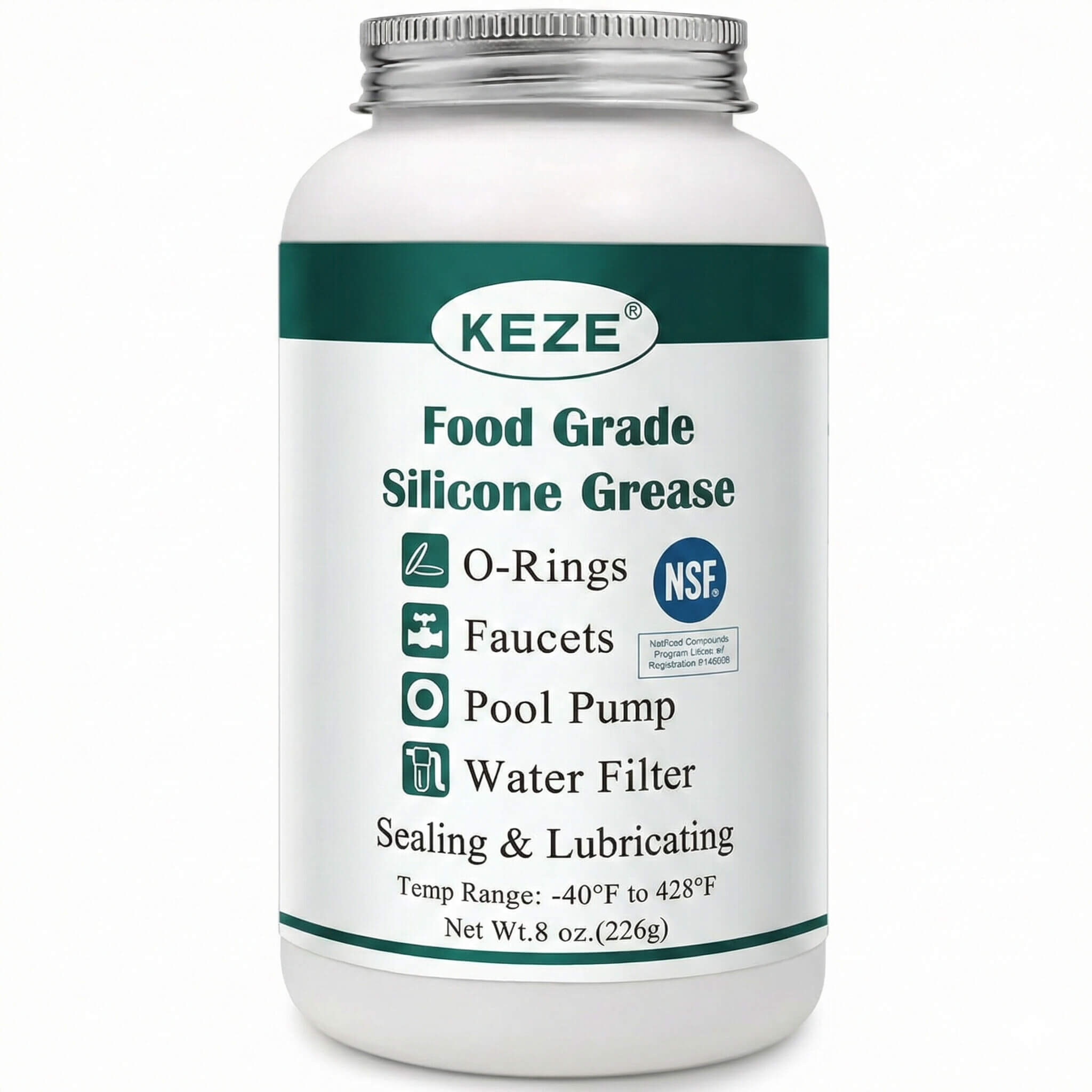
If your home has heavily mineralized well water or untreated hard city water, calcium will rapidly build up inside the wet, dark filter housing. Smearing a tiny, thin layer of food-grade silicone grease (never use WD-40 or petroleum jelly) onto the two black rubber O-rings of your *new* filter before installing it will prevent the rubber from swelling and make it vastly easier to remove next time.
Frequently Asked Questions (FAQ)
Should I unplug the refrigerator before trying to remove a stuck filter?
Water keeps dripping when I pull the stuck filter out. Is it broken?
Can I use WD-40 to loosen a stuck refrigerator water filter?
Conclusion
Dealing with a stuck Samsung water filter is a highly stressful experience, mostly because it feels like you are one wrong twist away from destroying an expensive appliance. The absolute most important takeaway is to remember the physics of your plumbing: never fight the hydraulic pressure.
Always start by turning off the wall valve and bleeding the front dispenser to drop the line pressure to zero. In the vast majority of cases, dropping the pressure and using a rubber jar-opener pad is all you need to break the seal. If you have to escalate to using metal slip-joint pliers, be incredibly gentle, wrap the plastic well, and use slow, steady force. Once you finally conquer the jammed cartridge, ensure you replace it with a genuine OEM Samsung filter to guarantee you won’t be fighting oversized plastic locking teeth six months from now.